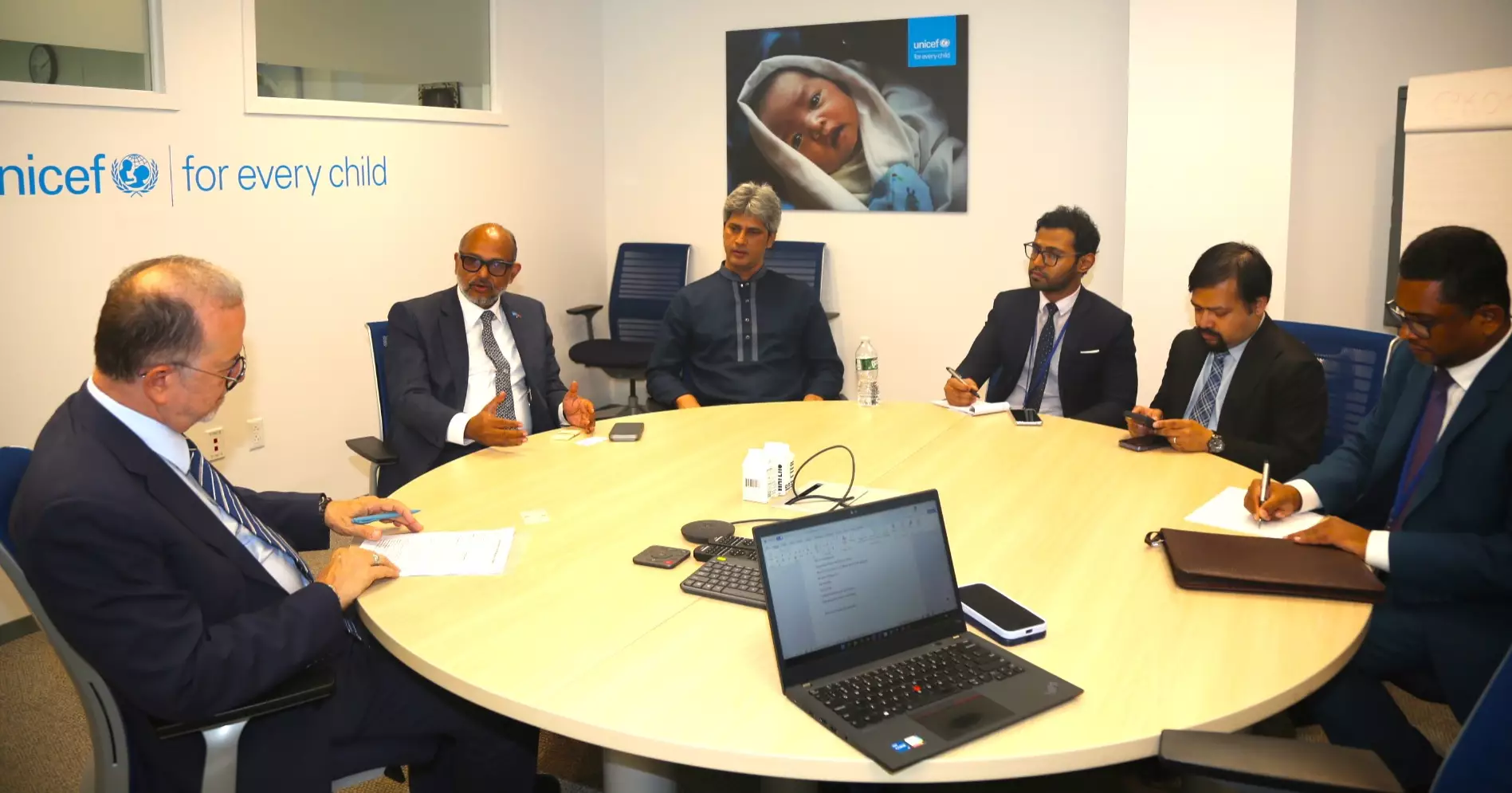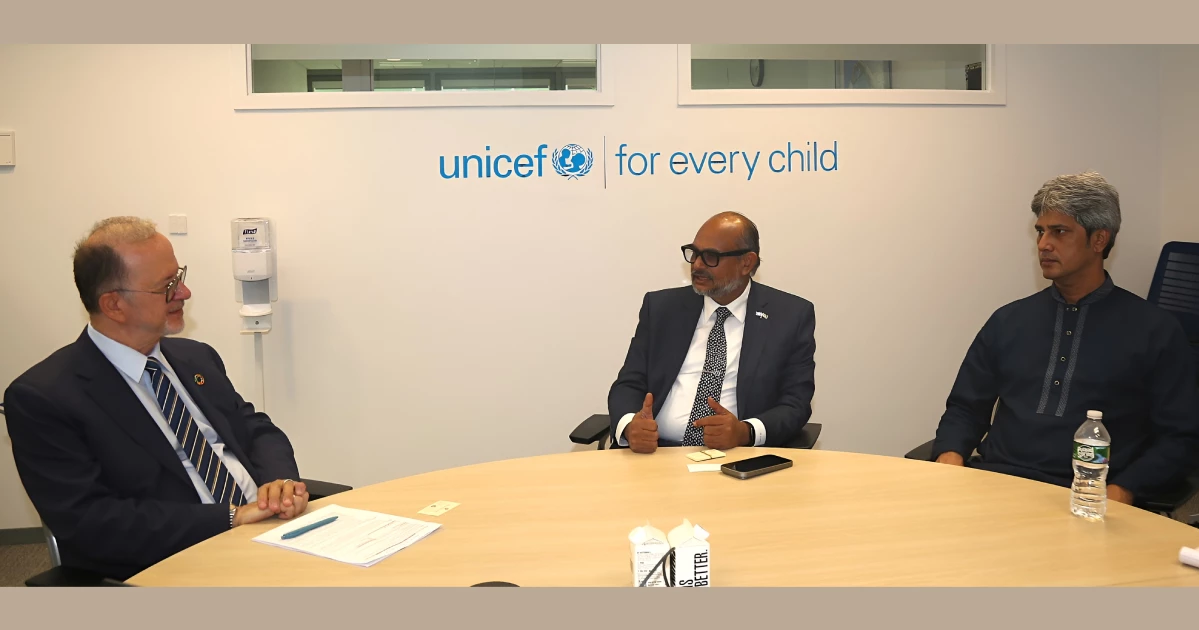
Prime Minister's Finance and Planning Adviser Dr Rashed Al Mahmud Titumir has called on the United Nations system to establish an international mechanism for debt restructuring, debt relief, debt suspension and sustainable debt solutions to help developing countries address mounting fiscal pressures arising from the Middle East crisis and other global shocks.
He said such measures are essential to enable developing countries to sustain investment in children, women, education, health, and social protection while keeping progress towards the Sustainable Development Goals (SDGs) on track.
Speaking during a meeting with UNICEF Deputy Executive Director for Humanitarian Action and Supply Operations Ted Chaiban at UNICEF House in New York on Friday, Dr. Titumir said rising energy prices, supply chain disruptions, and increasing debt burdens had significantly narrowed Bangladesh's fiscal space.
Despite these challenges, he said the government remains committed to protecting vulnerable populations and advancing its vision of a democratic human welfare state under the 'Bangladesh First' philosophy, according to the Bangladesh Permanent Mission in New York.
State Minister for Planning Zonayed Saki also attended the meeting.
The Adviser highlighted the government’s commitment to a universal life-cycle-based social security system placing women at the centre of development.
He said the Family Card initiative would support women-led households and provide assistance across different stages of life, including pregnancy, childhood, education, disability and old age.
Zonayed Saki stressed the importance of reliable and integrated data systems and outlined the government’s proposed “One Child, One Card, One Number and One Wallet” strategy to improve birth registration, school enrolment and access to public services.