
Editors’ Council (Sampadak Parishad) on Monday expressed deep concern over the highly controversial Section 18(A) of the proposed Bank Resolution Act, 2026, warning that it could pave the way for former plundering directors to reclaim ownership of ailing banks.
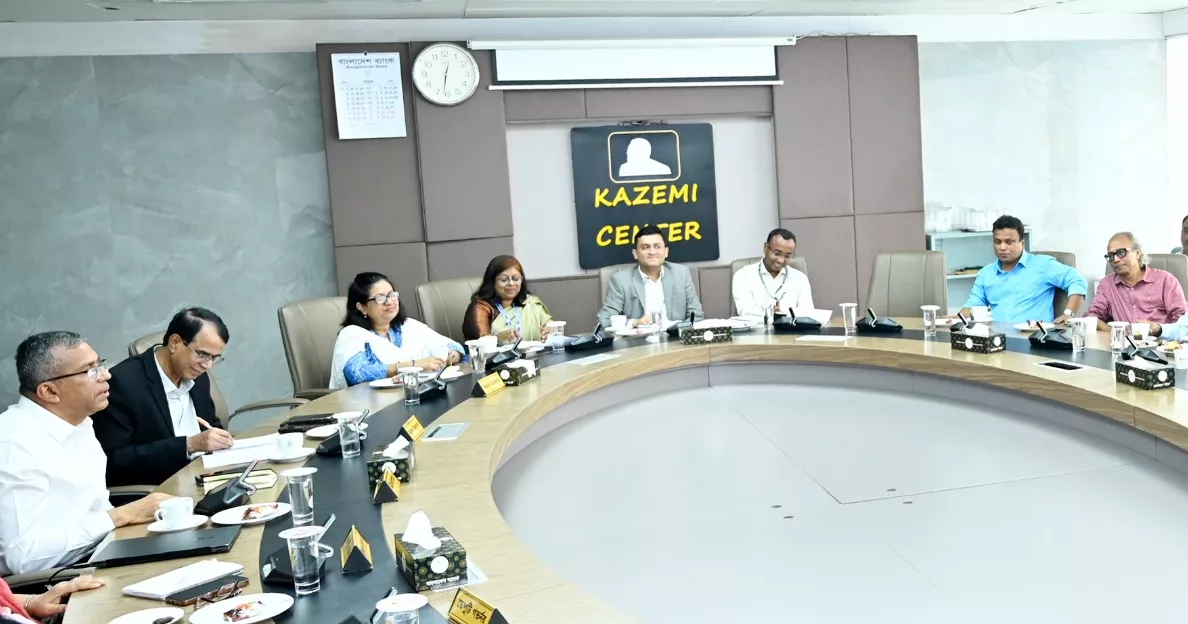
A delegation from the council voiced their anxieties during a high-profile meeting with the Governor of Bangladesh Bank at the central bank's headquarters in Motijheel, emphasizing the critical need to preserve corporate governance, safeguard depositors' money, and maintain financial stability.
Banking sector reforms to be brought under independent commission: Info Minister Swapon
Briefing reporters after the meeting, Nurul Kabir, President of Editors' Council and Editor of New Age, noted that the country’s banking sector is currently navigating an incredibly challenging environment.
"Our discussions heavily centered on the skyrocketing volume of non-performing loans (NPLs), the slow pace of structural banking reforms, absolute guarantees for depositors' funds, and ongoing volatility in the foreign exchange market," Kabir said.
"Crucially, we also exchanged views on the highly damaging long-term implications of Section 18(A) of the proposed Bank Resolution Act,” he added.
Section 18(A) of the Bank Resolution Act, 2026, has recently drawn sharp criticism from financial analysts and civil society. Under this provision, former shareholders and directors of weak or failing banks undergoing mergers or state-led resolution processes are granted a legal loophole to reclaim ownership or board positions under certain conditions. Critics argue this effectively offers a backdoor entry to the very individuals responsible for plundering bank resources.
During the meeting, the Editors' Council strongly urged the banking regulator to enforce transparency and institutional accountability. They demanded that robust and foolproof mechanisms be established so that ordinary depositors do not bear the brunt of a financial crisis if a bank collapses or faces a forced merger.
In response, the central bank Governor Mostaqur Rahman assured the delegation of ongoing regulatory interventions and future structural overhauls.
The Governor promised that the central bank remains fully aware of the systematic bottlenecks and is actively pursuing necessary measures to curb default loans, restructure weak financial institutions, and restore public trust in the financial ecosystem.
Beyond banking regulations, the meeting also touched upon broader macroeconomic indicators, including soaring inflation, stagnant growth in private sector investments, the employment landscape, and various budgetary facets of the upcoming FY2026–27 national budget.
Bangladesh Bank usually organised such a consultation meeting before the budget of the new fiscal year and new monetary policy every year.
The meeting was attended by a group of senior journalists and editors, including Matiur Rahman (Prothom Alo), Matiur Rahman Chowdhury (Manabzamin), Dewan Hanif Mahmud (Bonik Barta), Shamsul Huq Zahid (The Financial Express), Shahed Mohammed Ali (Daily Samakal), AMM Bahauddin (Daily Inqilab), Md. Rezaul Karim Lotus (Daily Sun), Altamash Kabir (Sangbad), Mostafa Mamun (Agamier Somoy), and Md. Mozammel Haque (Karatoa).