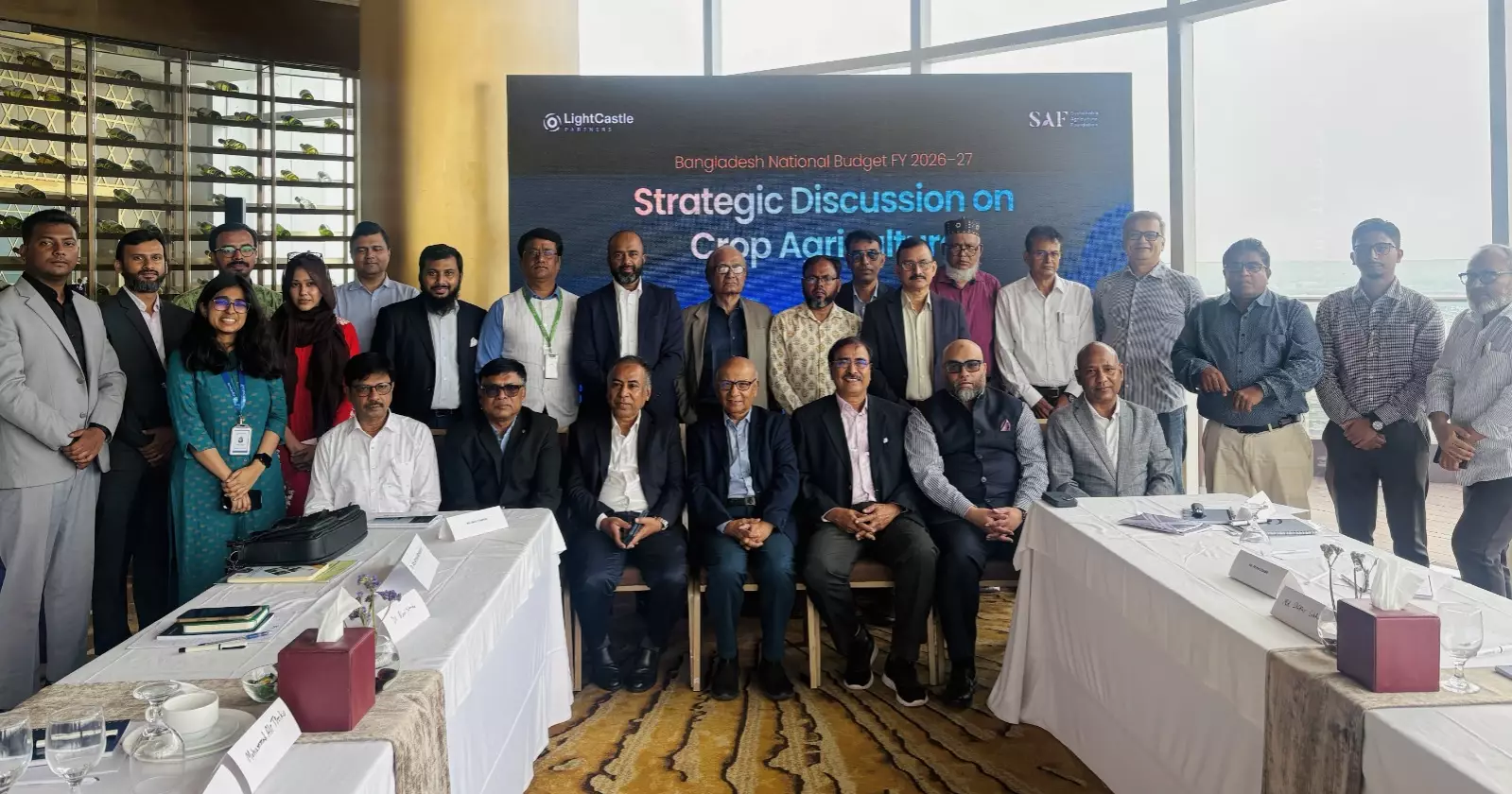
Experts at a round-table discussion on Wednesday observed that although the proposed national budget for fiscal year 2026-27 has increased allocations for the agriculture sector, farmers continue to face mounting challenges, including rising costs of agricultural inputs, post-harvest losses, climate-related risks, inadequate market access, and weak implementation of development programmes.
They said Bangladesh’s crop agriculture sector remains vital for ensuring food security, supporting rural livelihoods, promoting agro-industrial growth, and generating export earnings.
LightCastle Partners and the Sustainable Agriculture Foundation (SAF) Bangladesh organised the event titled “National Budget FY2026-27: Strategic Discussion on Crop Agriculture” at a city hotel, according to a press release.
Speakers said between 1999 and 2019, the value of agricultural production grew at an average annual rate of 3.54 percent.
However, the sector continues to face significant constraints, including climate vulnerability, growing dependence on agricultural inputs, and inefficiencies in post-harvest management, they said.
Speakers said that agriculture’s contribution to Bangladesh’s Gross Domestic Product (GDP) has declined from nearly 38 percent in the 1970s to 11.2 percent at present.
While public investment and policy attention to the sector have increased over the years, they stressed that the benefits of budgetary allocations have yet to adequately reach smallholder and marginal farmers.
The discussion focused on how proposed budget allocations, policy priorities, and strategic interventions for FY27 can be translated into tangible outcomes for farmers and contribute to the long-term transformation of Bangladesh’s agriculture sector.
Speakers called for stronger implementation of agricultural programmes, enhanced climate resilience, improved market systems, enhanced post-harvest management, and greater support for farmers to boost productivity and ensure sustainable growth of the sector.
The round-table discussion was attended by more than 30 policymakers, agricultural scientists, economists, entrepreneurs, development practitioners, and other stakeholders.