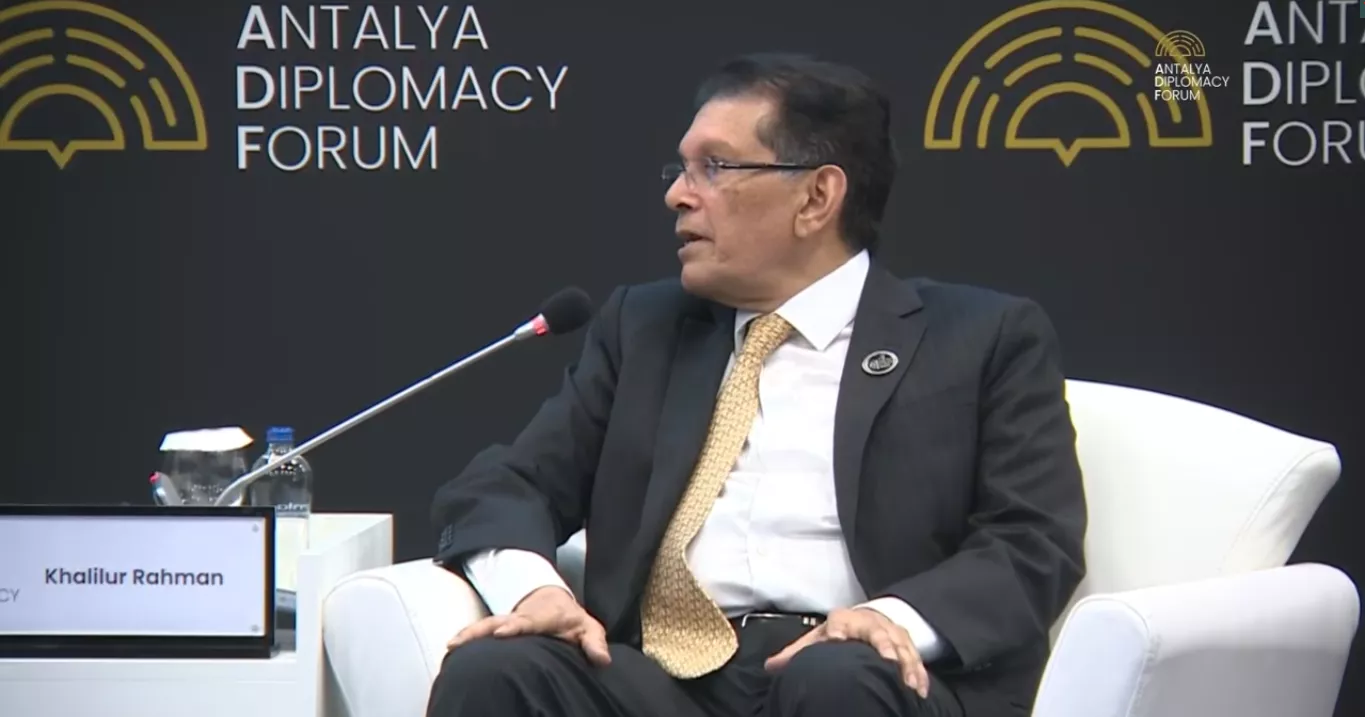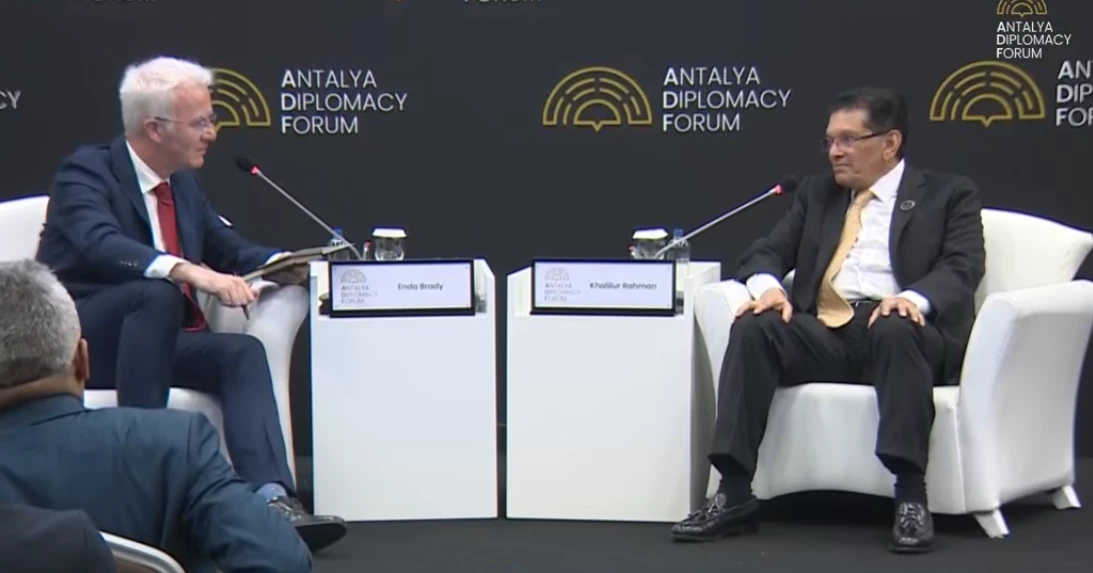
Foreign Minister Dr Khalilur Rahman has said that international commerce and global trade channels should be free and open, stressing that everybody suffers if the free flow of international commerce is impeded.
“It’s very important that the Strait of Hormuz is open for navigation. Not only the Strait of Hormuz, but international commerce should also be free and open. If they are not open and are impeded, everybody suffers. Global growth suffers, countries suffer. So it’s very important that these channels of global trade remain open,” he said.
During an interview titled ADF Talks on the sidelines of the Antalya Diplomacy Forum recently, the Foreign Minister said the news that the Strait of Hormuz would remain open was very welcome. “You saw the impact on oil prices immediately.”
He called for coordinated international action to contain the global energy crisis, warning that developing countries could face severe economic shocks if supply disruptions persist.
Referring to past experiences, Dr Khalilur said they do not want a repetition of history, and it is very important that countries around the world work not only to bring peace but also to minimide the effects that the crisis might have on various countries, especially developing nations.
He said the International Energy Agency has already indicated that the scope of the current crisis could be much larger than that of the 1970s.
“So if the impact is very similar, then we have very rough days ahead. It is only through collective action that we will be able to withstand the negative effects emanating from the crisis and its impact on the energy market,” said the Foreign Minister.
He said the world is currently facing a serious energy crisis and significant energy challenges and expressed hope that the situation would improve soon so that countries can return to normal economic activities.
The 5th edition of the Antalya Diplomacy Forum (ADF 2026), hosted by the Ministry of Foreign Affairs of the Republic of Türkiye under the auspices of President Recep Tayyip Erdoğan, took place on April 17–19 in Antalya, Türkiye.
In the face of geopolitical tensions, shifting balances of power, rising trade barriers and mounting pressure on multilateralism, the current global landscape is marked by increasing unpredictability.
This year’s theme, “Mapping Tomorrow, Managing Uncertainties,” emphasized the importance of anticipating and addressing emerging issues in order to shape a better future. The theme underscored the need to stay ahead of future developments by identifying risks and opportunities, developing strategies, and turning insights into action.
“Young nations and developing economies suffered deeply in the 1980s after earlier oil shocks. We do not want a repetition of history,” said the Foreign Minister.