Antalya Diplomacy Forum
Global trade must remain open to avoid economic fallout: FM
Foreign Minister Dr Khalilur Rahman has said that international commerce and global trade channels should be free and open, stressing that everybody suffers if the free flow of international commerce is impeded.
“It’s very important that the Strait of Hormuz is open for navigation. Not only the Strait of Hormuz, but international commerce should also be free and open. If they are not open and are impeded, everybody suffers. Global growth suffers, countries suffer. So it’s very important that these channels of global trade remain open,” he said.
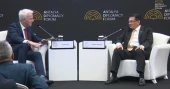
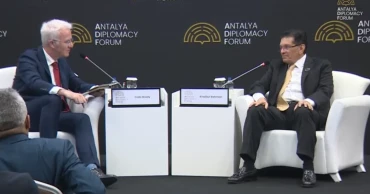
During an interview titled ADF Talks on the sidelines of the Antalya Diplomacy Forum recently, the Foreign Minister said the news that the Strait of Hormuz would remain open was very welcome. “You saw the impact on oil prices immediately.”
He called for coordinated international action to contain the global energy crisis, warning that developing countries could face severe economic shocks if supply disruptions persist.
Referring to past experiences, Dr Khalilur said they do not want a repetition of history, and it is very important that countries around the world work not only to bring peace but also to minimide the effects that the crisis might have on various countries, especially developing nations.
He said the International Energy Agency has already indicated that the scope of the current crisis could be much larger than that of the 1970s.
“So if the impact is very similar, then we have very rough days ahead. It is only through collective action that we will be able to withstand the negative effects emanating from the crisis and its impact on the energy market,” said the Foreign Minister.
He said the world is currently facing a serious energy crisis and significant energy challenges and expressed hope that the situation would improve soon so that countries can return to normal economic activities.
The 5th edition of the Antalya Diplomacy Forum (ADF 2026), hosted by the Ministry of Foreign Affairs of the Republic of Türkiye under the auspices of President Recep Tayyip Erdoğan, took place on April 17–19 in Antalya, Türkiye.
In the face of geopolitical tensions, shifting balances of power, rising trade barriers and mounting pressure on multilateralism, the current global landscape is marked by increasing unpredictability.
This year’s theme, “Mapping Tomorrow, Managing Uncertainties,” emphasized the importance of anticipating and addressing emerging issues in order to shape a better future. The theme underscored the need to stay ahead of future developments by identifying risks and opportunities, developing strategies, and turning insights into action.
“Young nations and developing economies suffered deeply in the 1980s after earlier oil shocks. We do not want a repetition of history,” said the Foreign Minister.
5 months ago
Dhaka looks for regional breakthrough after achieving peace at home: Khalilur Rahman
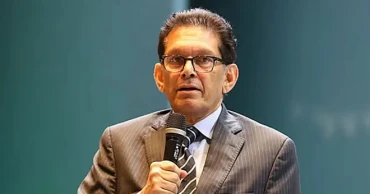
Foreign Minister Dr Khalilur Rahman has said Bangladesh achieved peace in society following the Uprising of 2024 and they are strongly advocating a ‘much closer and well-functioning’ South Asian Association for Regional Cooperation (Saarc) that will deliver to the people of the region.
“Look, peace starts at home, and with our democratic transition, it has been shown, beyond any doubt, that we have achieved a peaceful society in Bangladesh. Then, regional peace,” he said, adding that they are also trying to resolve the Rohingya issue, one of the longstanding issues in the region.
The Foreign Minister, who attended the three-day Antalya Diplomacy Forum 2026, said they are in touch with all parties to this conflict and believe that they should be able to make advances in resolving this problem in a peaceful manner.
“At least that's what we are trying right now. And when it comes to global peace, Bangladesh is one of the top contributors to peacekeeping operations,” Dr Khalilur told TRT World in an interview before heading towards Brussels.
Responding to a question, the Foreign Minister said the democratic transition they have seen in Bangladesh is ‘historic - historic for Bangladesh and probably for the world’.
He highlighted the smoothness with which power was transferred after ‘extremely well-organised’ elections.
The Foreign Minister said it was the most peaceful in the history of Bangladesh and the government has assumed responsibility on the basis of a historic mandate in which the ruling party got more than two thirds of the seats in Parliament. “So, it's a very resounding mandate. As far as stability is concerned, it was proven beyond doubt on election day.”
Dr Khalilur said they now have a vibrant parliament where policies are debated very vigorously, and a civil society that is very active with a free press.
“So, we have very energetic policy debates. The most important thing is leadership. Our Prime Minister is dedicated to leading the country in a manner that improves the lot of the ordinary people, very substantially and very quickly,” he said.
The Foreign Minister said South Asia is the least integrated region of the world and it has one fourth of the world's population, yet intra-regional trade is only 5% compared to 20% in Asean, which is not very good.
“My Prime Minister's father, President Ziaur Rahman was the first one who thought of bringing greater integration in this region and he advanced the idea of South Asian regional cooperation,” he said, adding that reviving Saarc is a major foreign policy objective of Prime Minister Tarique Rahman.
The Foreign Minister said it is through dialogue and diplomacy; they will remove the obstacles to their cooperation. “And that's what we'll be dedicated to.”
Asked about the relations with Turkey, the Foreign Minister said it is an exceptional and special relationship and both sides value it very highly.
He said his first bilateral visit was to Turkey at the invitation of his Turkish counterpart and it was his second visit within weeks.
Asked a question on the Bangladeshi diaspora, Dr Khalilur said it is an extremely important part of their lives and these are people who live, work and study abroad.
“So, our message to the diaspora is that we are a part and parcel of the same society. We will contribute to our society's well-being, and this is a government which will do everything to make that happen,” he said.
5 months ago