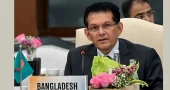
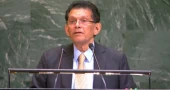
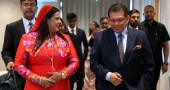
Foreign Minister Dr Khalilur Rahman
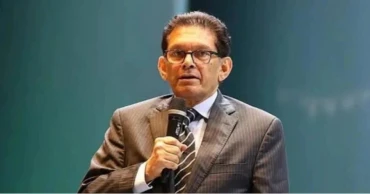
Bangladesh ready to bring back nationals if affected by Nepal floods: FM
Though there is no report of any Bangladeshi being killed or injured, Foreign Minister Dr Khalilur Rahman on Thursday said Bangladesh is ready to take appropriate steps to bring back Bangladeshi nationals from Nepal if anyone is found to have been affected.
Asked whether Bangladeshis have been affected by the disaster, Dr Khalilur said Bangladesh has specifically informed Nepal that if any Bangladeshi nationals are found affected - whether alive or dead - Dhaka would extend full cooperation and take appropriate measures to bring them back.
“There were foreign tourists there when the incident happened,” he told reporters at the Ministry of Foreign Affairs, noting that the government has not yet received any names or confirmed information about Bangladeshi casualties.
2 months ago
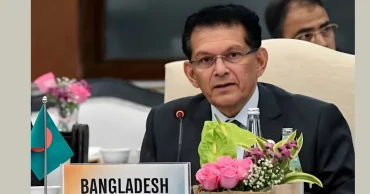
BRICS Summit: No decision yet on PM's India visit
Foreign Minister Dr Khalilur Rahman on Monday said the government has not yet decided whether Prime Minister Tarique Rahman will attend the BRICS Summit's outreach session in New Delhi next month.
He also urged the media to understand the difference between the two separate invitations from the Indian side.
“First of all, I am not an astrologer. So, I cannot predict on which exact day it will happen. Secondly, the BIMSTEC invitation was not extended to the prime minister personally. It was addressed to the chairperson of BIMSTEC,” he told reporters at the Ministry of Foreign Affairs.
Dr Khalilur was briefing reporters after Indian High Commissioner to Bangladesh Dinesh Trivedi paid a courtesy call on the Prime Minister at the Secretariat.
The Foreign Minister said Bangladesh had received two invitations from India - one from Indian Prime Minister Narendra Modi for a bilateral visit and another for the BIMSTEC chairperson to attend the BRICS Summit.
During the courtesy meeting with the Prime Minister, the High Commissioner conveyed greetings from Prime Minister of India Narendra Modi and the intent to work together with the government and people of Bangladesh in a positive, constructive and forward-looking manner.
They exchanged views on matters of mutual interest and discussed avenues for further strengthening bilateral relations between India and Bangladesh with a people-centric approach.
The High Commissioner also paid a courtesy call on Home Minister Salahuddin Ahmed.
The discussions focused on furthering bilateral relations and covered areas of common interest, including security cooperation between the two countries.
The High Commissioner conveyed India's willingness to strengthen people-centric cooperation in all domains, based on mutual interest, mutual benefit and mutual sensitivities.
On August 4, India confirmed that an invitation had been extended to Prime Minister Tarique to attend the BRICS Summit as the BIMSTEC Chair, while a separate bilateral invitation has been in place since February this year.
India will host the 18th BRICS Summit in New Delhi on September 12-13, focusing on global cooperation, trade and sustainable development.
"You would be aware that a formal invitation to Bangladesh Prime Minister Tarique Rahman to visit India was extended when he assumed office in February 2026," said Ministry of External Affairs (MEA) Spokesperson Randhir Jaiswal during a media briefing in New Delhi recently.
As far as the BRICS Summit is concerned, he said India has separately extended an invitation to the Bangladesh Prime Minister in his capacity as the current Chair of the Bay of Bengal Initiative for Multi-Sectoral Technical and Economic Cooperation (BIMSTEC) to attend the outreach session of the 18th BRICS Summit in New Delhi.
"The invitation has been extended as per the standard practice being followed in BRICS for the outreach sessions. Other heads of regional groups have also been invited in a similar manner," the MEA spokesperson said.
BIMSTEC comprises seven countries in the Bay of Bengal region - Bangladesh, Bhutan, India, Myanmar, Nepal, Sri Lanka and Thailand.
In April last year, Bangladesh assumed the chairmanship of the regional grouping for the next two years, reaffirming its commitment to advancing regional cooperation and development.
2 months ago
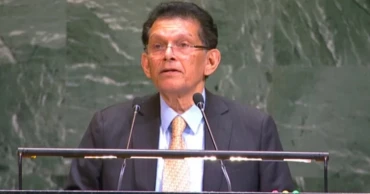
Dhaka hopes New Delhi won't undermine any pillar of state again: FM
Seeking an enabling environment to take forward relations with India, Foreign Minister Dr Khalilur Rahman on Monday said Bangladesh wants all countries across the world to respect the entire structure of the state, and he believes India has understood Bangladesh’s concerns.
“My impression, after speaking with them, is that they have understood it. We hope they will not do anything to undermine any pillar of our state again. This is our expectation, and based on my conversations with them, I am somewhat reassured that this incident will not be repeated," he told reporters at the MoFA, referring to convicted former Prime Minister Hasina’s recent press appearance in New Delhi virtually.
Dr Khalilur said a state has three pillars - Executive, Legislative, and Judiciary - and for convicted Hasina, her place is within the judiciary.
Explaining Bangladesh’s position, the foreign minister said Sheikh Hasina has been tried and convicted by a competent court and that any defence or legal response should be made through the judicial process.
“So what Hasina did on the 5th August was… she showed disrespect to the judiciary, one of the pillars of the state. And the Indian government allowed that to happen,” Khalilur said.
He also clarified that an invitation was extended and addressed to the Chairperson of BIMSTEC. "Please try to understand this distinction."
“Prior to that, the Prime Minister of India, Narendra Modi, wrote a letter to our Prime Minister Tarique Rahman, which was handed over on the day our government was formed. He extended an invitation there,” he said.
“There is an invitation. We will look into it at an appropriate time,” he added.
Pressed on whether Bangladesh would accept either invitation, the foreign minister said, “We have not taken any policy decision on this matter yet.”
Briefing the reporters on the outcome of the courtesy meeting between the Prime Minister and Indian High Commissioner to Bangladesh Dinesh Trivedi, Dr Khalilur said Bangladesh urged India to expedite the extradition of convicted former Prime Minister Sheikh Hasina and hand over the suspected killers of Shaheed Osman Hadi to Bangladesh as early as possible.
"We asked them to expedite this extradition process. We hope India will respond positively in this regard,” the foreign minister said.
Bangladesh also hoped that the issue that emerged on August 5 following Hasina’s virtual press appearance would not be repeated, as Dhaka wants an enabling environment to take forward bilateral relations.
Regarding the Hadi issue, the Foreign Minister said Bangladesh has provided all the documents to India and expects the quick extradition of his suspected killers from India.
“This is an extremely sensitive issue for us as well. We requested that these killers be extradited to us as quickly as possible,” he added.
Dr Khalilur said matters such as river management and other substantive bilateral issues are not usually discussed during a courtesy meeting.
Asked about India’s reaction to Bangladesh’s position concerning Sheikh Hasina’s activities on August 5, the foreign minister said New Delhi had understood the seriousness of the matter.
“No, regarding August 5th, we have clearly stated our position. The Indian authorities have understood its importance with gravity,” Dr Khalilur said.
“They told me this yesterday (Sunday), and they told the Prime Minister today as well,” he added.
Dr Khalilur said the Indian High Commissioner also shared his experiences in Bangladesh over the past few weeks with the Prime Minister and “expressed his immense pleasure at being in Bangladesh.”
Bangladesh on Friday said it desired to maintain a constructive, mutually beneficial, and forward-looking relationship with India based on sovereign equality, mutual respect, non-interference in each other's internal affairs, and national dignity.
"Regrettably," the Ministry said, "Bangladesh’s repeated requests to the government of India for returning convicted criminal Hasina to Bangladesh under the Extradition Treaty signed between Bangladesh and India in 2013 have not yet elicited a response."
"On the contrary, allowing her the opportunity to openly interact with the media under any pretext is deeply hurtful to our people’s sentiments and detrimental to the development of harmonious bilateral relations between Bangladesh and India," said the Ministry.
Bangladesh was outraged that the absconding "convicted genocider" Sheikh Hasina was allowed this evening to engage in a live interaction with the media in New Delhi, where she and her henchmen launched venomous vitriol against Bangladesh and its people.
2 months ago
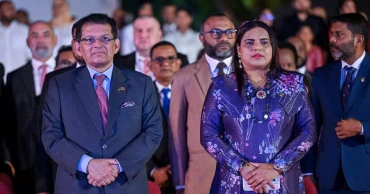
Dhaka, Malé reaffirm enduring friendship, enhanced bilateral collaboration
Bangladesh and the Maldives have reaffirmed their longstanding friendship, underscoring the strong people-to-people ties and close cooperation that have formed the foundation of their bilateral relationship over the years.
During the first official visit of Foreign Minister Dr Khalilur Rahman to Malé from July 25 to 27, the two countries reviewed their existing bilateral cooperation and discussed opportunities to further strengthen collaboration in areas of mutual interest, including health, education, trade and investment, tourism, labour and human resource development, and cooperation in regional and multilateral fora.
The two countries also exchanged views on regional and international developments and reaffirmed their shared commitment to enhancing cooperation in support of the mutual interests and prosperity of both nations.
Foreign Minister Dr Khalilur attended the 61st Independence Day Parade of the Republic of Maldives on Sunday at Republic Square in Malé as the special guest of the Government of Maldives.
He was received at the venue by Maldives Foreign Minister Iruthisham Adam.
The parade featured a ceremonial march-past and impressive displays by various branches of the Maldives National Defence Force, showcasing the country's discipline, heritage and national pride on the occasion of the 61st anniversary of the Independence of the Republic of Maldives.
Following the parade, Dr Khalilur attended a vibrant cultural programme highlighting the rich traditions and cultural heritage of the Maldives.
The Independence Day celebrations concluded with a spectacular fireworks display, the Ministry of Foreign Affairs said on Monday.
He also planted a Christina (Syzygium campanulatum) tree at Lonuziyaarai Park in Malé under the Five Million Trees Project launched by President Dr Mohamed Muizzu.
3 months ago
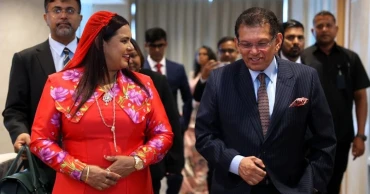
FM Khalilur’s visit sets stage for enhanced cooperation in years ahead: Maldives
Foreign Minister Dr Khalilur Rahman arrived in the Maldives on Saturday to pay an official visit, which is seen as a ‘significant milestone’ in further strengthening the longstanding and cordial relations between Bangladesh and the Maldives.
“The visit sets the stage for enhanced cooperation in the years ahead,” said the Ministry of Foreign Affairs of the Maldives.
Dr Khalilur was received by the Minister of Foreign Affairs of the Republic of Maldives, Iruthisham Adam, and senior officials of the Ministry of Foreign Affairs.
The Foreign Minister is visiting the Maldives from July 25-27 as a ‘special guest’ of the government of Maldives to attend the celebrations marking the 61st anniversary of the Independence of the Republic of Maldives.
3 months ago
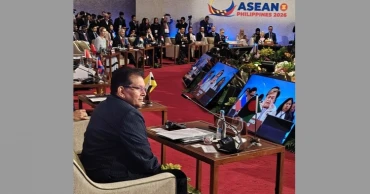
It’s a political failure demanding political solution, says FM about Rohingya crisis
Foreign Minister Dr Khalilur Rahman on Thursday called upon ASEAN Regional Forum (ARF) participants to collectively support efforts to create conducive conditions in Myanmar to facilitate repatriation of more than 1.3 million Rohingyas to their homeland in Rakhine State.
"The Rohingyas are not stateless people by circumstance - they are stateless by design. It is a political failure demanding a political solution,” he said while addressing the 33rd ASEAN Regional Forum (ARF) Ministerial meeting in Manila, Philippines.
Referring to his upcoming Presidency of the 81st Session of the United Nations General Assembly, the Foreign Minister stressed that global challenges must be resolved through dialogue and diplomacy.
Adviser to the Prime Minister Humaiun Kobir was also present at the meeting
Bangladesh is hosting the Rohingyas for nearly a decade that placed significant social, economic, environmental and security burdens on Bangladesh, a senior official told UNB.
The official said Bangladesh keeps urging the international community and key regional actors to intensify diplomatic efforts and engagement to facilitate the early repatriation of the Rohingyas to Myanmar.
Dr Khalilur called on all states to exercise maximum restraint in addressing maritime disputes.
Addressing climate change challenges, the Foreign Minister noted that Bangladesh remains committed to promoting enhanced regional cooperation in disaster preparedness and early warning systems.
Highlighting the opportunities and risks associated with artificial intelligence and emerging technologies, he proposed exploring a regional technology governance framework that reflects the region's unique geopolitical and developmental realities.
The Foreign Minister held bilateral meetings with the Foreign Ministers of Singapore, Sri Lanka and Australia and the Vice President of European Commission.
In the meetings, wide range of bilateral and multilateral issues including trade and investment, tourism, humanitarian assistance, reciprocal support in multilateral fora were discussed.
The ministers congratulated Foreign Minister Dr Khalilur on his election as President of 81st UN General Assembly and assured him of their cooperation during his tenure.
Indian External Affairs Minister Dr S Jaishankar on Thursday met Foreign Minister Dr Khalilur and exchanged pleasantries on the margin of ASEAN Regional Forum Foreign Ministers Meeting.
"Foreign Minister of Bangladesh Dr. Khalilur Rahman and Minister of External Affairs of India Dr. S. Jaishankar greeted each other in Manila on the margin of ASEAN Regional Forum Foreign Ministers Meeting," said an official at the Ministry of Foreign Affairs.
During his meeting with Dr Khalilur, Singapore’s Foreign Minister Vivian Balakrishnan said Singapore and Bangladesh share a longstanding friendship anchored in mutual respect, shared interests, and strong people-to-people ties.
“We discussed how we can deepen bilateral cooperation and work together in ASEAN to create new opportunities for growth and development in Bangladesh and across the wider Indian Ocean region,” he said after the meeting.
Dr Khalilur met with Sri Lanka's Minister of Foreign Affairs, Foreign Employment and Tourism, Vijitha Herath.
The two Ministers discussed strengthening Bangladesh-Sri Lanka bilateral relations, expanding trade and investment, enhancing regional cooperation, and reaffirming their shared commitment to multilateralism, as well as peace, stability, and prosperity in the region.
Dr Khalilur on Wednesday held a series of high-level bilateral engagements with his counterparts from the US, Russia, China and Pakistan on the sidelines of the ASEAN Regional Forum (ARF) Foreign Ministers’ meeting in Manila, highlighting Bangladesh’s continued efforts to strengthen diplomatic relations with key international partners.
During the meetings, the Foreign Minister exchanged views on issues of mutual interest, including economic cooperation, trade and investment opportunities, and matters of shared concern on the global stage, a diplomatic source told UNB.
Dr Khalilur is leading the Bangladesh delegation to the 33rd ASEAN Regional Forum Foreign Ministers’ meeting and the 50th Anniversary of the Treaty of Amity and Cooperation of Southeast Asia.
3 months ago
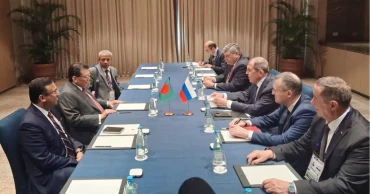
Dhaka eyes enhanced cooperation with key international partners
Foreign Minister Dr Khalilur Rahman on Wednesday held a series of high-level bilateral engagements with his counterparts from the US, Russia, China and Pakistan on the sidelines of the ASEAN Regional Forum (ARF) Foreign Ministers’ meeting in Manila, highlighting Bangladesh’s continued efforts to strengthen diplomatic relations with key international partners.
During the meetings, the Foreign Minister exchanged views on issues of mutual interest, including economic cooperation, trade and investment opportunities, and matters of shared concern on the global stage, a diplomatic source told UNB.
Dr Khalilur is leading the Bangladesh delegation to the 33rd ASEAN Regional Forum Foreign Ministers’ meeting and the 50th Anniversary of the Treaty of Amity and Cooperation of Southeast Asia.
Adviser to the Prime Minister for Foreign Affairs Humaiun Kobir accompanied the Foreign Minister in the meetings.
These meetings covered a broad spectrum of bilateral relations, including trade, investment, energy and connectivity, as well as regional and international issues, said the Ministry of Foreign Affairs.
During these meetings, the Bangladesh side underlined that the ‘Bangladesh First’ policy will guide Bangladesh’s external relations.
3 months ago
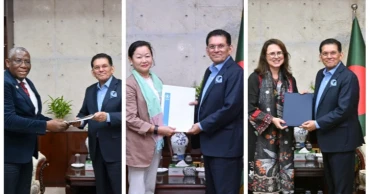
Bangladesh seeks deeper cooperation with PPD, WFP, IOM
Welcoming newly appointed representatives of PPD, WFP and IOM, Foreign Minister Dr Khalilur Rahman on Thursday underscored Bangladesh’s interest in deepening cooperation with their organizations across shared development and humanitarian priorities, and wished them success in their assignments.
Three newly appointed heads - Professor Joseph Akinkugbe Adelegan, Executive Director of the Partners in Population and Development (PPD) Secretariat; Coco H. Ushiyama, Country Representative of the World Food Programme (WFP) Bangladesh; and Dr. Laura Nicole Tomm-Bonde, Chief of Mission of the International Organization for Migration (IOM) Bangladesh, presented their credentials to the Foreign Minister at the Ministry of Foreign Affairs.
All three newly appointed representatives congratulated Foreign Minister Dr Khalilur on his election as president of the eighty-first session of the United Nations General Assembly.
They expressed their appreciation for Bangladesh’s long-standing partnership with their respective organizations and reaffirmed their commitment to further strengthening cooperation with the Government of Bangladesh in advancing shared priorities.
During the meeting with Prof Adelegan, the Foreign Minister appreciated the important role of PPD in promoting reproductive health, family planning, maternal and child health, and expressed confidence that PPD would further strengthen its contribution to sustainable development and population-related initiatives.
In his meeting with Ushiyama, the Foreign Minister commended WFP’s long-standing partnership with Bangladesh in the areas of food security, nutrition, school feeding, and humanitarian assistance.
He appreciated WFP’s continued support for the Forcibly Displaced Myanmar Nationals and the affected host communities in Cox’s Bazar and Bhasan Char and underscored the importance of sustained international support for the Rohingya response.
With Dr. Tomm-Bonde, the discussion focused on how Bangladesh and IOM could work more closely to strengthen public education and market-relevant skills for prospective migrants, improve data systems throughout the migration cycle, expand safe and regular pathways, and prevent irregular migration through awareness campaigns.
The Foreign Minister appreciated IOM’s contribution to implementation of the Global Compact for Migration, the humanitarian response for the Rohingyas in Cox’s Bazar, and assistance to Bangladeshi nationals stranded in crisis-affected countries.
Dr. Tomm-Bonde thanked the Foreign Minister for the warm reception, praised Bangladesh’s leadership in advancing safe, orderly and regular migration.
4 months ago
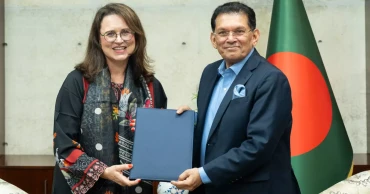
IOM to support Bangladesh in enhancing regular migration pathways
Newly appointed Chief of the International Organization for Migration (IOM) in Bangladesh Dr Laura Tomm Bonde on Thursday reaffirmed IOM’s readiness to support Bangladesh in enhancing regular migration pathways and advancing whole-of-government and regional approaches to climate mobility.
Presenting her credentials to Foreign Minister Dr Khalilur Rahman, she talked about climate-induced displacement and disaster risks stemming from Bangladesh’s exposure to climate shocks such as floods, cyclones, droughts, and salinity intrusion.
“I sincerely welcome Dr Laura Tomm Bonde to Bangladesh as the Chief of Mission and look forward to continuing the strong partnership between the Government of Bangladesh and IOM,” said the Foreign Minister.
Dr Bonde assumes her role at a pivotal time, as Bangladesh navigates diverse migration dynamics from expanding opportunities for safe and regular labour migration to hosting over one million Rohingyas who fled violence in Myanmar, one of the largest protracted displacement situations globally.
A Canadian citizen, Dr Bonde previously served as IOM Chief of Mission in Mozambique for six and a half years, said the UN agency.
“The overall migration landscape in Bangladesh is highly dynamic and presents both opportunities and challenges,” said Dr Bonde.
“I look forward to working closely with the Government to ensure that the migrants’ rights are protected and that migration contributes meaningfully to sustainable development through well governed and inclusive migration systems,” she added.
The new IOM Chief of Mission reaffirmed the Organization’s continued commitment to supporting the Government of Bangladesh across the full migration cycle, including strengthening safe and regular labour migration, enhancing health and pre-departure services, reinforcing border governance, and supporting protection and reintegration for vulnerable migrants.
She underscored IOM’s continued prioritization of the Rohingya response, delivering life-saving assistance and supporting affected host communities in Cox’s Bazar.
4 months ago
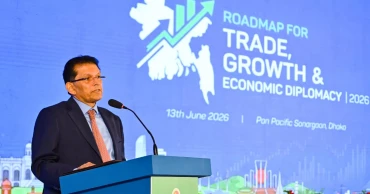
FM shares strategic vision to make Bangladesh most competitive investment destination in South Asia
Foreign Minister Dr Khalilur Rahman on Saturday said the government is fully committed to implementing deep, structural reforms to improve the ease of doing business stressing that the government holds the political will and strategic vision to make Bangladesh the most competitive investment destination in South Asia.
"Our government possesses the political will, the strategic vision, and the unwavering commitment to make Bangladesh the most competitive investment destination in South Asia," he said while describing the local business community as primary strategic partners.
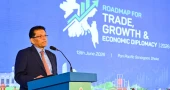
Speaking at the high-level conference titled “Roadmap for Trade, Growth & Economic Diplomacy 2026: Navigating Risks, Leveraging Resilience” in a city hotel, the Foreign Minister and President-elect of the 81st UN General Assembly said they view every foreign ambassador, not just as a diplomat, but as a crucial partner of their development.
"We view every business leader here, not just as an investor, or a taxpayer, but a stakeholder in our national success," he added.
Organised by the Ministry of Foreign Affairs in collaboration with the Bangladesh Investment Development Authority (BIDA), the conference brought together senior government leaders, heads of diplomatic missions, development partners, and representatives from the private sector to chart a forward-looking agenda for Bangladesh’s economic engagement.
Local Government, Rural Development and Cooperatives Minister Mirza Fakhrul Islam Alamgir, Finance Minister Amir Khosru Mahmud Chowdhury, State Minister for Foreign Affairs Shama Obaed Islam, Prime Minister’s Foreign Affairs Adviser Humaiun Kobir, Prime Minister’s Adviser on Education Mahdi Amin, BIDA Executive Chairman Chowdhury Ashik Mahmud and Foreign Secretary Asad Alam Siam, among others, spoke at the event.
The Foreign Minister said they must remain connected. "We must remain in dialogue. We must get feedbacks from you.... work with us as we rebuild trust and unlock the true vibrant potential of Bangladesh."
Today, faced with the energy crisis and developments in the international trade, finance and technology, Foreign Minister Dr Khalilur said Prime Minister Tarique Rahman also has a clear vision to transform the challenges to new opportunities with three key goals: stabilise, reform and elevate.
"We need to convert his vision into concrete action as it comes to our work on economic and trade diplomacy," he said.
As the new government begins its work, Dr Khalilur said they have before them the challenge of redesigning their international economic engagements against the backdrop slowing global economic and trade growth, geopolitical tensions, trade policy uncertainties, calamites rising trade barriers and structural shifts in supply chains.
Moreover, the ongoing energy crisis has added a new layer of complications, he said.
"We are not immune to these developments, which have crucial implications for our approaches to overall policy making, in general, and economic diplomacy, in particular," said the Foreign Minister.
This is the very reason why the Ministry of Foreign Affairs and the Bangladesh Investment Development Authority (BIDA) decided to organise today's event that brings together our partners and stakeholders for open and purposeful deliberations with a view to helping informed policymaking, he said.
"The challenges we face are critical. The growth prospects in our major markets remain in the positive territory but at a moderate level. This is likely to translate into sluggish consumer demand, which will affect our exports to these markets," Dr Khalilur said.
He said they will need to compete ever more fiercely in order to maintain and expand our export position.
Secondly, he said, financial markets and institutions are increasing affecting production of goods and services.
"Trade flows have become increasingly susceptible to movements in interest rates or changes in investor sentiments," Dr Khalilur said.
Countries like Bangladesh find it harder to raise capital, pay significantly higher borrowing costs and remain acutely vulnerable to swings in market sentiment, said the Foreign Minister.
While advanced economies are able to borrow at roughly 1-4%, the rate for emerging developing countries range typically from 6-12% or even higher.
"Thus, our access to affordable and secure financing remains significantly restricted," the Foreign Minister said.
Like many other developing countries, Bangladesh remains acutely susceptible to factors such as currency volatility, shifts in risk-taking appetite and financial volatility, said the Foreign Minister.
Thirdly, he said, climate vulnerability has introduced another difficulty in access to finance.
According to UNCTAD, which recently carried out an Investment Policy Review of Bangladesh, some climate-vulnerable countries are paying an extra 20 billion dollar annually in interest due to their climate risk.
"External debt and climate crisis are become intertwined," said the Foreign Minister.
Fourthly, he said, the ongoing energy crisis has already caused them to spend more on imported fuel. "Increased fuel prices directly affect our cost of production and competitiveness."
"By taking away critical funding that would have gone for development activities, we are likely to witness second round effects of the crisis in the form of reduced funding for development in the years to come," the Foreign Minister said.
The International Energy Association opined that the scope of the current energy crisis could be larger than that of the twin oil shocks of the 1970s, which was a major cause for the 1980s to become a lost decade of development for many developing countries.
The Foreign Minister said trade tech, which is the intersection of trade, investment and technology, is fast redefining the global economy and trade by making cross border transactions quicker and more efficient through the increasing use of innovations like AI, Internet of Things, Blockchain and 5G.
"This poses both a challenge and an opportunity depending on how quickly and effectively countries can take advantage of the fast moving Trade Tech landscape," he said.
The conference featured three thematic sessions: 1. The Policy Compass – Advancing Trade & Investment, focusing on policy predictability, market access, and investor confidence, 2 Capital for Growth – Finance, Commerce and Trade, addressing financing reforms and investment mobilisation, 3 The New Stage - Government Policy, AI, Creative Industries and Sport, exploring emerging growth sectors and diversification opportunities.
The “Roadmap for Trade, Growth & Economic Diplomacy 2026” was held at a critical juncture of global transitions, risks and uncertainties.
The event aims to foster greater coordination between policy and implementation, enhance Bangladesh’s economic diplomacy, and build stronger partnerships with the international community.
4 months ago