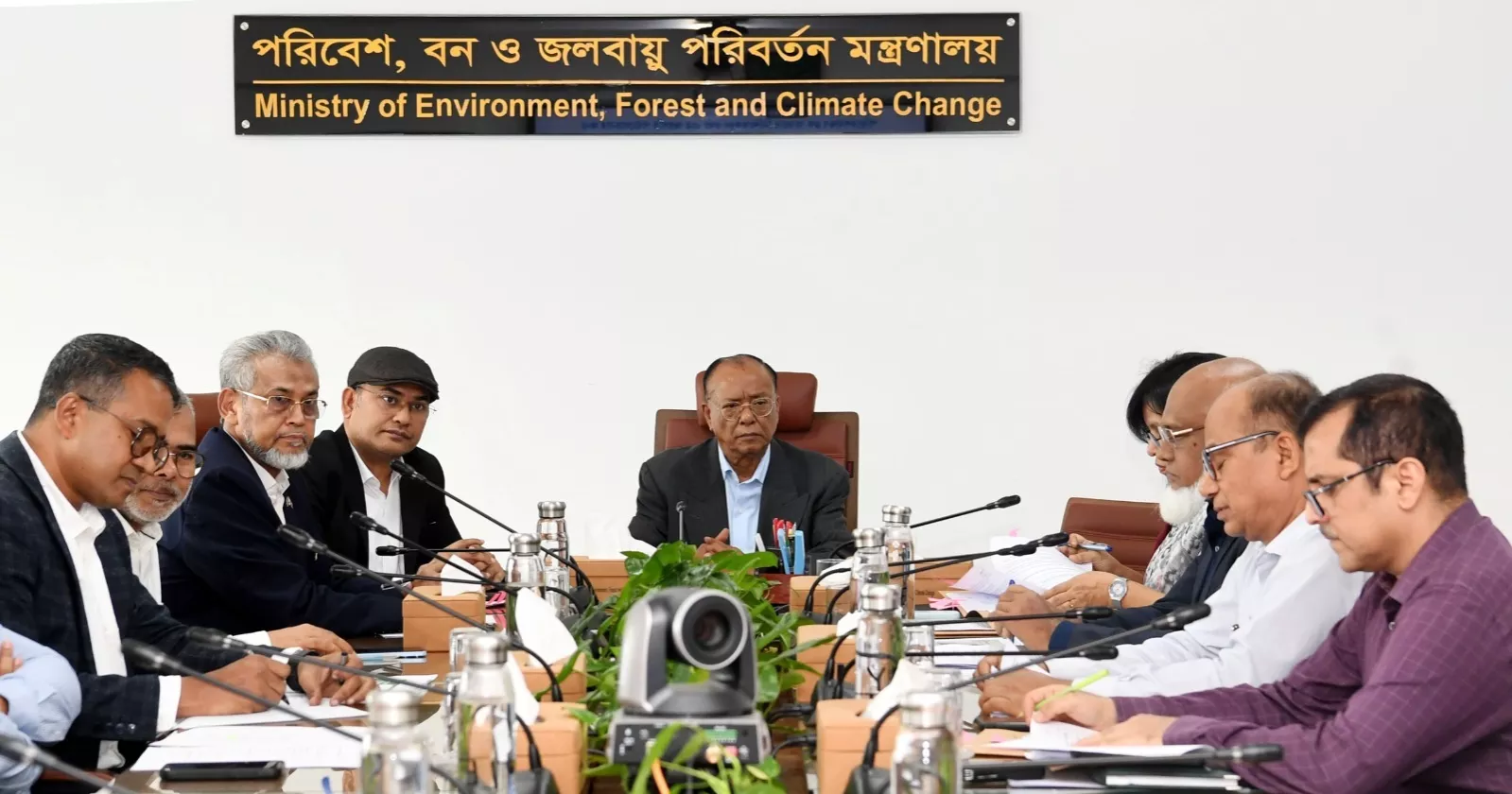
Environment, Forest and Climate Change Minister Abdul Awal Mintoo on Sunday said the government will prioritise the use of concrete blocks over traditional bricks in public construction projects and explore ways to further expand their use.
“To protect agricultural land fertility, reduce air pollution and carbon emissions, and build a sustainable construction system, all ministries, government engineering departments, manufacturers and other stakeholders must work together in a coordinated manner, balancing environmental protection with the practical needs of the construction sector,” he said.
Mintoo made the remarks while presiding over two separate meetings at the ministry’s conference room on promoting eco-friendly construction materials, reviewing the use of blocks in government projects and addressing issues facing the brick industry.
Prime Minister Tarique Rahman supports increased investment while protecting the environment, his Special Assistant on Environment, Forest and Climate Change Affairs Saimum Parvez, who was present as a special guest, said, urging brick kiln owners to adopt eco-friendly technologies as soon as possible.
The first meeting reviewed progress in ensuring the use of eco-friendly blocks in government construction, repair and renovation work. Representatives of various ministries and divisions, government engineering departments, the Department of Environment, the Housing and Building Research Institute (HBRI) and the Bangladesh Concrete Block Manufacturer Owners’ Association attended the meeting.
Participants discussed proposals to rationalise customs duties and taxes on imported raw materials, reduce VAT at the production stage, allow VAT rebates on raw material purchases and provide incentives for recycling industrial and construction waste. They stressed the need to pursue these proposals with the National Board of Revenue (NBR).
The meeting also discussed involving the Public Works Department and other government engineering offices, along with HBRI, in quality control and monitoring, as well as providing training to engineers, technicians and masons to ensure the quality of blocks.
The second meeting discussed issues facing the brick industry with representatives of the Bangladesh Brick Manufacturing Owners’ Association and the Bangladesh Auto Brick Manufacturers’ Association, including environmental compliance, raw materials and fuel use, and the transition to more eco-friendly and modern production systems.
The meeting called for concerted efforts to reduce the environmental impact of conventional brick kilns, legal action against illegal kilns, discourage the use of agricultural topsoil in brick-making and expand modern, technology-driven automatic brick and eco-friendly block production to control pollution.
Brick industry representatives also shared their views and proposals on the sector’s challenges, potential and the policy support needed.