The latest instalment in the Subodh series by the Bangladeshi guerilla artist HOBEKI? appeared on Tuesday, June 30 - only this time across the border for the first time, in the mountainous Indian state of Sikkim.
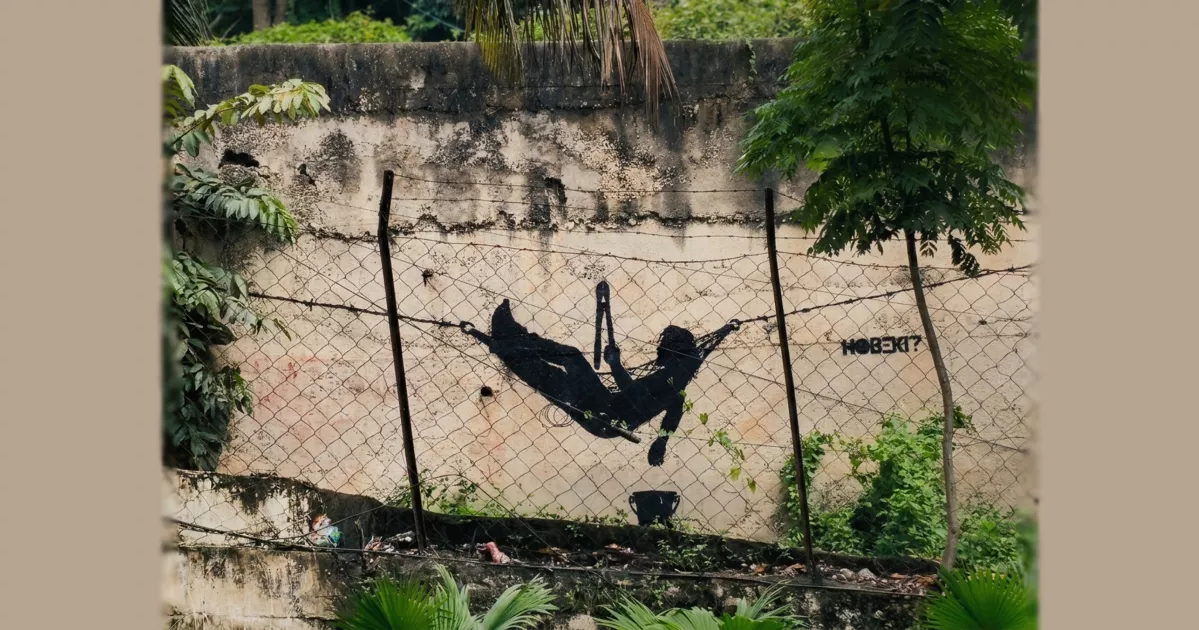
The stencilled graffiti, executed in HOBEKI?’s distinctive style on the concrete south-west wing wall of Majitar Nala Bridge, on the famous Gangtok-Rangpo Road in Sikkim. Rangpo is known as the Gateway to Sikkim.
It measures approximately 20 x 12 ft and carries the artist’s name tag, HOBEKI?, on the right side. According to art agency ARTCON, the work remains visible and has been confirmed through HOBEKI?’s Instagram page, as well as ARTCON’s ongoing documentation of the artist’s practice.
The location is not accidental. Rangpo is widely known as a gateway town to Sikkim, situated near the West Bengal border and along the Teesta-Rangpo river corridor. It is one of the key entry points into Sikkim on the route toward Gangtok, where movement, arrival, documentation, and permission are already part of everyday life. That geography turns the graffiti into more than an image. It becomes a border event.
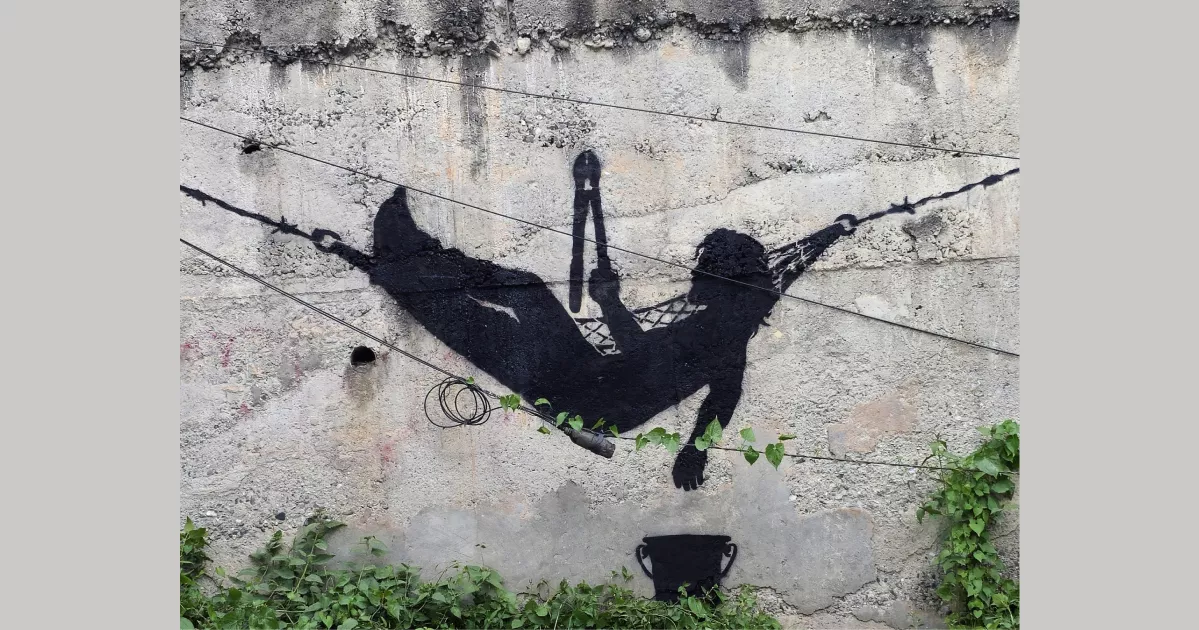
The work shows Subodh, HOBEKI?’s iconic bearded figure, in a strikingly altered posture. He is bare-bodied, with messy hair and tattered jeans, lying on a hammock. But the hammock is tied with barbed wire. In his right hand, Subodh holds up a wire cutter. His left arm hangs down toward a water bucket placed on the ground. At first glance, the scene appears relaxed, almost like a traveller resting after a long journey. But each object quietly complicates that calm.
For years, Subodh has been one of the most recognizable figures in Bangladesh’s contemporary street-art scene. Earlier Subodh series as stencil and spray-paint works showed a gaunt young man in tattered jeans, often running with a cage containing a bright sun.
These works were accompanied by messages urging him to flee, as if time, luck, and society itself had turned against him. The series has been read as socially ambivalent, politically ambiguous, and closely tied to anxieties around migration, censorship, despair, and public conscience.