Industry entrepreneurs, policymakers, and experts on Monday emphasized the urgent need for adopting artificial intelligence (AI), automation, Industry 4.0 technologies, and shifting toward high-value-added products to retain Bangladesh's global competitiveness in the post-LDC era.
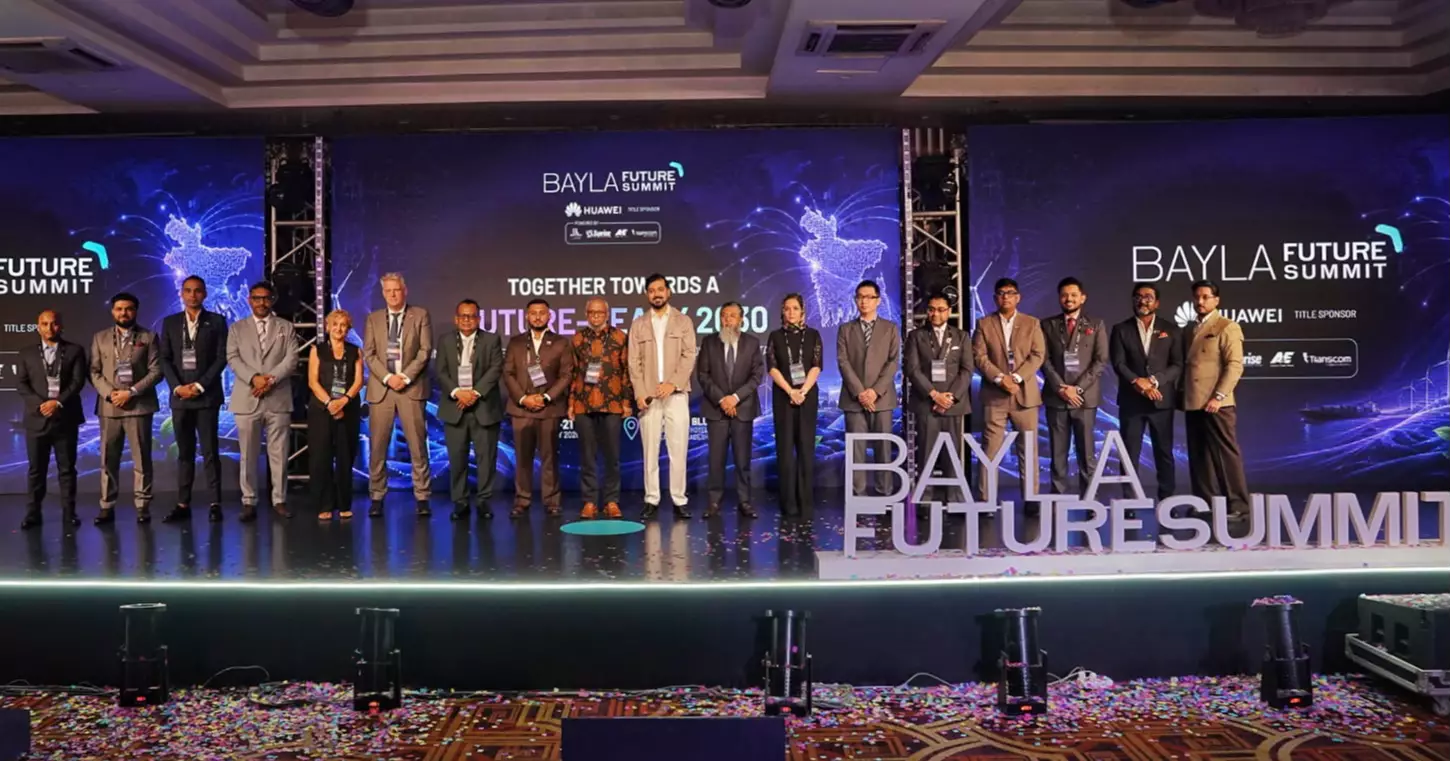
Speaking at the inaugural session of the two-day 'BAYLA Future Summit-2026' organized by the Bangladesh Apparel Youth Leaders Alliance (BAYLA) at a city hotel, speakers highlighted that Bangladesh’s future competitiveness will no longer rely solely on low production costs or preferential market access. Instead, productivity, innovation, tech-driven manufacturing, sustainable development, and value addition will be key to success.
Attending the event as the chief guest, Minister of Labour and Employment Ariful Haque Choudhury stressed the importance of nurturing a skilled, innovative, and responsible new generation of leaders to sustain long-term growth in the readymade garment (RMG) sector.
"To meet the demands of a tech-driven industry, upskilling and reskilling the workforce is the need of the hour. The government is working to ensure an industry-friendly environment by balancing the interests of both workers and owners," he said, adding that new policy initiatives are being taken to foster sustainable industrialization.
Mohammed Hatem, President of the Bangladesh Knitwear Manufacturers and Exporters Association (BKMEA), stated that survival in the near future will be difficult for garment factories without embracing AI. "Those who adopt digital transformation will lead the market," he noted, urging the youth to lead the sector toward tech-driven, sustainable growth.
Vidya Amrit Khan, Vice President of the Bangladesh Garment Manufacturers and Exporters Association (BGMEA), emphasized moving beyond merely executing buyer orders toward innovation, original design, brand development, and value addition.
She pointed out that while productivity-boosting technologies like AI and automation are essential, their effective utilization remains limited across many domestic factories. She also advocated for fashion education, local brand development, and bridging the gender gap in leadership roles.
Asif Ashraf, Managing Director of Urmi Group, underscored that rising wages and intense global competition leave no choice but to enhance productivity and efficiency. "AI will not replace humans, but those who use AI will replace those who do not," he remarked, emphasizing AI-enabled machinery, digital monitoring, and product diversification into technical and medical textiles.
BAYLA President Abrar Hossain Sayem urged young entrepreneurs to adopt an "AI and Industry 4.0 mindset" to thrive in evolving markets. He called for long-term green financing, modern supply chains, and consistent policy support to navigate post-LDC transition challenges.
Tanvir Ahmed, Director of Sheltech Group, and Nuria Lopez, Chairperson of the European Chamber of Commerce in Bangladesh (EuroChamb), highlighted market diversification, logistics reinforcement, and environmental compliance as crucial pillars for retaining EU and global market shares.
Delivering remarks at a session titled 'Expanding Beyond Manufacturing,' Simin Rahman, Group CEO of Transcom Limited, stated, "Global buyers do not just purchase garments; they buy compliance, sustainability, trust, innovation, and reliability from Bangladesh. Every product marked 'Made in Bangladesh' should symbolize excellence."