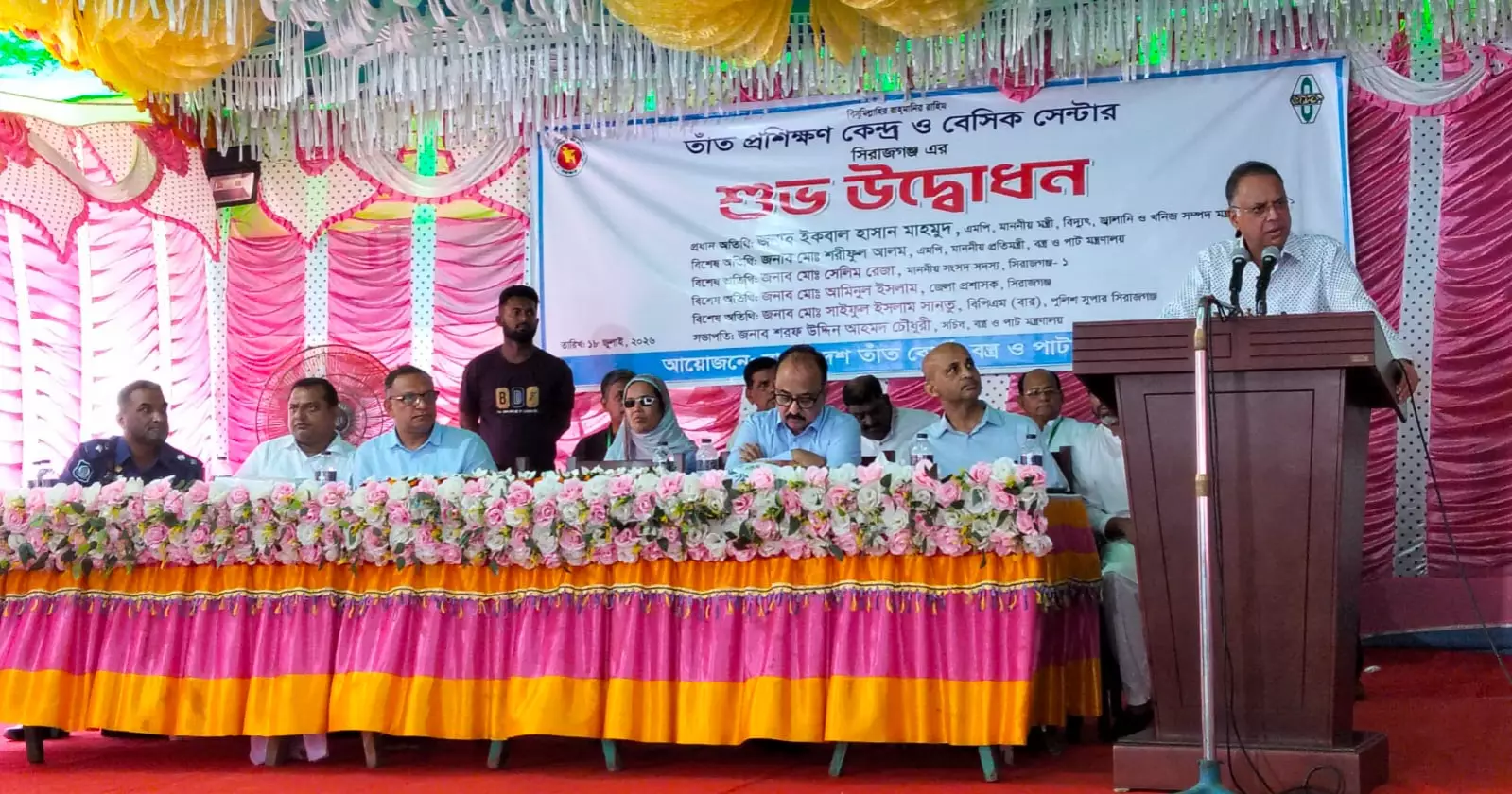
Power and Energy Minister Iqbal Hassan Mahmood on Saturday accused the former Awami League government of destroying Bangladesh’s once promising jute industry after independence, saying the sector had lost much of its potential due to years of neglect.
Speaking as the chief guest at the inauguration of a Weaving Training Centre and Basic Centre established by the Bangladesh Handloom Board in Sirajganj Sadar upazila, the minister said the country was now working to revive its traditional industries and create new employment opportunities.
State Minister for Jute and Textiles Shariful Alam attended the programme as the special guest.
Remembering those killed during the July movement, Iqbal Hassan Mahmood said their sacrifices had ensured a democratic environment where people were able to cast their votes freely.
“The government was elected through a free and fair election, and we want to build the country on that foundation,” he said.
Highlighting the historical importance of jute, the minister said the crop had been one of the major reasons behind the struggle with Pakistan, as people fought to secure their rights over the country’s valuable natural resource.
He alleged that after independence the Awami League government had ruined two important sectors, jute and tea, while Pakistan had made progress in the jute industry. He also said former President Ziaur Rahman had taken initiatives to revive the sector.
Referring to Sirajganj’s long-standing reputation as a handloom hub, the minister said the district’s traditional towels and lungis had survived, but its famous handloom sarees were gradually disappearing.
He urged efforts to restore the country’s weaving heritage and expressed hope that the newly inaugurated training centre would open new opportunities for local weavers by helping them acquire modern skills and become successful entrepreneurs.
The minister also encouraged parents to send their daughters to the training centre, saying Bangladeshi women were internationally recognised for their fine craftsmanship.
He said initiatives focusing on training, skills development and the use of modern technology were essential for generating employment and strengthening local economic activities.
Speaking on the occasion, State Minister for Jute and Textiles Shariful Alam said the new Weaving Training Centre and Basic Centre would play an important role in developing skilled human resources, expanding modern technology, promoting innovative designs and creating new entrepreneurs in one of Bangladesh’s key handloom-producing regions.
He said the training would enable young people and traditional weavers to improve their skills, create employment and establish businesses, while outlining the government’s broader plans for the development of the textile and handloom sectors.
Officials of the district administration, business representatives and political leaders also addressed the function.