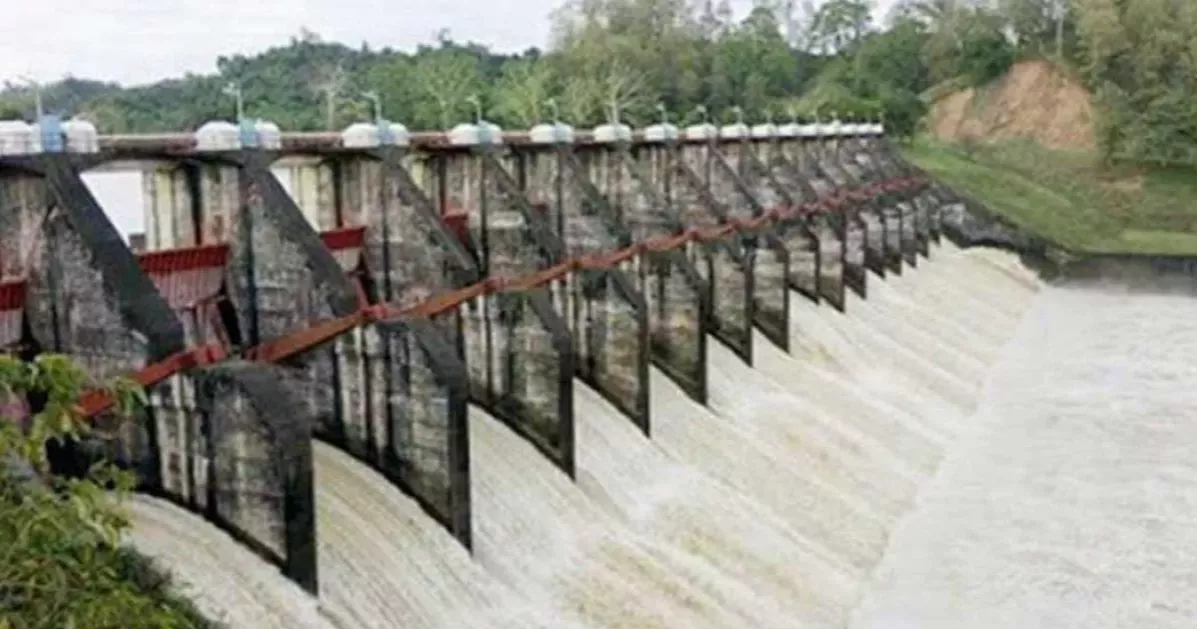
Power generation at the Karnaphuli Hydroelectric Power Station in Kaptai faces total suspension due to a sharp decline in the water level of the Kaptai Lake, with three of its five generating units remaining shut.
Production could be suspended entirely if substantial rainfall does not occur soon, officials said on Wednesday.
Currently, only two of the plant’s five units are in operation, generating a combined 58 megawatts (MW) of electricity, far below the facility’s maximum generation capacity of 240 MW.
Low water level in Kaptai Lake forces shutdown of 4 power units
Manager of the Karnaphuli Hydroelectric Power Station Engineer Mahmood Hasan said the water level in the Kaptai Lake has been falling steadily during the dry season.
Although the area experienced intermittent rainfall this week, it was insufficient to significantly improve the situation, he said.
According to the plant authorities, the lake’s water level stood at 73.91 feet mean sea level (MSL) as of 9:00am on Wednesday, against the rule-curve level of 78.34 feet MSL, leaving it 4.43 feet below the desired level.
Sources said the water level of 68 feet MSL is considered the danger threshold for power generation.
If the lake's water level falls to that mark, electricity generation at the hydroelectric plant will have to be suspended completely.
Kaptai Lake has a maximum water-holding capacity of 109 feet MSL.
Engineers on duty at the plant’s control room said Unit-2 was producing 30 MW and Unit-3 was generating 28 MW, bringing total power generation to 58 MW as of Wednesday morning.
Officials of the Bangladesh Power Development Board (BPDB) said the remaining units could not be brought back into operation unless the region receives heavy rainfall in the coming days.
The declining water level is also affecting thousands of people who depend on Kaptai Lake for transportation and livelihoods.
Residents of remote upazilas, including Belaichari, Barkal, Juraichari, Langadu and Baghaichhari, are facing growing difficulties as navigability in several parts of the lake has deteriorated due to the emergence of shoals.
Local sources said water transport services are being disrupted in many areas, increasing public suffering and adversely affecting trade and business activities.