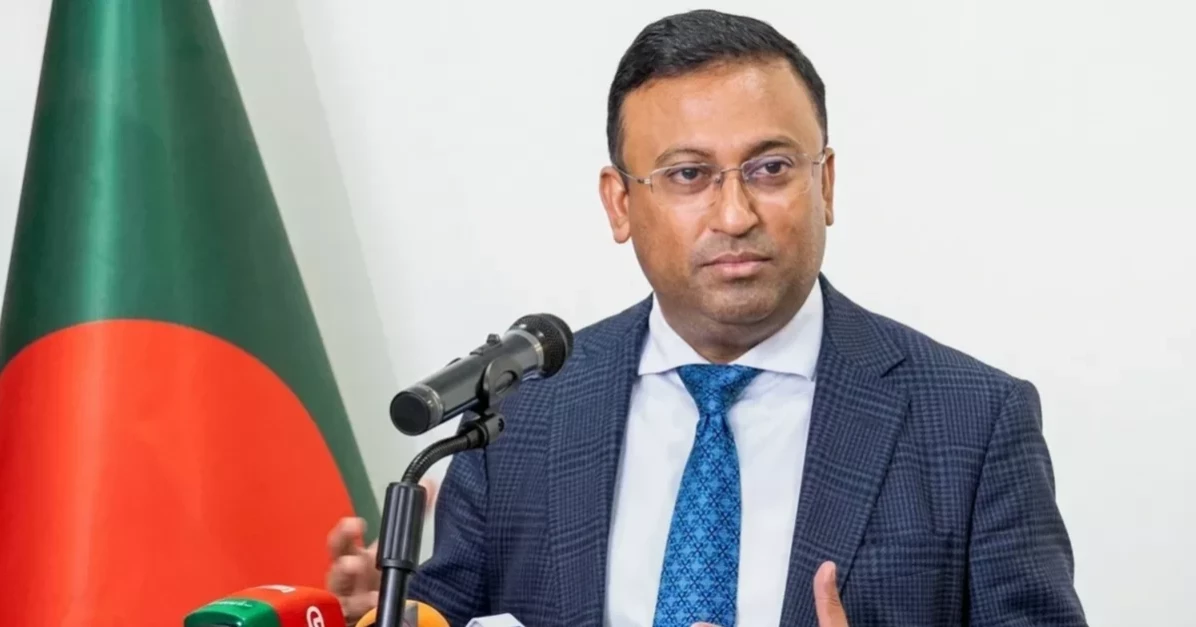
Marking the United Nations Day, Bangladesh has reaffirmed its unwavering commitment to the UN Charter, international cooperation and a rules-based multilateral order.
"Let us work together to restore trust, bridge divisions and build a world where peace, justice and prosperity are shared by all," said State Minister for Foreign Affairs Humaiun Kobir in a message on Saturday.
Bangladesh continues to host more than 1.3 million Rohingyas forcibly displaced from Myanmar.
"We call for sustained international support for their early and sustainable return to Myanmar," Kobir said.
He extended warm greetings to the UN and its Member States on the occasion of United Nations Day.
"United Nations Day reminds us of the enduring relevance of the UN Charter and the importance of collective action in addressing shared global challenges," Kobir said.
At a time of growing geopolitical tensions, armed conflicts, humanitarian crises and widening inequalities, multilateralism is not merely an option, it is an imperative, he said.
"We must renew our commitment to dialogue, peaceful settlement of disputes, sovereign equality and respect for international law," Kobir said.
The government of Bangladesh remains firmly committed to multilateralism.
"Under the leadership of Prime Minister Tarique Rahman, Bangladesh is determined to strengthen democratic governance, uphold human rights and the rule of law and promote accountable institutions," he said.
Kobir said the election of Bangladesh’s Foreign Minister as President of the 81st UN General Assembly underscores the Government’s renewed impetus for multilateral engagement.
Bangladesh’s contribution to the UN is rooted in action and solidarity.
"As one of the leading contributors to UN peacekeeping operations, our brave peacekeepers continue to serve in challenging environments around the world," Kobir said.
He said they remain committed to advancing women’s participation in peacekeeping and decision-making on peace and security.
"Our partnership with the UN extends to sustainable development, disaster resilience, poverty reduction, gender equality and humanitarian action," Kobir said.
As the international community pursues the 2030 Agenda for Sustainable Development, he said they must ensure that developing countries, least developed countries and climate-vulnerable nations receive finance, technology and capacity-building support they need.
"Bangladesh also supports a more representative, transparent and effective UN, including meaningful reform of the Security Council so that the Organization can respond to today’s realities and deliver for all;" he said.