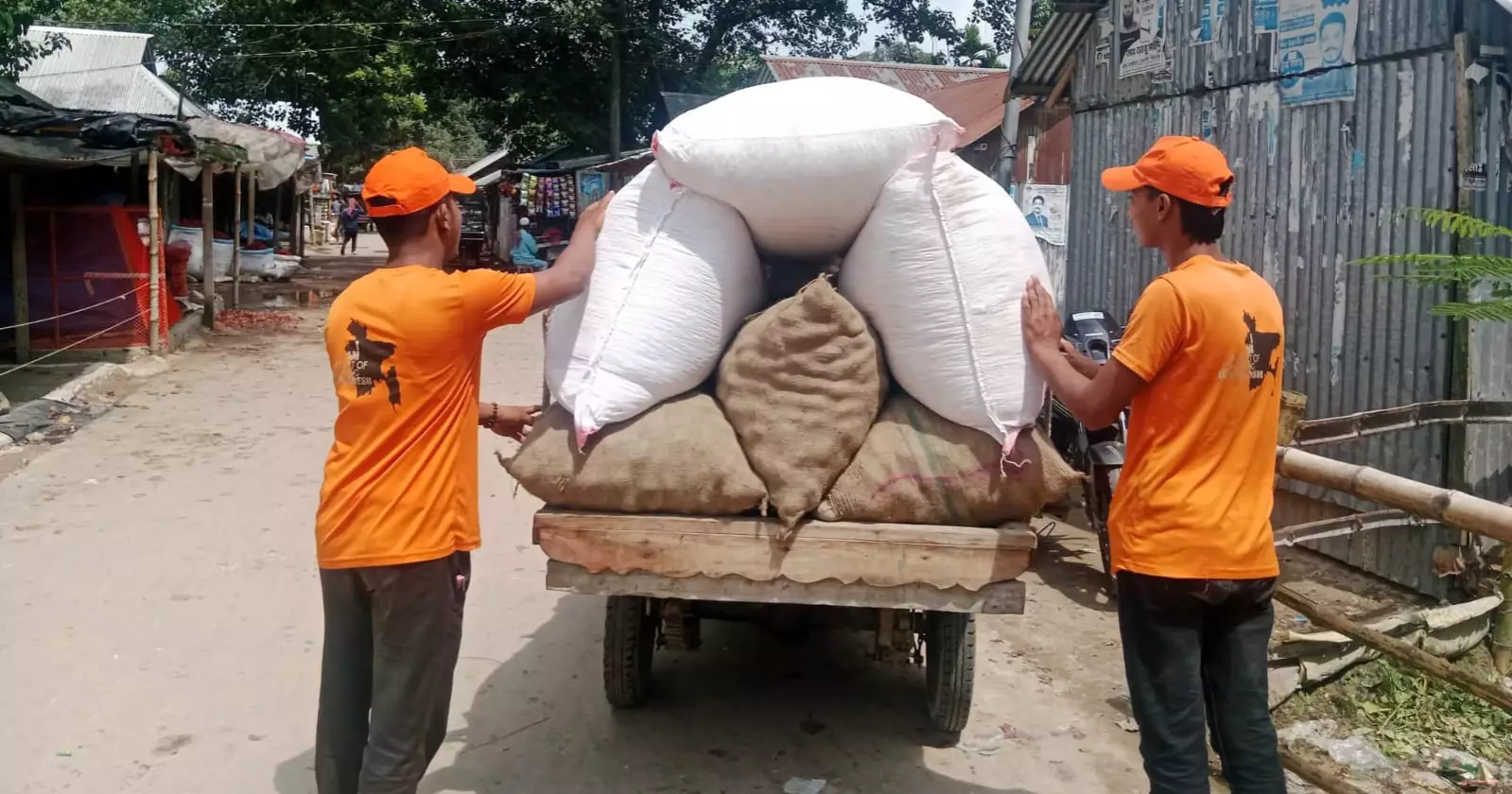
OBHIZATRIK Foundation on Sunday launched emergency flood relief operations in Bangladesh's flood-affected regions, distributing food, safe drinking water, medicines and relief packages to hundreds of families while introducing a nationwide volunteer network aimed at reaching remote communities that often remain beyond the reach of conventional relief efforts.
In the first phase, the foundation provided emergency assistance to 400 families in the worst-affected areas of Banshkhali upazila in Chattogram. Rescue boats are also being used to deliver aid to inundated and hard-to-reach localities.
Of the beneficiaries, 200 families received assistance with support from the Azmur Rokeya Rahman Trust, while the remaining 200 were assisted through the foundation's own funds.
The organisation said its volunteers in Kurigram district are preparing to deliver emergency food assistance to another 250 families on Monday in Bhurungamari and nearby char areas.
Before launching the relief operation, Obhizatrik spent four days organising local volunteers, collecting field-level information and identifying areas where relief had yet to reach, it said. Assistance is now being distributed based on verified assessments of the most vulnerable communities.
"We have been working in disaster response for the past 16 years. Our goal is to reach places where adequate assistance has not yet arrived," said Ahmed Imtiaz Jami, President of OBHIZATRIK Foundation
"From previous disasters, we have seen that while some locations receive relief multiple times, many remote communities remain completely deprived. That is why we prioritised field verification and information gathering through local volunteers before distributing aid," he said.
Jami said the organisation has launched the OBHIZATRIK National Volunteer Network (OVN) to strengthen nationwide disaster response.
Through the online platform, volunteers from across the country will be able to register and provide area-based updates, enabling better coordination and faster humanitarian response during future disasters, he said.
The foundation plans to continue providing emergency food assistance until floodwaters recede, after which it intends to focus on healthcare services, safe drinking water and long-term rehabilitation.
Jami said the organisation is currently not accepting public donations for the ongoing relief operation, which is being financed through its own resources and support from a donor organisation.
He added that discussions are underway with other development partners and donors, and that additional funding would enable the foundation to expand assistance to more flood-affected people across the country.