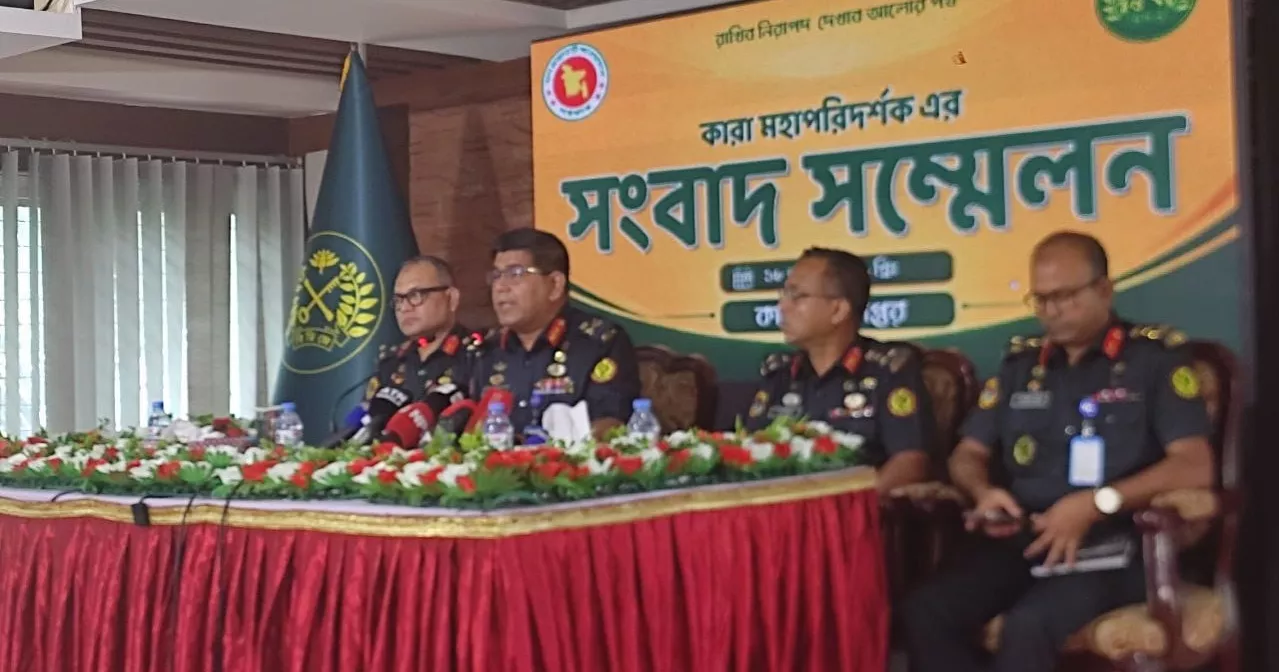
The Prisons Department is shifting its focus from punishment to correction and rehabilitation of inmates, with initiatives being taken to equip prisoners with skills, create work opportunities and help them reconnect with their families, Inspector General of Prisons Brigadier General Syed Md Motahar Hossain said on Tuesday.
“Prisons should not be seen merely as places of punishment. We are putting greater emphasis on correction and rehabilitation,” he said at a press conference at the Prisons Department headquarters in Old Dhaka.
As part of the initiative, prisoners are receiving training in 39 different trades to help them develop skills and prepare for life after release. Steps have also been taken to bring the training programmes under formal certification.
The IG Prisons said the department has also taken initiatives to create opportunities for inmates interested in education to sit for SSC and HSC examinations. The authorities have contacted the Ministry of Education in this regard and are considering using a prison as a study centre.
He said a soap-making factory has already been launched at Kashimpur Prison to make inmates productive and provide them with an opportunity to earn.
Prisoners are producing soap at the facility, which is later distributed among inmates in different prisons for their use. This is also helping the government reduce expenditure on purchasing soap from outside, he said.
The prisoners involved in soap production will be able to earn around Tk 5,000 to Tk 6,000 a month. After meeting their own expenses, they will be able to send part of their earnings to their families.
The IG Prisons said there is significant interest among inmates in such work, with around 20,000 prisoners having applied for the opportunities, far exceeding the number of available positions.
He said the income-generating activities would provide some financial support to prisoners' families while helping inmates develop productive skills.
Motahar Hossain said the initiatives introduced over the past two years are part of a broader, long-term programme to reform and modernise the prison system.
The Prisons Department is working to make prisons more modern, secure, technology-driven and humane, he said.
Among the initiatives are producing biofuel and biofertiliser from food waste, introducing cashless prisons and biometric systems, online meetings, AI-based CCTV surveillance, digital attendance, virtual courts and various work-oriented programmes for inmates.