State Minister for Foreign Affairs Shama Obaed Islam has emphasised the need to address underlying socio-economic factors, including poverty, social norms, school dropout rates and limited opportunities for girls, to end child marriage.
During a recent dialogue with UNICEF Executive Director Catherine Russell, Shama also discussed gender-based vulnerabilities arising from climate change, gender-based violence, including online violence against women, and juvenile delinquency.
She underscored the Government’s commitment to improving the quality of education and progressively increasing investment in education to 5% of GDP.
Nearly half (47.2 per cent) of women aged 20 to 24 in Bangladesh were married before the age of 18, according to the Bangladesh Multiple Indicator Cluster Survey 2025.
Child marriage drives girls out of school, fuels early pregnancy and limits their opportunities throughout life. UNICEF called for girls to complete secondary education and for loopholes in national law that permit child marriage to be closed.
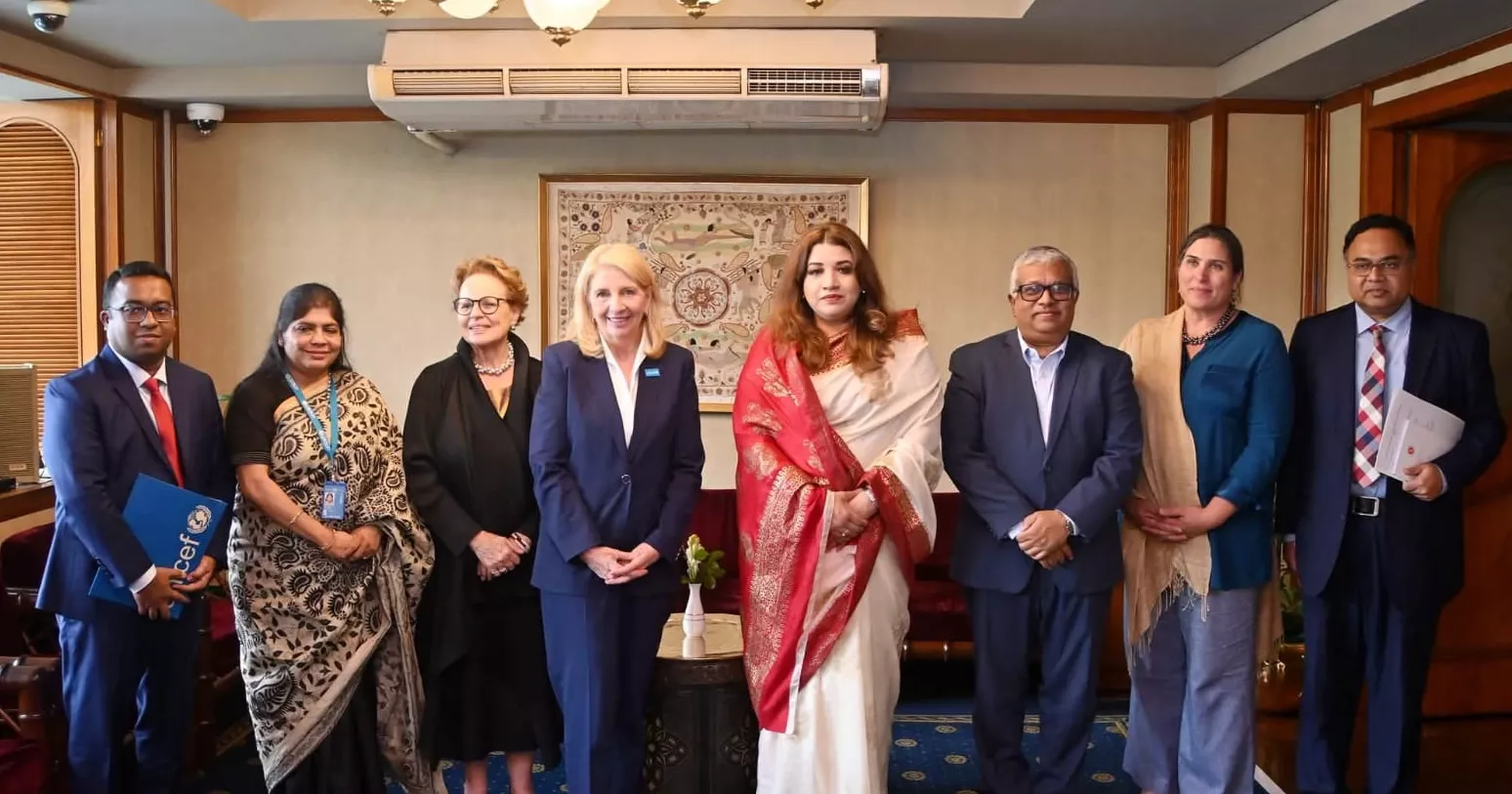
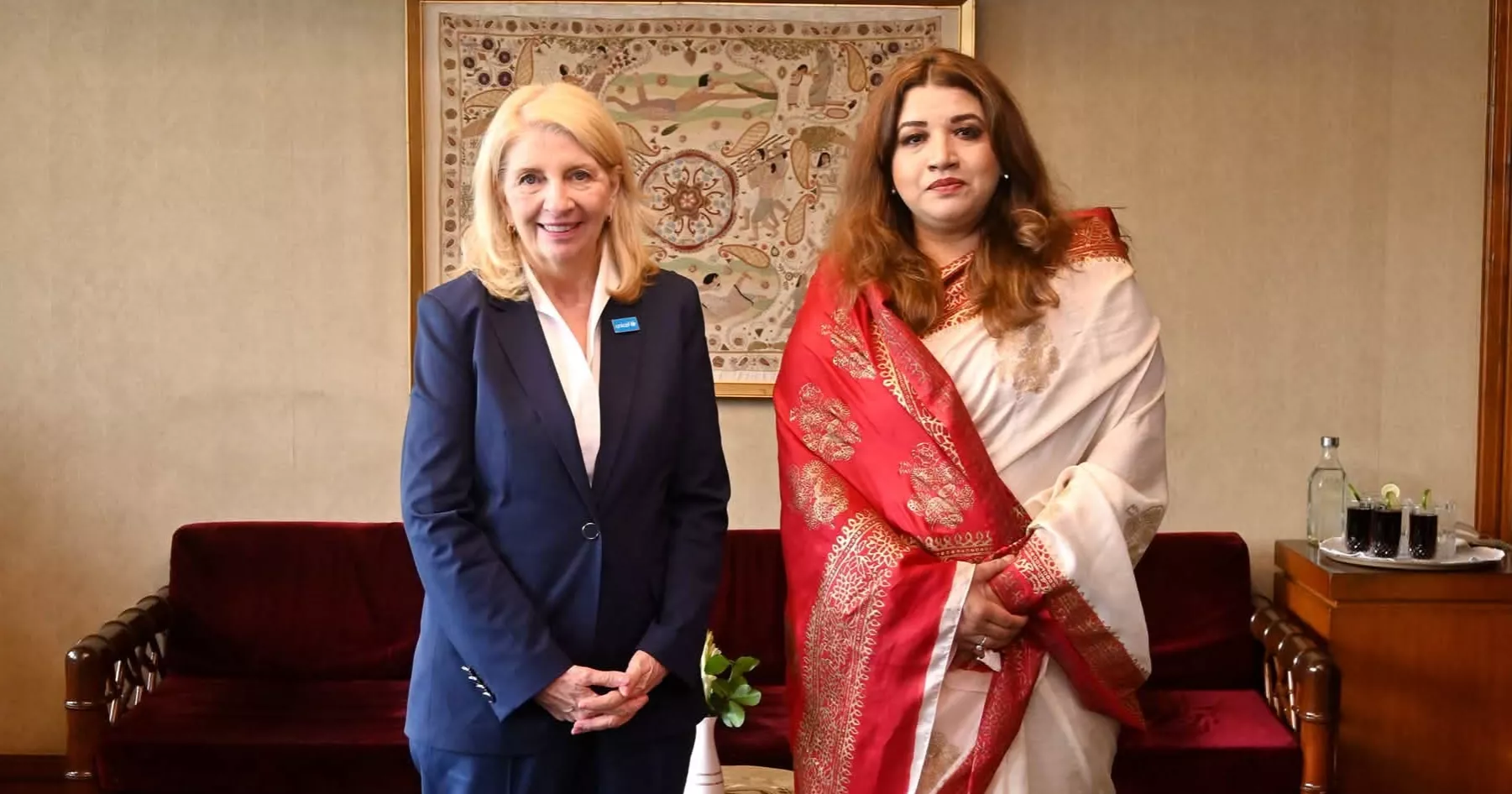
During a meeting with senior officials, including State Minister for Foreign Affairs Shama Obaed Islam, Russell welcomed the Government’s commitment to increasing spending on education and health while stressing the importance of translating promises into action.
“Budgets reflect priorities,” she said. “Investing in children’s quality education, health, nutrition and protection is investing in Bangladesh’s future.”
Russell was accompanied by UNICEF Country Representative Gillian Mellsop, Deputy Representative Emmanuelle Abrioux and Child Protection Specialist Shabnaaz Zahereen. Foreign Secretary Asad Alam Siam and Director General Kazi Ehsanul Haque accompanied the State Minister during the meeting.
The State Minister appreciated UNICEF’s contributions since Bangladesh’s independence and reaffirmed the Government’s commitment to building an inclusive Bangladesh that ensures dignity, equal opportunities and essential services for women and children.
She highlighted flagship initiatives such as the ‘Family Card’ and ‘Farmers’ Card’, which aim to extend financial support to female heads of households and strengthen their economic empowerment.