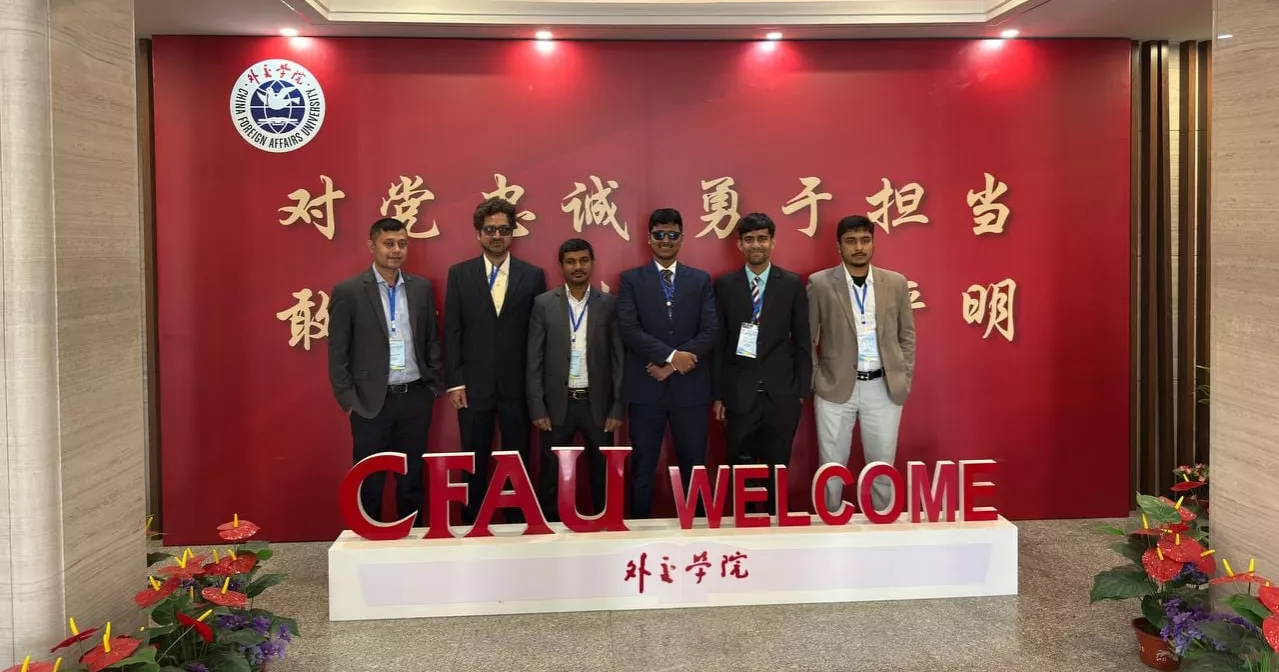
Six young representatives from Bangladesh are participating in the Youth Leadership Development Programme for a Community with a Shared Future among Neighbouring Countries (2026), being held in Beijing and Hainan Province, China, from November 13 to 21.
The nine-day international programme is jointly organised by the Research Centre on Building a Community with a Shared Future for Humanity and the Hainan Institute for Free Trade Port Studies.
It aims to promote exchanges and cooperation among young people worldwide, deepen mutual understanding, and strengthen their capacity to address global challenges and contribute to global governance and international cooperation.
The Bangladeshi participants are AKM Mazharul Islam, Saddam Hosen, Md Abul Hasan, MD Riazul Islam, Md Wabidur Rahman and Karim Al Zahin. They are among around 80 young international participants representing countries neighbouring China, including Bangladesh, Sri Lanka, Pakistan, Nepal, Cambodia, Indonesia, Russia and others.
The theme of this year's programme is "Responding to Global Challenges and Enhancing Youth Leadership". Through a range of activities, including high-level dialogues, thematic forums, expert lectures, field visits and cultural exchanges, participants will have opportunities to engage with scholars, practitioners and young leaders from different countries.
The programme seeks to broaden participants' international perspectives, enhance their cross-cultural communication and leadership skills, and deepen their understanding of China's development experience and broader issues of international cooperation.
For the Bangladeshi participants, the programme provides an important platform to exchange ideas with young leaders from neighbouring countries, explore opportunities for regional cooperation and strengthen people-to-people ties between Bangladesh, China and other participating nations.
Their participation also reflects the growing importance of youth engagement in strengthening international relations, fostering mutual understanding and building a more cooperative future amid increasingly complex global challenges.