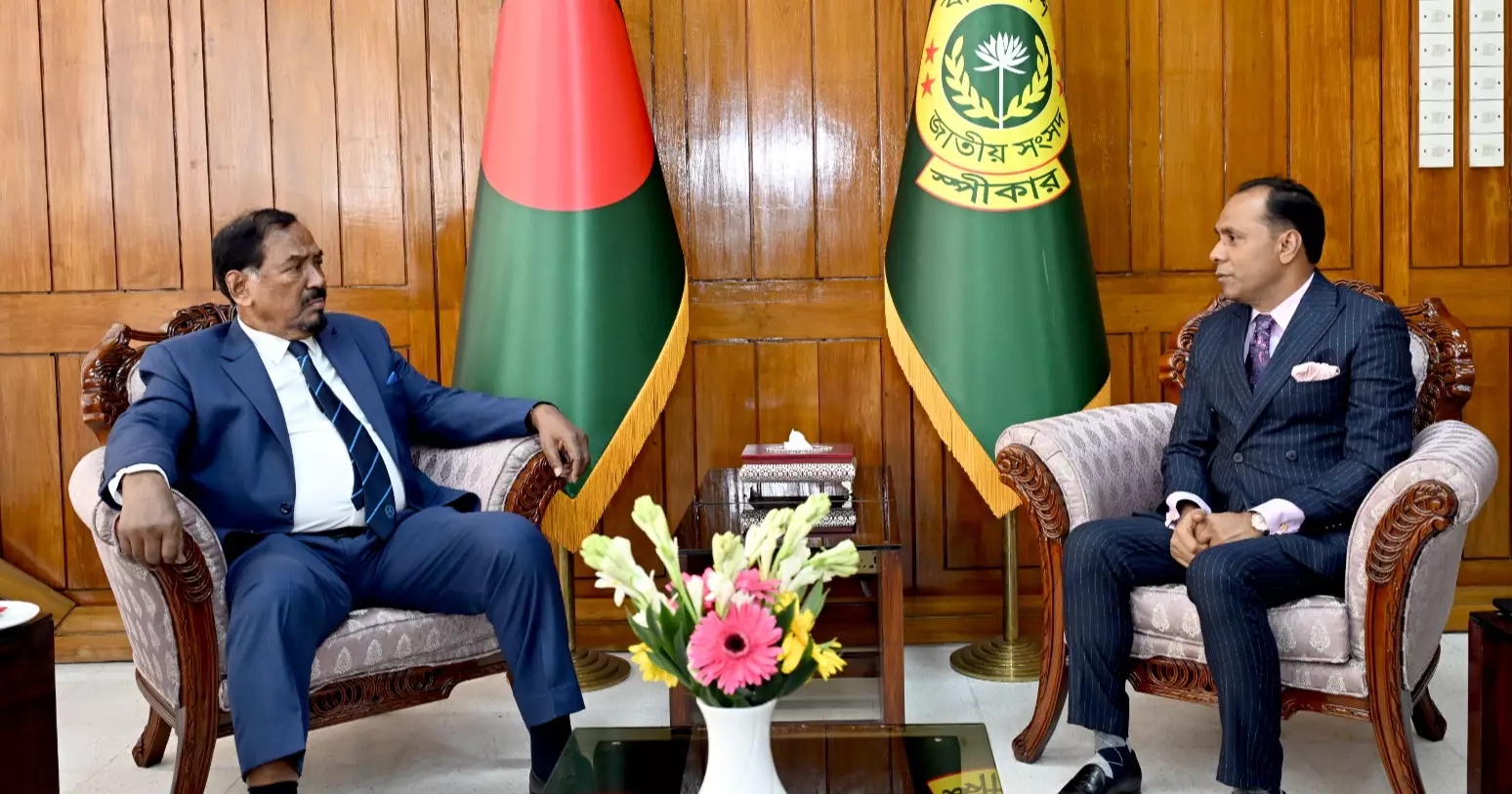
Speaker Hafiz Uddin Ahmad on Sunday stressed the need to ensure equal participation of women and men in the country’s development process, saying transforming the population into human resources remains one of Bangladesh’s major challenges.
“Women and men have equal roles in making the most of the demographic dividend. We must ensure their equal participation in the development process,” he said.
The Speaker said this while addressing a workshop titled “Parliament’s Role in Realizing Population Dividends, SDGs and ICPD Commitments” as the chief guest at the Parliament’s Oath Hall.
The workshop was organised by the Bangladesh Parliament Secretariat under the SPCPD project.
Hafiz Uddin said Bangladesh could move forward by properly utilising the opportunities created by its demographic dividend and developing its large population into skilled and productive human resources.
He also highlighted several challenges, including child marriage, gender-based violence, girls’ education and violence against women.
At the same time, the Speaker said climate change is creating additional challenges, with rising sea levels and increasing salinity in coastal areas.
He urged Members of Parliament to raise public awareness in their constituencies and undertake development initiatives to address these challenges.
Hafiz Uddin also laid emphasis on preventing violence against women.
Deputy Speaker Barrister Kayser Kamal, who chaired the workshop, said Bangladesh’s population should not be viewed merely in numerical terms.
“The population must be educated properly and provided with employment opportunities so that it can be transformed into human resources,” he said.
Kayser Kamal stressed the need for coordinated planning and effective measures to achieve the Sustainable Development Goals, saying parliamentary activities should go beyond lawmaking to include policies and plans aimed at resolving people’s problems.
Chief Whip Nurul Islam Moni said the availability of natural resources alone could not guarantee a country’s economic prosperity.
“The biggest resource of a country is its skilled and educated population,” he said, stressing the need to learn from the experiences of other countries and turn Bangladesh’s large working-age population into skilled human resources.
Moni said a skilled, educated and productive population will remain the key driving force behind sustainable economic development.
UNFPA Representative in Bangladesh Catherine Breen Kamkong said the Bangladesh government is working with development partners by formulating people-centred policies on climate change, reproductive health protection for adolescents and social protection for the population.
Parliament Secretariat Secretary Barrister Md Golam Sorwar Bhuiyan delivered the welcome address.
The workshop was also addressed by other senior officials and representatives of UNFPA and the SPCPD project.
Members of the Cabinet, whips, MPs, representatives of UNFPA and the SPCPD project, and senior officials of the Parliament Secretariat attended the programme.