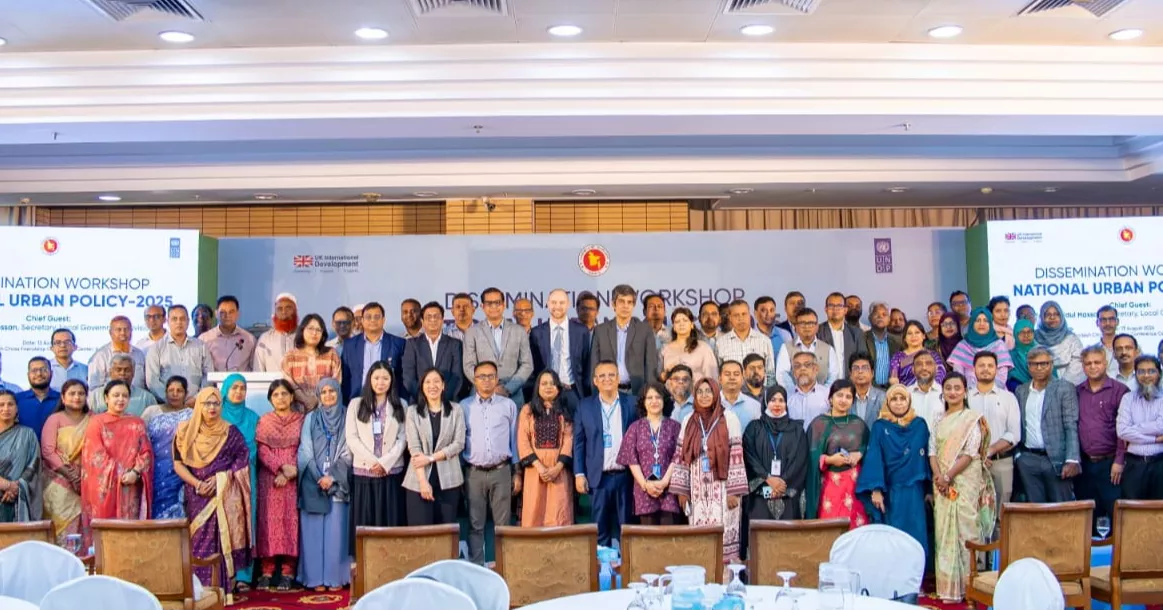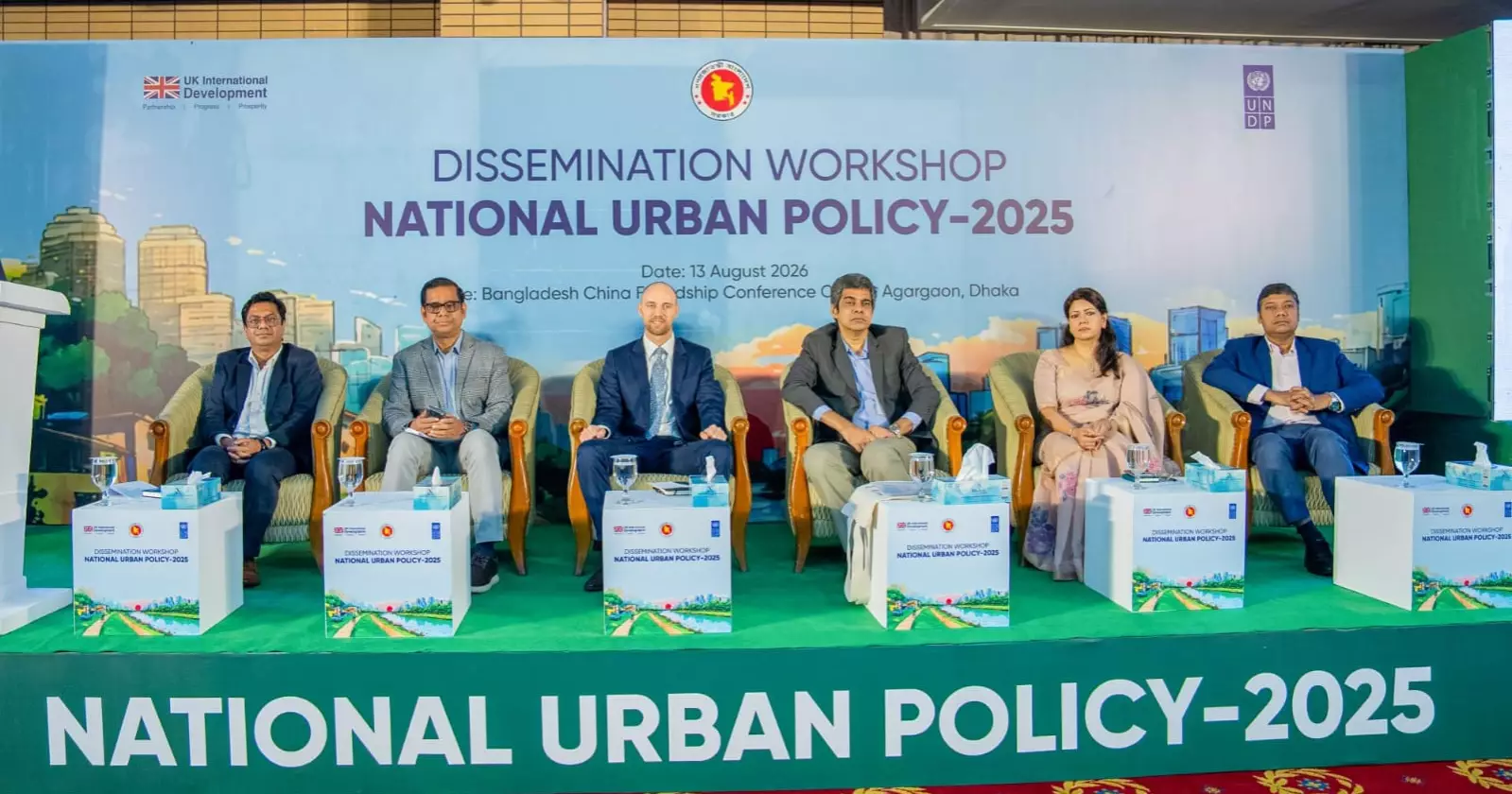
Speakers on Thursday called for coordinated action to implement the National Urban Policy 2025 and translate its commitments into more liveable, inclusive and climate-resilient cities, noting that more than one-third of Bangladesh’s population, living in urban areas and cities, contributes nearly 65 percent of GDP.
The call came at the national dissemination workshop on National Urban Policy 2025, organised jointly by the United Nations Development Programme (UNDP) and the Local Government Division (LGD) with support from the UK Government at BCFCC in Dhaka.
The workshop brought together representatives from government ministries and agencies, local government institutions, development partners, academia, research institutions and the urban development community.
The government of Bangladesh approved the country’s first National Urban Policy 2025 as a national framework for more planned, inclusive, sustainable and climate-resilient urban development.
Speaking at the workshop, Md Mahmud Ali, Director (Additional Secretary), Urban Development Directorate, said urban development is not one ministry's job alone, it needs coordination across sectors, with active participation from ministries, public and private institutions, development authorities, academia, professionals, and urban residents themselves.
Md Samsul Islam, Joint Secretary, Local Government Division, stressed that the next priority is to move from policy to implementation.
“We want the National Urban Policy 2025 to go beyond being a policy document and become an effective tool for real change in urban planning, management, infrastructure development and service delivery,” he said.