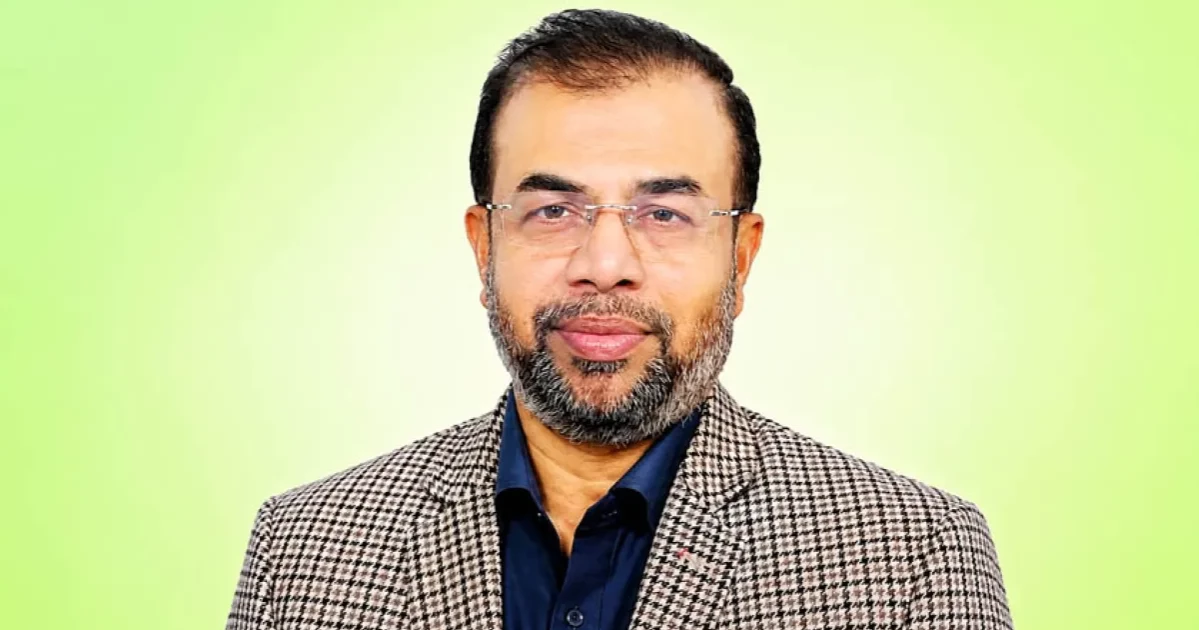
State Minister for Environment, Forest and Climate Change Shaikh Faridul Islam on Thursday reaffirmed the government's commitment to labour welfare and environmental sustainability, at a national dialogue to advance implementation of the Just Transition Chapter under its updated Nationally Determined Contribution (NDC 3.0).
Inaugurating the dialogue, titled "Advancing Bangladesh's Just Transition: From Commitment to Action," the state minister highlighted government priorities including renewable energy expansion, environmental restoration, and stronger protection of workers covering safety, fair wages and health.
Bangladesh's Just Transition annex maps 69 activities, $1.85 billion investment envelope
The event was convened by the International Labour Organization (ILO) in partnership with the Embassy of Sweden in Bangladesh and the Department of Environment (DoE) under the Ministry of Environment, Forest and Climate Change (MoEFCC), bringing together government officials, workers, employers, youth, civil society and development partners ahead of COP31.
Abdur Rahim Khan, Additional Secretary of the Labour Wing at the Ministry of Labour and Employment, described Just Transition as fundamentally a livelihood issue, naming tripartite social dialogue, workforce reskilling, employment creation and occupational safety and health as key priorities.
Moustapha Kamal Gueye, Director of the ILO's Just Transition Priority Action Program, commended Bangladesh for developing a costed Just Transition chapter within its NDC, stressing that social justice and decent work are essential to achieving climate ambition. He also invited Bangladesh to present its model at the Global Just Transition Pavilion at COP31.
Hanna Norell, Head of Cooperation at the Embassy of Sweden, reaffirmed Sweden's partnership with Bangladesh and the ILO, emphasising the need to integrate environmental, economic and social priorities in the transition.
Presenting an overview of NDC 3.0, Mirza Shawkat, Director (Climate Change & International Convention) at the DoE, said the country's emissions stood at 252 million metric tonnes in 2022 and are projected to reach 480 million tonnes by 2035 under business-as-usual. NDC 3.0 targets 391 million tonnes under the unconditional pathway and 333 million tonnes with international support, requiring an estimated $116 billion between 2026 and 2035.
Selim Raihan, Executive Director of SANEM, and Elisa Benistant Fremigacci, ILO Technical Officer for Just Transition, presented the Just Transition Chapter itself, developed through consultations with more than 200 counterparts across 140 organisations. Dr Raihan noted Bangladesh is the first country in South Asia to undertake such an exercise.
In a Youth Voices session moderated by Amanullah Porag of Youth for NDCs, young representatives Farah Anzum of the Global Strategic Communications Council and Fariha S. Aumi of the Brighters Foundation called for participation from the design stage of climate programmes and formal representation in decision-making structures.
A panel on financing, moderated by ILO Bangladesh Country Director Max Tunon, heard Bangladesh Employers' Federation Secretary-General Farooq Ahmed call for simpler green finance procedures and greater cost-sharing by international brand buyers, while Bangladesh Bank's Abul Bashar outlined existing sustainable finance facilities. Dr Fahmida Khatun of the Centre for Policy Dialogue (CPD) stressed the need for disaggregated data to guide targeted policy.
Closing the dialogue, Saimum Parvez, Special Assistant to the Prime Minister for Environment, said employment creation should be a primary indicator of climate policy success alongside emissions reduction, and proposed an Inter-Ministerial Just Transition Monitoring Body under the NDC Advisory Committee.
Lutfor Rahman, Director General of the DoE and chair of the dialogue, delivered the vote of thanks, calling for the day's commitments to be translated into measurable outcomes.