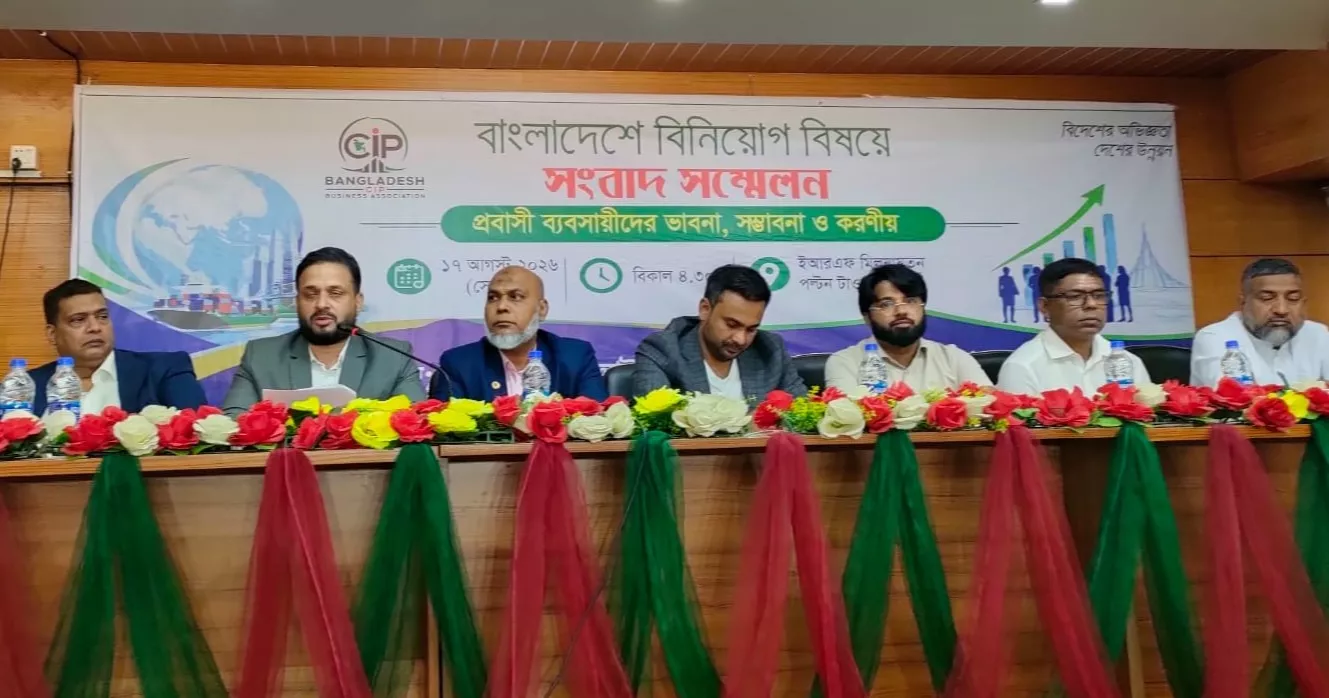
Non-Resident Bangladeshi (NRB) Commercially Important Persons (CIPs) and business leaders based in the United Arab Emirates (UAE) have pledged a prospective investment of Tk 1,000 crore in Bangladesh, demanding swift government intervention to address long-standing visa complexities and protect expatriate rights.
The proposal and demands were presented by the Bangladesh CIP-Business Association during a press conference at the Economic Reporters’ Forum (ERF) auditorium in Dhaka on Monday (August 17).
Earlier in the day, the delegation held separate meetings with Minister for Expatriates' Welfare and Overseas Employment Ariful Haque Choudhury and State Minister for Foreign Affairs Shama Obayed. The delegation is also scheduled to meet high officials of the Bangladesh Investment Development Authority (BIDA) on Tuesday (August 18) to discuss the investment climate, regulatory approvals, and infrastructure support.
Speaking on behalf of the delegation, Mohammad Rubel CIP stressed that expatriates are not merely remittance senders, but active investment partners in national development.
According to the association, the key sectors targeted for the Tk 1,000 crore investment include- Digital & AI-based Islamic Banking, Dry Food Processing & Packaging Industries, Solar Energy & Renewable Power Projects, Tourism, Healthcare & Education, Tech-enabled E-rental Services.
The business leaders stated that prompt implementation of these projects depends on government assurances regarding streamlined approvals, land allocation or long-term lease facilities, investment security, and one-stop service execution.
12-Year Visa Complications & Stranded NRBs
The delegation highlighted severe labor issues in the UAE, noting that Bangladeshi workers have been deprived of internal employer transfers (in-house visa changes) for nearly 12 years, placing thousands of livelihoods at risk.
Furthermore, recent abrupt visa cancellations have left thousands of UAE-based Bangladeshi workers and entrepreneurs stranded at home, threatening their jobs, businesses, and family stability abroad.
To resolve these issues, the association placed specific demands before the Ministry of Foreign Affairs and the Expatriate Welfare Ministry:
Compiling a comprehensive list of stranded workers and initiating high-level diplomatic talks with the UAE government to secure their return. Appointing skilled, experienced, and non-political officials across Bangladesh embassies and consulates. Establishing 24/7 emergency hotlines, a digital grievance redressal mechanism, and dedicated expatriate support cells in coordination with local administration.
15-Point Charter of Demands
Placing a 15-point charter of demands before the Prime Minister through the designated ministries, the CIP association advocated for mandatory pre-departure language and skills training, issuance of "Prohashi Cards" for all expatriates, government-funded repatriation of deceased workers, enhanced remittance incentives, affordable airfares, and dedicated emergency assistance funds for Middle East crises.
Among others, Md. Nazrul Islam CIP, Mohammad Salim Uddin CIP, Mohammad Monjurul Haque CIP, Mohammad Shamsuzzaman CIP, Mohammad Shafiqul Islam Rahi CIP, Mohammad Najim Uddin CIP, businessman Mahmudul Hasan, Keramat Ullah Biplob, businessman Mohammad Enamul Haque, and Shibly Al Sadik spoke in the press conference.