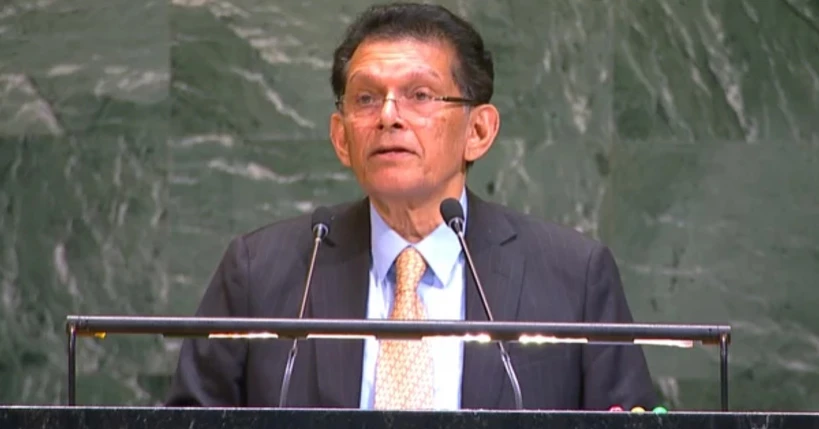
Foreign Minister Dr Khalilur Rahman left Dhaka on Sunday night for New York to take up his responsibilities as President of the 81st Session of the United Nations General Assembly, a tenure that will coincide with a crucial period for the world body, including the selection of a new UN secretary-general.
The Foreign Minister left Dhaka shortly after 8:20pm on an official visit to New York, USA in connection with his UNGA presidency from August 31 to October 21 and is scheduled to transit through Dubai, a senior official told UNB.
The 81st session of the General Assembly will formally open on September 8, with world leaders expected to gather at UN Headquarters in New York later in the month for the annual high-level general debate.
Assuming the presidency at a time of deepening geopolitical divisions, the Foreign Minister has pledged to make consensus-building and restoring confidence in the UN central to his tenure.
“The UN will commence its ninth decade at a time when trust in our organization is being tested on multiple fronts,” Dr Khalilur told UN member states.
He said the challenges facing the international community were undermining public trust and confidence in the UN’s ability to deliver on its commitments.
“As your president, I will dedicate myself to rebuilding trust, nurturing consensus, and opening space for good faith negotiations that will lead to outcomes for all that are owned by all,” he said.
Dr Khalilur has also pledged to serve as a bridge-builder among member states, engage all sides and work to find common ground amid widening divisions.
He said he would uphold the UN Charter and ensure geographical and gender balance within the Office of the President of the General Assembly, while remaining attentive to the needs of smaller delegations.
Bangladesh is also expected to use the high-profile presidency to advance issues of national and regional importance, particularly the protracted Rohingya crisis.
State Minister for Foreign Affairs Shama Obaed Islam recently said Dhaka hopes to use its stronger diplomatic position at the UN to intensify international pressure on Myanmar and build momentum for a political and durable solution to the crisis.
“We are trying to involve the international community more,” she said, referring to a high-level UN session on the Rohingya crisis expected to be held in September, with Bangladesh’s Prime Minister Tarique Rahman expected to participate.
Shama Obaed said Dhaka hopes the high-level discussion will produce clearer international guidelines and stronger momentum towards resolving the crisis, which has become increasingly complex amid security and other challenges.
Bangladesh has repeatedly called for sustained international engagement to ensure the safe, voluntary and dignified return of the Rohingya to Myanmar, while seeking greater global support for addressing the humanitarian and security dimensions of the crisis.