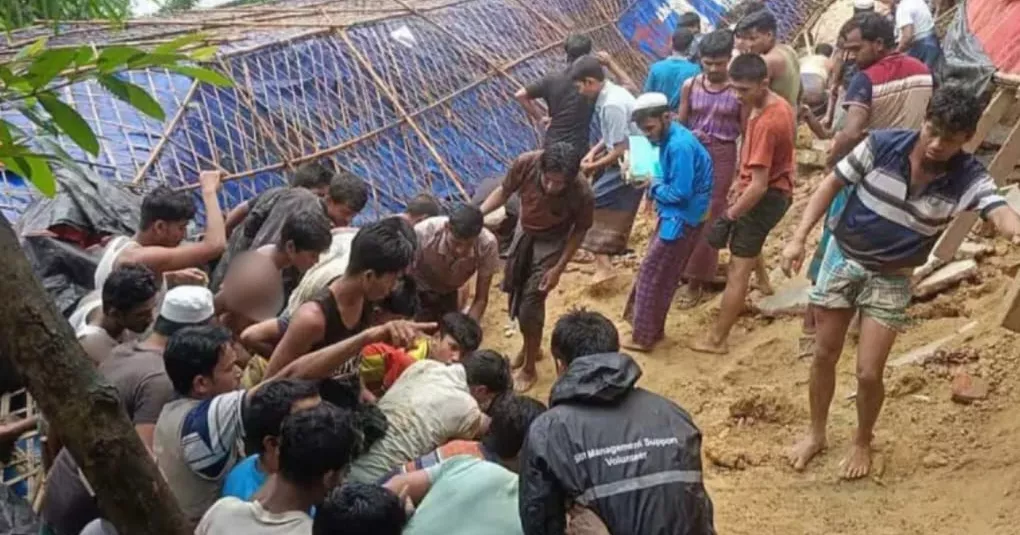
UNHCR Representative in Bangladesh Ivo Freijsen on Thursday described the loss of lives in landslides and floods in Rohingya camps in Cox’s Bazar as a heartbreaking reminder of how vulnerable these camps are to natural disasters and the risks Rohingya families face each monsoon season.
"UNHCR extends our heartfelt condolences to the families who lost loved ones in the collapse of the madrasah in the Rohingya refugee camps in Bangladesh, as well as those who perished in the deadly landslides and flash floods earlier this week,” he said in a statement.
With more than 12 lakh refugees living in one of the world's most densely populated refugee settlements, far too many people remain exposed to landslides, flooding, cyclones, fires, and other environmental hazards.
“Many of the dangers facing Rohingya refugees are neither unforeseen nor unavoidable, with adequate opportunities and resources for sustained disaster risk reduction,” said the UN official.
In the face of enduring funding constraints, however, investments in strong long-term disaster preparedness and resilience measures are increasingly underfunded, while a lack of allocated land further limits opportunities to decongest even the most overcrowded and hazardous locations and to plan for safer infrastructure, he said.
Ivo Freijsen said rather than implementing the strategic interventions they know can reduce risks before they become emergencies, humanitarian agencies are often forced to adopt short-term solutions, and the consequences of these constraints were tragically illustrated this week.
He said UNHCR continues to advocate for the necessary resources, land and planning opportunities to improve safety and protect the lives of refugees living in these camps, in conjunction with the continued pursuit of durable solutions.