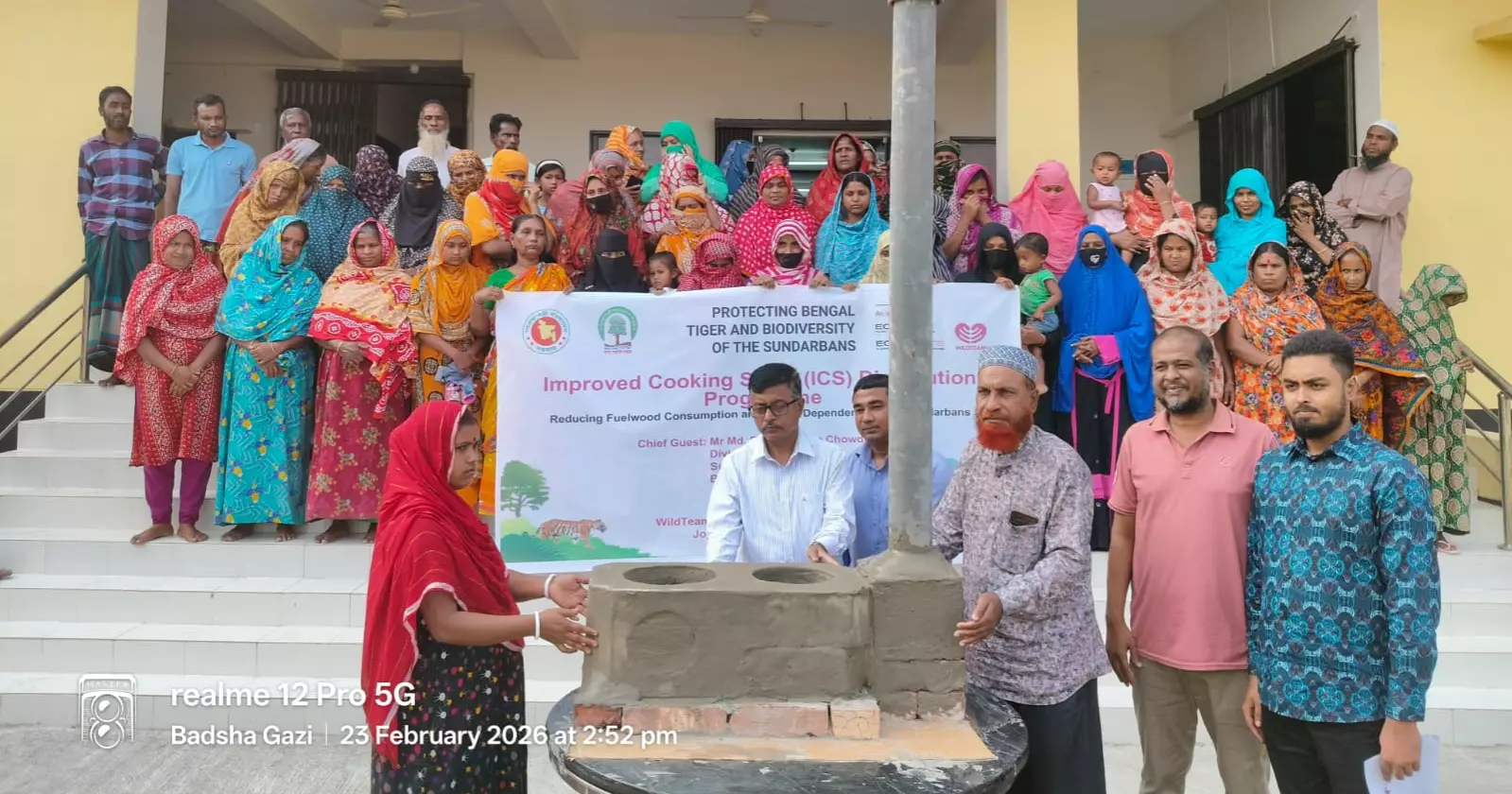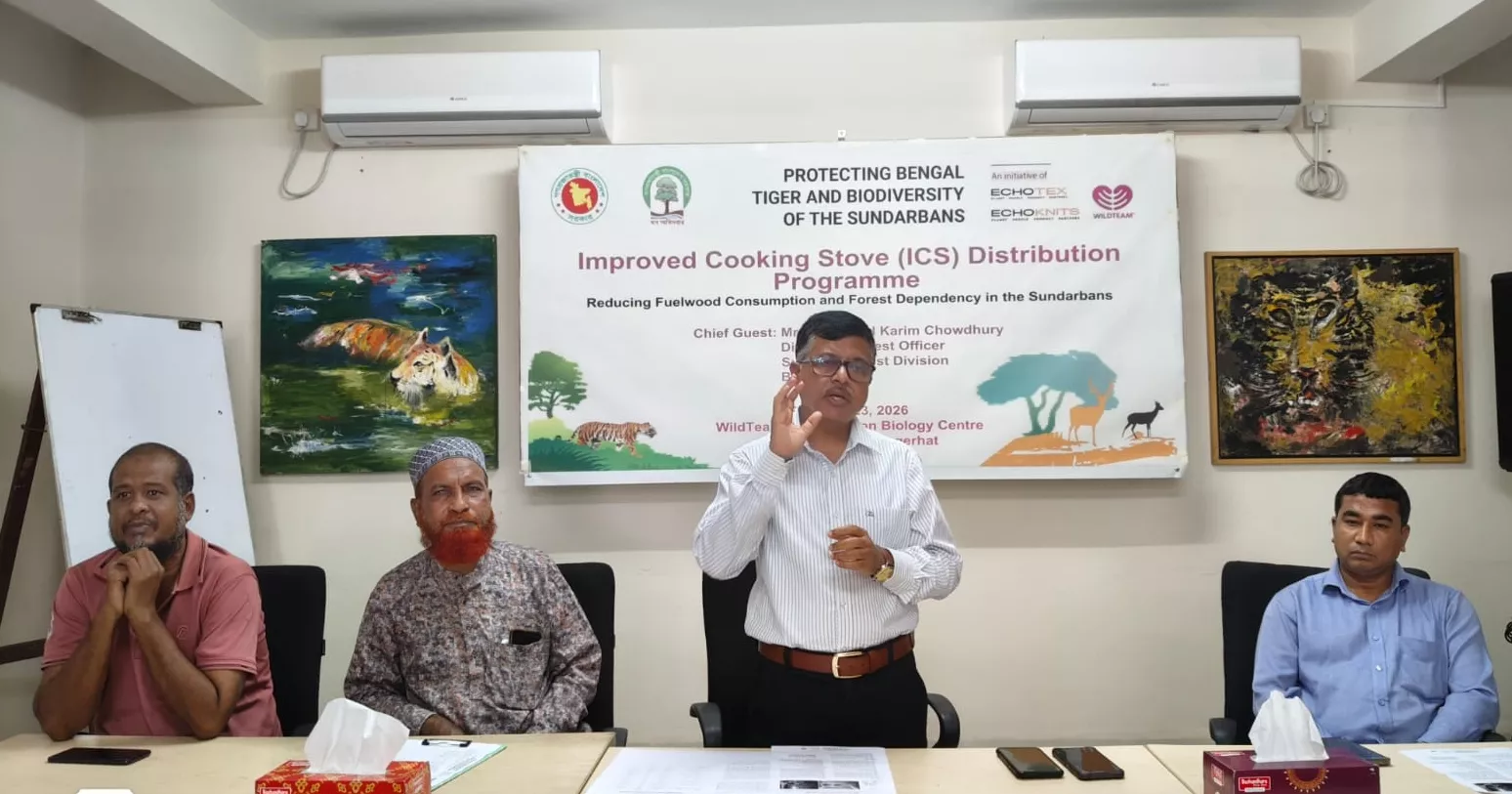
The formal inauguration of the Improved Cooking Stove (ICS) Distribution Programme, organised by WildTeam, was held on Monday at the WildTeam Conservation Biology Centre in the Joymoni area of Mongla, Bagerhat.
The initiative aims to reduce the use of fuelwood among forest-edge communities and lessen their dependence on the Sundarbans.
Md Rezaul Karim Chowdhury, Divisional Forest Officer (DFO) of the Sundarban East Forest Division, attended the programme as the chief guest.
In his speech, he said, “Where do you bring firewood from?” Many replied—we cut it from the forest, and we also collect wood that floats in. He added, “You may catch fish, you may catch crabs—these are part of livelihood; but trees must not be cut. Cutting trees means directly harming the forest. Therefore, our goal should be to use market-bought wood and alternative fuels, and to keep the Sundarbans safe and healthy.”
He further noted, “After coming here, I have seen that using improved stoves significantly reduces cooking time and produces less smoke—therefore less firewood is needed. Less smoke also means better health. With traditional clay stoves, flames can often spread outside, creating a risk of fire accidents; improved stoves are comparatively safer. And since this is a double stove, the same amount of firewood can be used to cook two items at the same time.”
He added, “Improved stoves are not new—they have existed for a long time. Looking at its structure and design, I am optimistic that it will work and benefit families. If, while using it, you feel any modification or repair is needed, inform WildTeam—I believe they will provide the necessary support and improvements.
Joymoni is a forest-edge area close to the Sundarbans, where dependence on fuelwood for cooking is high. As a result, pressure increases on collecting wood from the forest. By using improved stoves, families can cook with less fuelwood, produce less smoke, reduce health risks, and save time and expenses. At the same time, pressure on forest resources decreases, which will have a positive impact on forest conservation in the long run.
This programme builds on a proven track record. Between 2018 and 2025, with support from German cooperation through KfW and IUCN under Phases I and II of the Integrated Tiger Habitat Conservation Programme (ITHCP), interventions in three Tiger Tolerant Villages in Satkhira range of the Sundarbans—Kadamtola, Mirganng, and Golakhali—delivered measurable results. During this period, WildTeam distributed around 1,000 improved cooking stoves (ICS), and baseline-to-endline assessments recorded up to a 30% reduction in household fuelwood use.
Alongside clean-cooking actions, solar lighting was installed at 45 high-risk points, improving illumination along village edges and helping reduce the likelihood of unwanted wildlife entry. Community members also reported practical day-to-day benefits—children could play more safely, and women felt more confident moving outside after dark.
With these evidence-based outcomes—and with Satkhira’s three villages formally recognized as Tiger Tolerant Villages—the programme is now being scaled up to reach more forest-edge households and further reduce dependence on the Sundarbans. This project will expand to three additional villages in the Chandpai Range of the Sundarbans—Joymonir Ghol, South Chila, and Burburia.