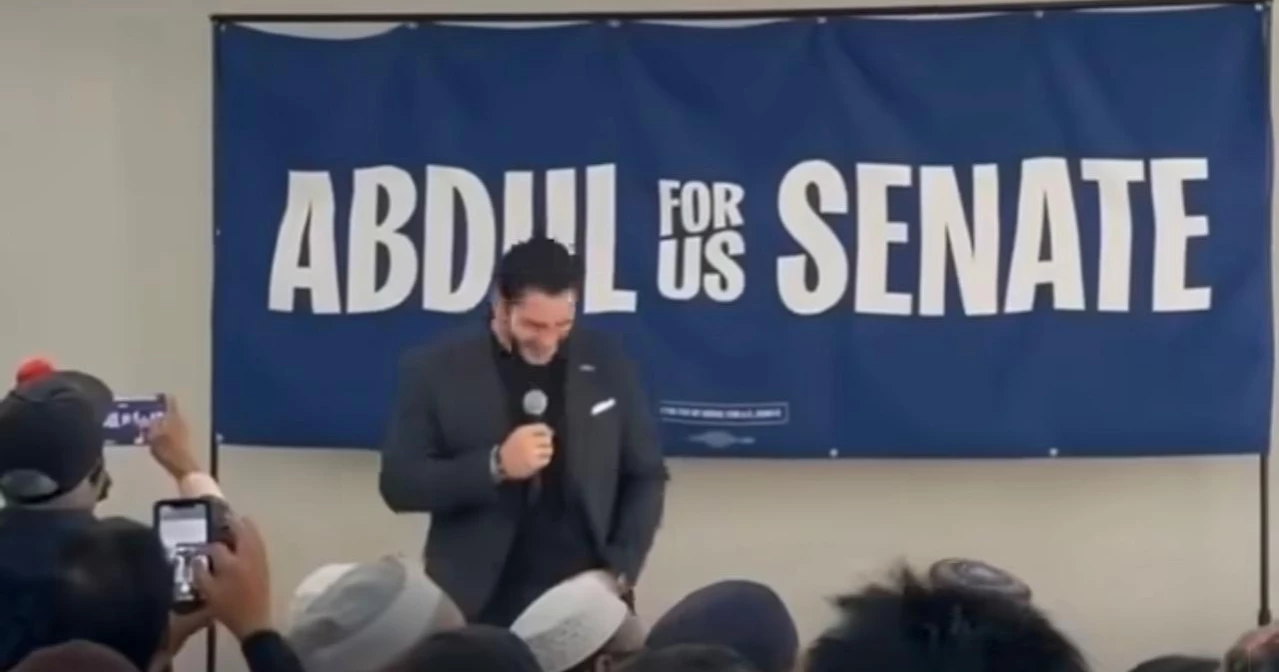
With the November 3 US midterm elections approaching, Bangladeshi-Americans in Michigan are campaigning for Abdul El-Sayed in a Senate race that could help determine control of US Congress.
Community members are raising funds, volunteering and urging voters to turn out for the Egyptian-American physician, whose campaign combines progressive economic policies with outspoken criticism of US support for Israel’s war in Gaza. For many supporters, the contest has also become a stand against the anti-Muslim rhetoric directed at him.
Across the country, campaigning has reached a fever pitch. President Donald Trump is racing to shore up vulnerable Republicans, while political action committees and other outside groups are pouring millions of dollars into closely contested races.
Leading forecasts favour Democrats to regain the House of Representatives, where 218 seats are needed for a majority. Their prospects in the Senate have also improved, although control remains less certain.
The arithmetic is demanding: starting from a caucus of 47 senators, including allied independents, Democrats need a net gain of four seats to reach 51. A 50–50 split would leave Republicans in control through the vice president’s tie-breaking vote. Holding Michigan’s Democratic seat is therefore essential to their strategy.
El-Sayed is running against Republican former representative Mike Rogers for the seat being vacated by Senator Gary Peters, who is not seeking re-election. Michigan remains fiercely competitive: Trump carried it in 2024 by approximately 1.4 percentage points.
Recent polls have encouraged Democrats, with the RealClearPolling average showing El-Sayed ahead by about 3.5 points, although the race remains rated a toss-up.
An energetic speaker with a quick wit, El-Sayed has mobilized progressive voters in Michigan and beyond. His candidacy has found particular resonance among members of the state’s Bangladeshi-American community, who see connections between his priorities and their everyday concerns.
Speaking to UNB, Dr Naz Hassan, second vice-chair of the Michigan Democratic Party, said standing with El-Sayed meant more than supporting a political candidate.
“It is about our community’s political voice, our shared values, economic opportunities, healthcare, civic rights and the kind of Michigan we want to build for our children and future children.”
Like New York Mayor Zohran Mamdani, El-Sayed openly embraces his Muslim identity. That has made him a target of attacks from Trump and his allies. Trump has called him a “jihadist” and sought to associate him with the Muslim Brotherhood—accusations most analysts find baseless. Bangladeshi-American supporters regard such attacks as both false and deeply offensive.
El-Sayed has also secured endorsements from prominent progressive figures, including Senator Bernie Sanders and Representative Alexandria Ocasio-Cortez. Their backing has helped give the Michigan contest a national profile.
For Bangladeshi-American volunteers, however, the campaign is rooted as much in household economics as in national politics. Alongside community fundraising, supporters are encouraging neighbours and friends to vote. They are drawn to El-Sayed’s promises to curb the influence of corporate money in politics and ease the financial pressures facing Michigan families.
Dr. Hassan told UNB that many Bangladeshi-American families work hard, pay taxes, run businesses and contribute to Michigan’s economy. Yet healthcare costs, prescription drug prices and insurance bills can put enormous pressure on their budgets.
He pointed to El-Sayed’s support for Medicare for All, which would seek to provide universal health coverage regardless of employment or income.
Foreign policy is another powerful concern. Bangladeshi-American supporters interviewed for this report are deeply unhappy with the US war against Iran and American support for Israel’s military campaign in Gaza. They see these policies as questions of both moral responsibility and political accountability.
El-Sayed has described Israel’s actions in Gaza as genocide. His position has won support among voters demanding a change in US policy, while deepening opposition to his candidacy among some pro-Israel groups.
For Hassan, support for El-Sayed brings these concerns together: economic security, affordable healthcare, protection of civil rights and a government responsive to ordinary families.
An El-Sayed victory would retain a crucial Democratic seat and strengthen the party’s prospects of taking the Senate. For the Bangladeshi-Americans campaigning for him, the stakes are also personal: whether their concerns will be heard—and whether their faith will be treated as a political liability.