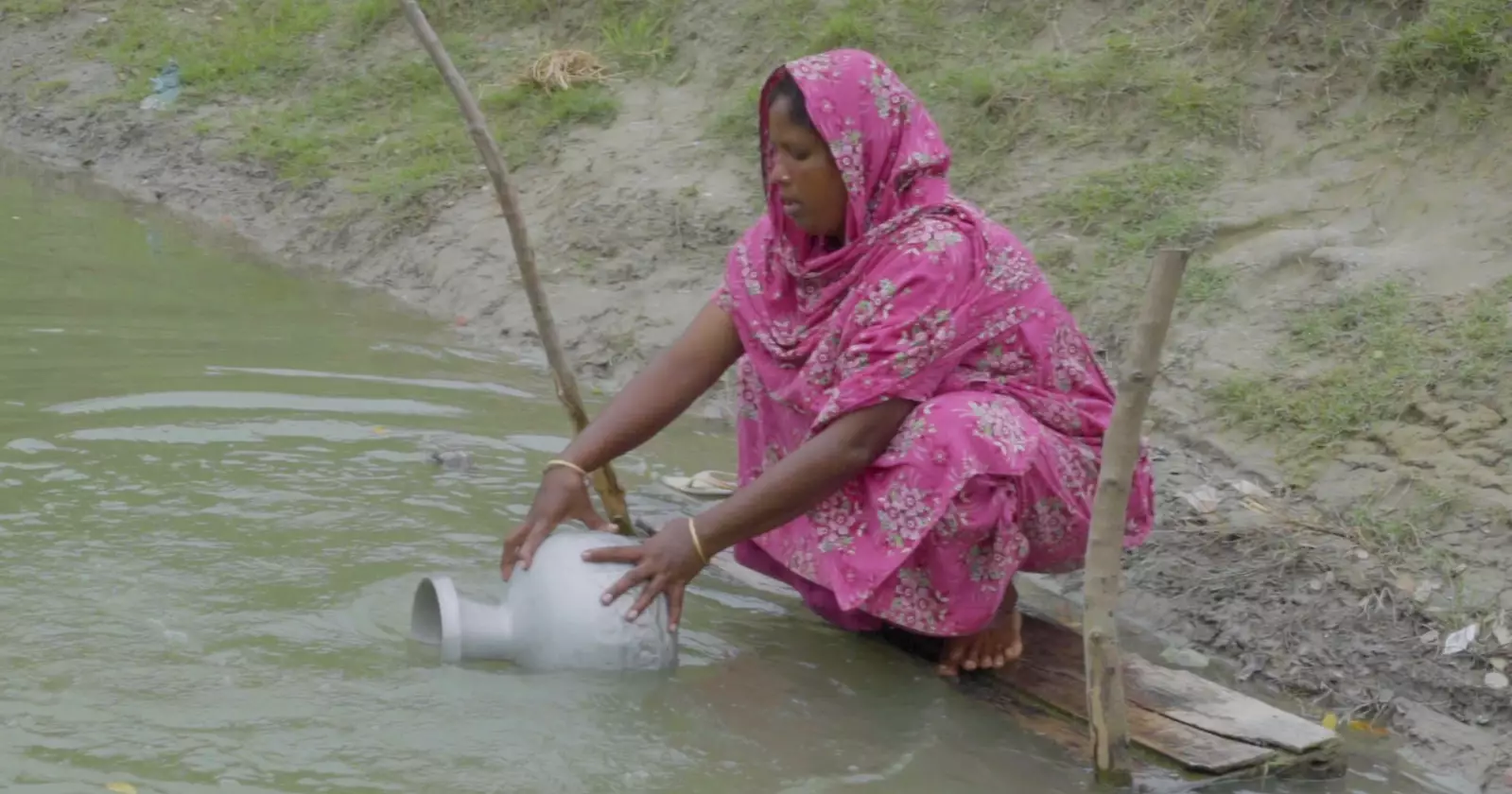
On the remote island of CharLata in Patuakhali's Rangabali upazila, where saline intrusion, water scarcity and climate change have made access to safe drinking water increasingly difficult, a community initiative is helping transform women from water collectors into decision-makers.
Implemented by OBHIZATRIK Foundation with support from a gender grant under the IUCN BRIDGE Water Governance Programme, the six-month project trained 60 women from fishing and farming households to take leadership roles in water governance, disaster preparedness and community decision-making.
President of OBHIZATRIK Foundation Ahmed Imtiaz Jami said women have always borne the burden of securing water for their families but have historically remained excluded from decisions about water management.
"Women understand the realities of water better than anyone because they live with the crisis every day. The objective was to ensure their voices become part of the decisions that affect their lives," he said.
CharLata, a low-lying island in the Meghna estuary, faces severe freshwater shortages during the dry season as ponds become saline and shallow tube wells fail to meet demand.
According to a baseline survey conducted by the project, around 90 percent of households said collecting water is exclusively women's responsibility, while nearly 96 percent identified salinity as their most pressing water-related challenge.
Many women spend up to four hours every day collecting, filtering and storing drinking water.
The study also found that 97 percent of surveyed households believe coal ash from a nearby thermal power plant has contaminated ponds and open water sources, raising concerns over public health, fisheries and livelihoods.
Residents reported declining fish catches, reduced agricultural production and increasing difficulty accessing freshwater.
Women also shoulder the greatest burden during disasters. Around 85 percent of respondents said women are responsible for protecting household drinking water supplies during cyclones and storm surges.
Despite their frontline role, only 18 percent of women had ever participated in meetings on water management or disaster preparedness before the project began.
Project officials said the intervention focused not only on technical knowledge but also on building confidence and leadership.
Participants completed training on financial literacy, leadership development, disaster risk reduction, and water management and governance after extensive household surveys, gender audits and community consultations.
The women also learned rainwater harvesting, maintenance of pond sand filters and tube wells, water quality monitoring, and how to engage with local government institutions responsible for water services.
By the end of the programme, the participants jointly developed a seven-point community charter outlining their priorities for safer and more equitable water governance and presented it to local authorities.
Community awareness materials have also been distributed across the island to sustain the initiative beyond the project's completion.
Jami acknowledged that a short-term intervention cannot solve long-standing climate and environmental challenges facing coastal communities.
"Salinity continues to increase and environmental pressures remain. But today these women know their rights, understand water governance and have begun participating in decisions that were once closed to them. That change is worth protecting," he said.
The initiative, organisers said, demonstrates how strengthening women's participation in local governance can improve community resilience in Bangladesh's climate-vulnerable coastal regions while ensuring those most affected by water insecurity help shape sustainable solutions.