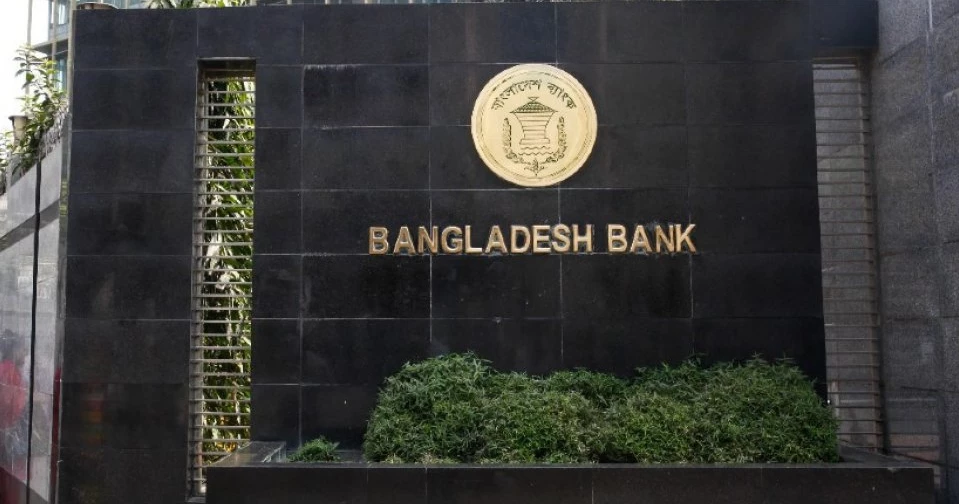
Bangladesh Bank (BB) has approved the introduction of Forward Rate Agreements (FRAs) in import trade to protect local importers from international interest rate fluctuations, particularly involving the Secured Overnight Financing Rate (SOFR).
The central bank issued a circular on Thursday allowing Authorised Dealer (AD) banks to sign these agreements with local buyers and borrowers tapping into supplier and buyer credits for usance imports.
A Forward Rate Agreement is a financial contract that allows parties to lock in an interest rate for a specific future period, offering an effective shield against future interest rate uncertainty. Usance imports allow businesses to defer their payments for a specified timeframe after receiving the imported goods.
Central bank regulations specify that these contracts can only be used for risk-mitigation purposes directly linked to actual import transactions. The guidelines explicitly prohibit any form of speculation or maintaining unprotected financial positions through these derivative contracts. Settlements will be executed based on the difference between the pre-agreed contract rate and the prevailing benchmark rate.
To ensure systemic stability and prevent individual banks from carrying excessive market risk, the central bank has imposed strict risk-management guidelines. AD banks must fully offset any contract-related risks through parallel, same-day matching transactions, ensuring they do not hold volatile market risks on their own books.
Furthermore, the central bank capped the banks' maximum pricing margin at 10 basis points. The total volume of FRAs executed by an individual bank cannot exceed 25 percent of its average monthly foreign exchange inflows recorded over the past 12 months.
The circular emphasises compliance with international contract frameworks, daily mark-to-market valuations, and robust internal risk assessments. In the event of early termination, contracts must be settled based on existing market rates, with meticulous document preservation made mandatory.