The Bangladesh Garment Manufacturers and Exporters Association (BGMEA) on Wednesday called upon World Bank to significantly expand the funding and scope of its sustainable water management programme to accelerate the green transformation of the country's ready-made garment (RMG) sector.
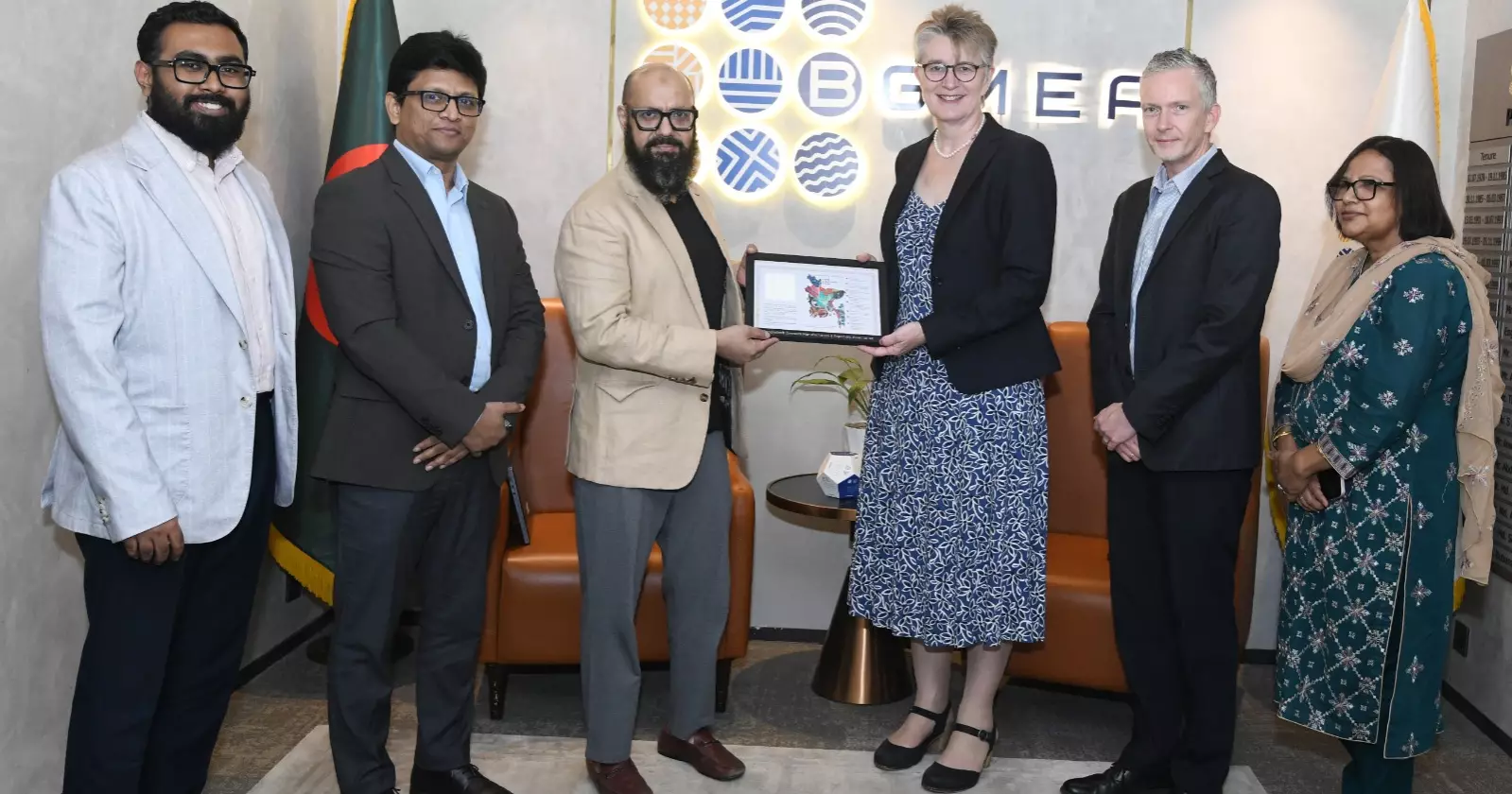
The call was made during a high-level bilateral meeting held at the BGMEA Complex in Uttara, Dhaka, between BGMEA President Mahmud Hasan Khan and a World Bank delegation, led by Regional Director for Sustainable Development for the South Asia Region Mara K Warwick.
During the meeting, both sides reviewed the progress of the “Dhaka Water Security and Resilience Programme” (D-Water) and its $5 million Viability Gap Funding (VGF) pilot initiative.
Although BGMEA initially submitted a list of 31 factories, the World Bank selected eight factories for the initial rollout.
Highlighting the overwhelming interest among garment manufacturers, the BGMEA chief urged the World Bank to scale up both the fund size and the number of beneficiary factories.
Emphasising that water management is directly linked to international trade competitiveness, he noted that global buyers, particularly European brands, now strictly mandate data on water reduction, wastewater treatment, and recycling at every stage of apparel production.
"Adopting water-efficient modern technology is indispensable not only to protect Dhaka's rivers and groundwater levels, but also to retain our competitive edge in global export markets," Mahmud Hasan said.
Highlighting high initial capital expenditure as a major barrier, BGMEA leaders stressed that securing financial viability for green projects is difficult for factory owners amid global economic slowdowns and price pressures.
They urged international development partners like the World Bank to provide grants, long-term soft loans, or zero-interest financing to make green investments feasible.
To address physical constraints faced by small and medium enterprises (SMEs) such as lack of space or adjacent drainage systems for individual Effluent Treatment Plants (ETPs), BGMEA proposed establishing cluster-based treatment facilities and utilising tankers or lorries for waste removal.
They also called for expanding the program beyond Dhaka to other major industrial hubs across Bangladesh.
Furthermore, BGMEA leaders underscored the need for policy predictability, urging authorities to avoid sudden regulatory shifts in environmental policy and provide sufficient lead time so factories can plan long-term eco-friendly investments.
The World Bank delegation received the proposals positively and assured continued support and logistics to accelerate the RMG sector's sustainable transition.
BGMEA Director Dr Md Hasib Uddin, World Bank Lead Water Specialist David Melcom Lord, Senior Water Supply and Sanitation Specialist Rokeya Ahmed, Water Specialist Md Mahadi Hasan, and Environmental Specialist Bushra Nishat were also present at the meeting.