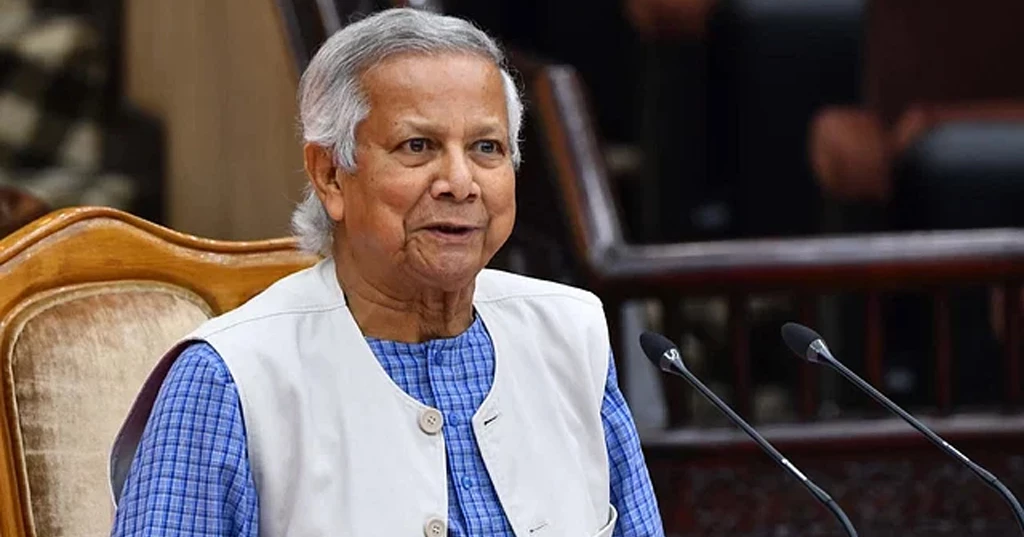
Chairman of the Islamic Development Bank (IsDB) Group Dr Muhammad Al Jasser met Nobel Laureate Prof Muhammad Yunus on Thursday and exchanged views on development, entrepreneurship and innovative solutions to social challenges.
The IsDB delegation also included Adeeb Yousuf Al Aama, CEO, International Islamic Trade Finance Corporation (ITFC); Anasse Aissami, Director General, Country Programmes, IsDB; and Abdihamid Abu, General Manager, Trade Finance, ITFC.
During the meeting at the Yunus Centre, the delegation discussed Prof Yunus's philosophy and practical experience in development, according to a press release.
They discussed his work with microcredit and Grameen Bank, the concept of social business, and his "Three Zeros" vision of zero poverty, zero unemployment and zero net carbon emissions.
Al Jasser said IsDB is considering ways to introduce microfinance across its member countries, drawing on lessons from Bangladesh's experience.
Prof Yunus welcomed the idea and asked that a team be sent to study Grameen's programmes closely, so that IsDB could identify which approaches might be of interest.
He also thanked Al Jasser for IsDB's continued partnership with Bangladesh, pointing to the US$1 billion financing agreement signed earlier in the day for the modernisation and expansion of the Eastern Refinery.
Al Jasser commended Prof Yunus's work, noting that a growing number of young people today are not looking for jobs in the traditional sense, and no longer see themselves simply as employees.
Prof Yunus said this calls for translating their creativity into problem-solving and entrepreneurship, an idea at the heart of microcredit from its earliest days. He pointed to the Nabin Programme as an initiative that began in Bangladesh before expanding elsewhere.
The conversation also covered Grameen University, which nurtures young people as job creators rather than job seekers.
Prof Yunus briefed the Islamic Development Bank on his initiatives in creating a series of digital healthcare, eye care, nursing college, hospital chain etc as social business network in the rural areas.
He emphasised the importance of empowering young people to use their creativity and entrepreneurial abilities to solve social problems, create dignified opportunities and build a more just society.