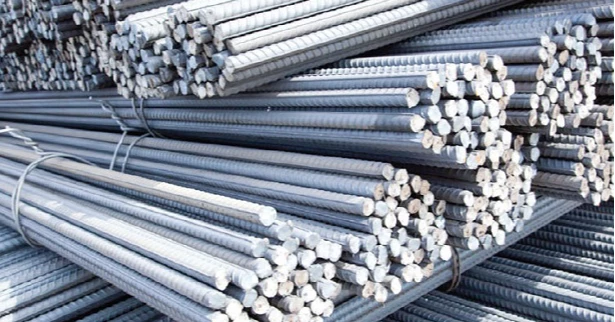
The local steel industry is facing a severe crisis that could push up the production cost of MS Rod by Tk 11,000 to Tk 12,000 per tonne, local steel manufacturers warned on Wednesday (June 17).
The Bangladesh Steel Manufacturers Association (BSMA) attributed this looming price hike to the combined impact of recent power tariff hikes and the proposed hikes in VAT, customs duties, and taxes in the proposed budget for the fiscal year 2026-27.
Speaking at a press conference at the National Press Club on Wednesday, BSMA President Mohammad Jahangir Alam said the direct and indirect production costs would ultimately be passed on to consumers, further dampening sales in an already struggling market.
The association placed a five-point demand to the government to rescue the steel sector from the current crisis.
Their demands include the withdrawal of the proposed additional VAT, duties, and taxes on the steel industry; cancellation of extra VAT at the sales stage and on local scrap; reconsideration of the additional taxes on raw materials; restoring the turnover tax to the previous 0.6 percent from the proposed 1.0 percent; and accelerating the implementation of the development budget to stimulate demand.
Jahangir Alam noted that while the proposed budget includes some business-friendly initiatives, the new financial burdens make survival difficult for the industry.
He revealed that while the country's annual demand for steel rods stands at around 50 lakh tonnes, the total production capacity exceeds one crore tonnes. As a result, most mills are operating at less than 50 percent capacity, which significantly increases overhead costs and puts immense financial strain on entrepreneurs.
Detailing the cost hikes, the BSMA stated that recent electricity price hikes alone added Tk 1,800 to Tk 2,000 to the cost of producing each tonne of rod. Additionally, rising port fees, landing charges, and transportation costs are adding another Tk 3,000 to Tk 3,500 per tonne. Furthermore, the proposed budget’s higher taxes on ferro-alloys (crude alloys of iron), refractory materials, spare parts, and other inputs will hike costs by another Tk 2,000 to Tk 2,500.
While these factors account for a direct production cost increase of Tk 5,000 to Tk 6,000, indirect pressures—such as dwindling market demand, underutilized factory capacity, higher overhead expenses, and rising bank interest rates—will slap on another Tk 5,000 to Tk 6,000 in costs per tonne, the steel leaders said.
The BSMA president pointed out that large-scale infrastructure projects and work orders have remained stalled since August 5, 2024, as many previous contractors have gone into hiding or left the country, and many projects are stuck awaiting design approvals. He urged the government to swiftly release the development budget to keep the construction industry alive.
BSMA Secretary General and Chairman of Rani Steel, Suman Chowdhury, criticized the fiscal strategy, noting that while the education budget was increased, the heavy tax burden on industries will stifle the job creation needed for the educated youth.
He warned that many factories might default on their bank loans if the situation persists.
Among others, Maruf Mohsin, Managing Director of Sonargaon Steels, and Zakaria, Director of CSRM, were also present at the press conference.