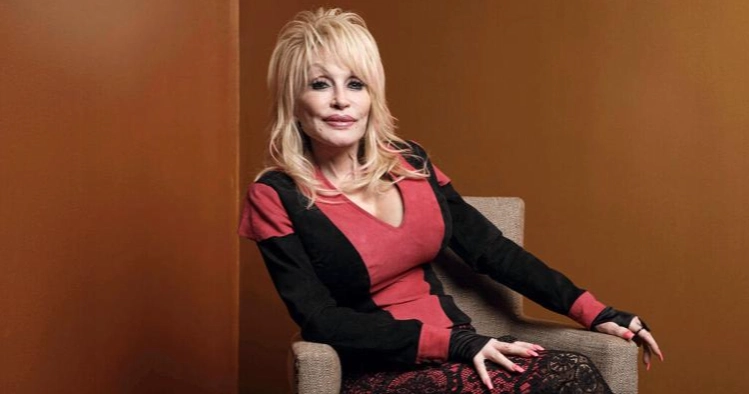
Dolly Parton, the legendary country music singer, songwriter, actor and philanthropist whose career spanned generations, has died in Nashville at the age of 80.
Parton died Tuesday at the Vanderbilt-Ingram Cancer Center after a brief battle with cancer, her publicist Marcel Pariseau said in a statement. She was surrounded by family and loved ones at the time of her death.
With her distinctive voice, heartfelt songwriting and dazzling stage costumes, Parton rose from humble beginnings in the Tennessee mountains to become one of the world's most recognisable entertainers.
She became known for her signature blonde wigs, glamorous outfits and sharp self-deprecating humour, but her influence extended far beyond music. Her appeal crossed generations, cultures and political divides, making her one of the most widely admired figures in American popular culture.
Parton wrote hundreds of songs during her career, including enduring hits such as “Jolene,” “Coat of Many Colors” and “I Will Always Love You.” Her music has generated more than 100 million sales worldwide and over 1 billion online streams.
She was also a successful businesswoman and philanthropist. Her ventures included Dollywood, a major theme park in the Smoky Mountains near her birthplace, while her charitable efforts reached millions of children and families.
From a Poor Tennessee Family to Country Music Stardom
Parton's career was deeply shaped by her childhood as one of 12 children in a poor Tennessee family. Her father left school at an early age to work on the family farm and struggled with reading.
That experience inspired Parton to establish the Imagination Library, an education initiative that provides free books to children.
Her musical journey began in church, where her grandfather served as a preacher. By the age of 10, she was playing guitar and performing on local television programmes. At 13, she made her debut at Nashville's Grand Ole Opry, where Johnny Cash introduced her as a young performer from East Tennessee.
After graduating from high school in 1964, Parton moved to Nashville with a suitcase full of songs. She was accompanied by her uncle Bill Owens, a songwriter.
Producer Fred Foster recognised her talent and helped introduce her music to other performers while also recording Parton's own songs. By the mid-1970s, she had established herself as one of Nashville's leading country stars.
Partnership With Porter Wagoner
A major turning point in Parton's career came through her collaboration with country star Porter Wagoner. She joined his syndicated television programme and developed her performance skills while Wagoner helped her secure a recording contract with RCA.
Their first duet, “The Last Thing On My Mind,” was released in 1967. Around the same time, Parton launched her own music publishing company.
Although their joint recordings became popular radio hits, Parton's early solo releases initially achieved more modest success. With Wagoner's help, she gradually refined her traditional country style into a more polished sound with broader pop appeal.
Her first solo No. 1 country hit came with “Joshua.” She also reached the Top 5 with “Coat of Many Colors,” a deeply personal song about the coat her mother made from scraps of fabric and the ridicule Parton faced because of her family's poverty.
In 1973, she released “Jolene,” the song that became one of the defining recordings of her career. Its success took Parton's music beyond country audiences and opened doors to international listeners.
“Jolene” went on to become one of her most frequently covered songs, with artists including Miley Cyrus, Olivia Newton-John and The White Stripes recording versions of it.
Parton left Wagoner's television show in 1974 following tensions between the two, although they continued working together for several years. Their professional relationship later became the subject of a legal dispute after Wagoner sued Parton in 1979 over management fees and royalties.
Crossing Over Into Pop Music
Parton's 1974 song “I Will Always Love You” became another landmark in her career. Written as a farewell to Wagoner, the song helped her win the Country Music Association's female vocalist of the year award in 1975 and 1976.
She famously declined an offer from Elvis Presley to record the song because she did not want to give up her publishing rights.
Years later, Whitney Houston's rendition of “I Will Always Love You” became a global blockbuster after appearing on the soundtrack of the 1992 film “The Bodyguard.” Houston won a Grammy for the recording in 1994, with Parton presenting her with the award.
Parton's own move toward pop music also paid off. “Here You Come Again,” one of the few major hits she did not write herself, became a crossover success and earned her first Grammy Award in 1979.
Other major hits followed, including the title song from the 1980 film “9 to 5,” in which she starred alongside Jane Fonda and Lily Tomlin. She also recorded the hugely popular duet “Islands in the Stream” with Kenny Rogers.
In 1987, Parton joined Linda Ronstadt and Emmylou Harris for the album “Trio,” which sold more than a million copies.
A Unique Image and Feminist Icon
To millions of fans, she was simply “Dolly” — a combination of Southern warmth, humour and glamour. Her flamboyant appearance, including rhinestone-covered dresses, figure-hugging outfits and elaborate hairstyles, became an inseparable part of her public identity.
At the same time, Parton was widely regarded as a role model for women in the entertainment industry. She maintained control over her songwriting, publishing and business interests at a time when the industry was largely dominated by men.
She was also willing to make herself the subject of jokes. During her 1989 appearance as host of “Saturday Night Live,” she allowed writers to poke fun at her image while maintaining that she would not use profanity or make jokes about Jesus.
Parton frequently joked about her appearance and blonde persona, turning stereotypes about herself into a source of humour and a way to control her public image.
She married Carl Dean, an asphalt paving contractor, in the mid-1960s. The couple remained together until his death in 2025 at the age of 82. Although Dean rarely appeared publicly, Parton said he influenced her career and inspired some of her songwriting.
Success in Hollywood and on Broadway
Parton's acting career took off with “9 to 5,” in which she played an office worker alongside Fonda and Tomlin. Film critic Roger Ebert described her as a natural movie star.
The film's title song became another major hit and earned Parton two Grammy Awards. She later appeared in films including “The Best Little Whorehouse in Texas” and “Steel Magnolias.”
Her connection with film and television continued for decades. She appeared alongside her goddaughter Miley Cyrus on “Hannah Montana” and contributed to numerous television specials, films and streaming projects based on her music.
Parton also became a successful author, publishing books and memoirs, including “Dolly,” as well as the bestselling novel “Run, Rose, Run,” which she co-wrote with James Patterson.
“9 to 5: The Musical” premiered on Broadway in 2009. Another stage production, “DOLLY: A True Original Musical,” is scheduled to open on Jan. 19, 2027, the date that would have marked her 81st birthday.
A Legacy of Philanthropy
Beyond her music and entertainment career, Parton's charitable work became one of her most enduring legacies.
After devastating wildfires struck the Smoky Mountains in 2016, she organised a televised benefit concert and established a foundation that provided monthly financial assistance to residents whose homes had been destroyed or damaged.
Her Dollywood theme park became a major economic force in eastern Tennessee, attracting visitors from across the United States. She also expanded her philanthropic work through the Dollywood Foundation.
Parton was inducted into the Country Music Hall of Fame and received a lifetime achievement award from the Recording Academy. In 2025, she was selected to receive the Jean Hersholt Humanitarian Award from the Academy of Motion Picture Arts and Sciences.
She received 55 Grammy nominations and won 10 awards, making her the third-most nominated woman in Grammy history, behind Beyoncé and Taylor Swift.
A Rare Figure Above Politics
Parton's popularity extended across political and social divides. Fans from different generations and backgrounds embraced her, and “Dolly for President” became a familiar slogan during US election seasons.
Despite her enormous public profile, Parton generally avoided discussing her political views. She repeatedly said she preferred not to take sides because she had supporters across the political spectrum.
When the Rock & Roll Hall of Fame Foundation nominated her in 2022, Parton initially questioned whether she belonged in the institution because she did not consider herself a rock artist.
The voters ultimately selected her for induction. Parton attended the ceremony, performed at the event and subsequently released a rock album.
Her career, spanning music, film, television, business and philanthropy, established her as one of the most influential and enduring entertainers of her generation.