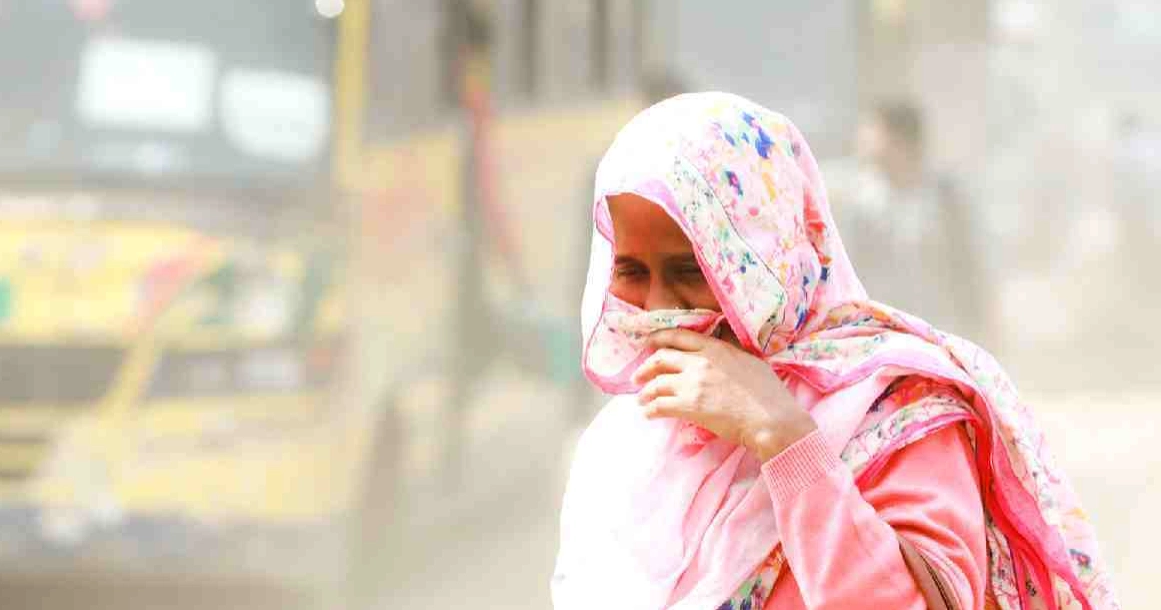
The overcrowded capital of Dhaka ranked 9th among cities with the worst air quality on Monday morning, recording an AQI score of 131 at 8:15 am.
According to the AQI index, the city’s air was classified as “unhealthy for sensitive groups,” indicating potential health risks for vulnerable populations.
Thailand’s Chiang Mai, Pakistan’s Lahore, and India’s Delhi topped the list with AQI scores of 198, 184, and 166, respectively.
An AQI between 50 and 100 is considered “moderate,” while 101 to 150 is deemed “unhealthy for sensitive groups.” Readings between 151 and 200 are classified as “unhealthy,” 201 to 300 as “very unhealthy,” and anything above 300 is regarded as “hazardous,” posing serious health risks.
The Air Quality Index (AQI) is used to report daily air quality, indicating how clean or polluted the air is and outlining possible health effects.
In Bangladesh, the AQI is based on five key pollutants: particulate matter (PM10 and PM2.5), nitrogen dioxide (NO₂), carbon monoxide (CO), sulfur dioxide (SO₂), and ozone.
Dhaka has long struggled with air pollution. Air quality typically worsens during winter and improves with the monsoon rains.
According to the World Health Organization, air pollution causes an estimated seven million deaths globally each year, largely due to stroke, heart disease, chronic obstructive pulmonary disease, lung cancer, and acute respiratory infections.