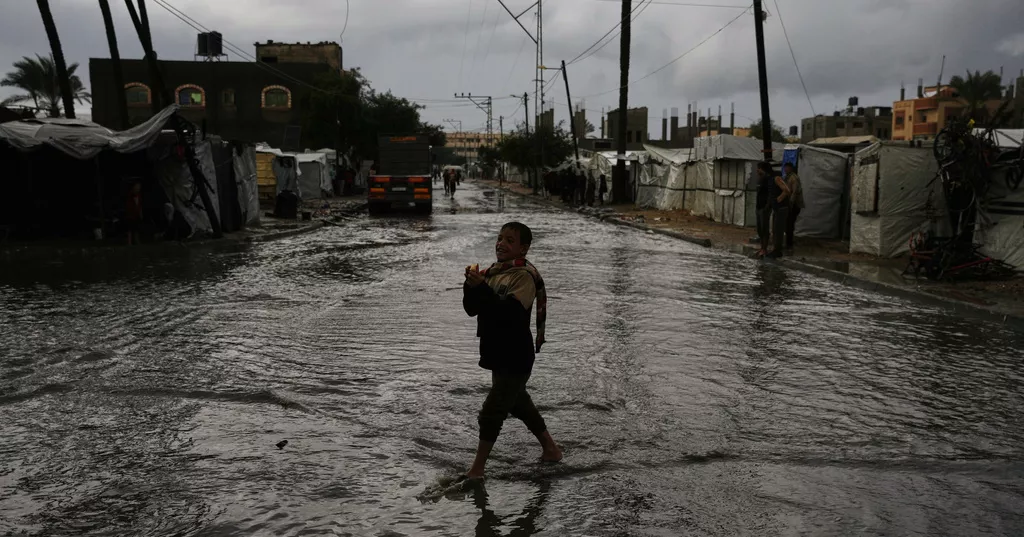
Turkish President Recep Tayyip Erdogan on Wednesday described Israel’s war in Gaza as both “genocide” and “ecocide”, urging the international community to recognise its environmental devastation and calling on Israel to allow more humanitarian aid into the Palestinian territory.
Speaking at the UN climate summit, COP31, in Antalya, Erdogan said the destruction had affected Gaza's environment, agriculture and essential infrastructure.
“What has taken place in Gaza is not only a genocide, but it is also an ecocide,” he said, drawing applause from world leaders and climate representatives.
A UN-backed panel of independent experts concluded last year that Israel had committed genocide in Gaza. Israel strongly denies the allegation.
Erdogan said centuries-old olive trees had been cut down, soil and water polluted, and cities reduced to piles of rubble. He also highlighted how damaged infrastructure and recent heavy rainfall had flooded tens of thousands of tents and temporary shelters.
Israel’s Foreign Ministry responded on X, accusing Erdogan of using an international forum to promote an “anti-Israel campaign of lies” and supporting Hamas. It said those concerned about Gaza should demand Hamas disarm to allow reconstruction.
Israel launched its offensive following the October 7, 2023 attacks by Hamas-led militants in southern Israel, which killed around 1,200 people and saw 251 others taken hostage. Israel was not invited to COP31.
The Israeli offensive has killed more than 74,000 Palestinians and devastated much of Gaza, according to local health authorities.
A 2025 UN Environment Programme report found that by May 2025, more than 97 percent of tree crops, 82 percent of annual crops and 95 percent of shrubland had been damaged.
The war has also severely damaged Gaza's water, sewage and waste management systems and virtually eliminated fishing livelihoods, raising health risks and worsening food insecurity.
Greenpeace MENA Executive Director Ghiwa Nakat warned that contaminated soil and groundwater, destroyed ecosystems and damaged infrastructure could threaten public health and livelihoods for generations.
Meanwhile, world leaders began formal negotiations at COP31 this week, seeking concrete measures to curb global warming following a year of deadly floods, heat waves and other climate-related disasters.
More than 70 world leaders and senior government officials are addressing the summit, while the United States, China and India are among those whose heads of state are absent.