
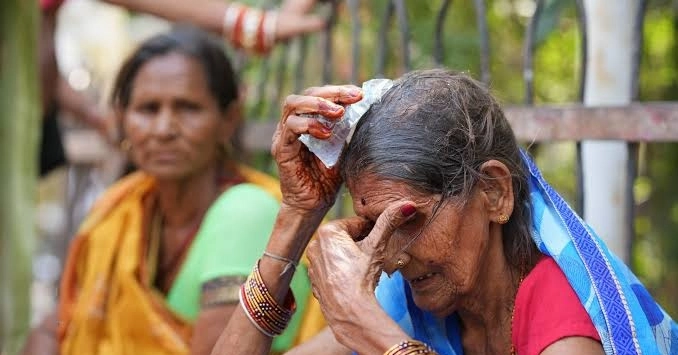
Scorching temperatures around the clock, frequent power cuts and sleepless nights have become part of daily life for residents of Banda, a town in northern India that has repeatedly ranked among the hottest places on Earth.
Climate change, driven largely by the burning of fossil fuels such as coal, oil and gas, is making heatwaves across India more frequent and severe, according to experts. Banda, in Uttar Pradesh state, has been among the worst-hit areas.
In May, the town recorded a temperature of 48.2 degrees Celsius (118.8 degrees Fahrenheit), one of several occasions this year when it was India's hottest location. Climatologist and weather historian Maximiliano Herrera said Banda also ranked as the hottest place on Earth on seven different days this year, most of them in April.
Although temperatures have eased slightly since then, high humidity brought by the monsoon has kept conditions uncomfortable.
An Associated Press team visited Banda in June to see how residents cope with the extreme heat.
Before sunrise, 70-year-old Munni Devi and her four sons begin unloading vegetables at the local market while temperatures are already around 30 degrees Celsius.
Despite the exhausting conditions, Devi said missing work is not an option.
"Everyone feels the heat, but because of our circumstances, we have to bear it," she said.
She said the heat has become more intense every year, while unreliable electricity leaves many families without even ceiling fans for hours at a time. To keep cool, her grandchildren are often sprayed with water using a hose.
As temperatures climb during the afternoon, many people remain indoors if possible. But street vendors and auto-rickshaw drivers continue working outside to earn a living.
Meanwhile, 70-year-old animal lover Shobharam Kashyap spends his afternoons building wooden birdhouses to help birds survive the extreme weather.
He and other volunteers have installed more than 15,000 birdhouses across Banda, many painted green because he believes birds prefer that colour. He has also placed clay bowls filled with water around his home for birds to drink and cool off.
Kashyap said caring for birds reflects a long-standing cultural tradition in India, where people often leave food for birds at temples.
The rising temperatures are also putting pressure on Banda's healthcare system.
Doctors at the town's main hospital say patient numbers increase every summer, with many suffering from dehydration, heat exhaustion, diarrhoea, vomiting and abdominal pain.
Hospital superintendent Dr Abhishek Pranayami said admissions continue to rise every year, placing growing pressure on doctors and medical staff.
Even after sunset, temperatures remain high, forcing many residents to spend the night outdoors.
At Banda railway station, families gather on open platforms hoping for cooler air. Some sleep on blankets spread across the platform, while others rest on benches or near the station entrance. Labourers whose homes remain unbearably hot often sleep on nearby pavements or even on gravel despite traffic and noise.
Parents with young children sometimes stay awake through the night, waiting at the station where the open space offers some relief from the heat.
Climate and health expert Abhiyant Tiwari of NRDC India said Banda has always experienced hot summers, but climate change is making heatwaves more intense, longer-lasting and more dangerous.
He warned that persistently high night-time temperatures are especially harmful because they prevent the human body from recovering after prolonged daytime heat exposure.
District Magistrate Amit Aasery said local authorities have opened cooling centres, distributed hundreds of thousands of oral rehydration solution (ORS) kits and strengthened hospital preparedness during heat alerts.
Officials are also monitoring groundwater levels, soil moisture and vegetation while working to improve water supplies and raise public awareness about heat risks.
However, Aasery acknowledged that local efforts alone cannot solve the problem.
"What is happening here is a global phenomenon. It is because of climate change. We are the recipient of this," he said.