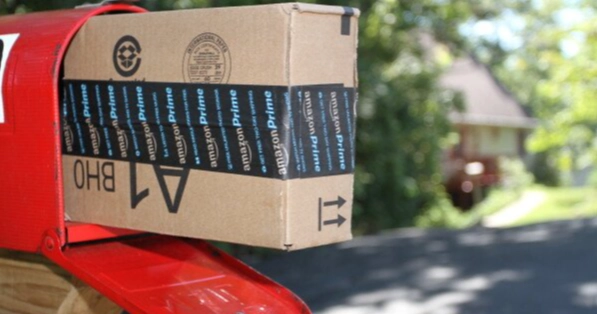
By late afternoon, dozens of brown boxes of different sizes often pile up in the lobby of an apartment building. Each carries Amazon’s familiar smile-shaped logo, stretching from the letter “A” to “Z” and representing a company that sells almost everything and promises quick delivery.
Amazon’s delivery box, seen on suburban doorsteps and in city apartment buildings, has become a symbol of a shopping culture where customers expect to receive almost anything within hours, or even in less than 30 minutes in some cities.
Behind these deliveries is a vast network of workers and robots sorting and packing orders, along with trucks, vans, bicycles and even drones transporting products to customers.
A few decades ago, getting something immediately usually meant visiting a nearby shop. Catalogue shopping through companies such as L.L. Bean and Lands’ End was also popular, but deliveries could take at least a week.
Amazon changed those expectations after launching as an online bookseller from founder Jeff Bezos’s garage in July 1995. The company later expanded into CDs, DVDs, videotapes, toys, clothing and numerous other products, earning a reputation as an “everything store.”
In 2005, Amazon introduced two-day delivery for Prime members, transforming online shopping. Since then, the company and its competitors have continued to reduce delivery times. Amazon is introducing 30-minute delivery this year. According to the company, Prime members in the United States can access free shipping on more than 300 million items across over 35 categories.
Research firm eMarketer estimates that e-commerce will account for 17.4% of US retail sales this year, worth $1.4 trillion. Amazon controls 40% of the country's online market, followed by Walmart with 11.4%. The company has also expanded its operations in cloud computing and artificial intelligence.
As its business grows, Amazon is developing packaging that is lighter, more compact and easier to recycle, said Pat Lindner, the company's vice president of mechatronics and sustainable packaging.
The company is also reducing its use of single-use plastic packaging. The share of Amazon shipments in North America using such packaging fell from 65% in 2023 to 27% in 2025.
Amazon is also using fewer of its signature cardboard boxes. Around 11% of its global orders are now shipped in their original manufacturer packaging without additional boxes or envelopes, the company said. Last year, more than half of its orders were delivered without a box, either in their original packaging or in flexible packaging.
However, the traditional cardboard box is unlikely to disappear.
“The box will always be important,” Lindner said, adding that Amazon would continue to introduce innovations to meet customers’ needs.