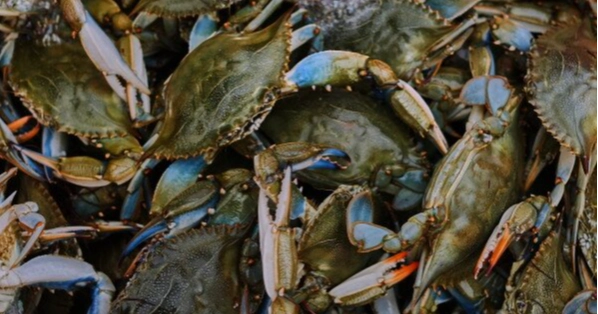
Italian fishermen are trying to turn an environmental disaster into a business opportunity as they find new markets for invasive Atlantic blue crabs that have devastated clam and mussel farms in the Po River Delta.
For two years, most of the crabs caught by fishermen were incinerated because Italians showed little interest in eating the species, which is blamed for destroying large numbers of prized Manila clams.
But the strategy is now changing. Instead of destroying the crabs, fishermen are exporting them, helping some communities recover from huge financial losses caused by the invasion.
The Polesine Fishermen's Cooperative Consortium saw its revenue fall by 75% to 15 million euros ($17 million) in 2024 and 2025. Its active membership also dropped from 1,500 to 850.
“We needed to change strategy and create an opportunity from this disaster,” said Paolo Mancin, president of the cooperative.
The new approach appears to be paying off. The consortium has sold every blue crab it has caught so far this year, eliminating the need to incinerate them. It expects revenue to reach 20 million euros ($23 million) this year, with crab sales accounting for most of the income.
“Since we're going to have to live with these crabs, I hope they become an opportunity,” said fisherman Federico Zago. “I hope the market continues to grow.”
The Atlantic blue crab has been present in the Adriatic Sea since at least the 1940s, likely arriving in ships' ballast water. However, its population remained relatively limited until 2023.
Then its numbers surged dramatically. The crabs damaged fishing nets, consumed large numbers of mollusks and pushed aside the native green crab, a popular local delicacy.
Experts say climate change helped create favourable conditions for the species. Rising water temperatures supported reproduction, while drought lowered water levels in the Po River, allowing more seawater to enter freshwater areas.
The changing water conditions created an ideal environment for blue crabs, especially in lagoons and deltas where clam and mussel farms provided an abundant food supply.
Italy launched an eradication programme in 2024 and paid fishermen to catch and incinerate the crabs. Over two years, the Polesine cooperative alone collected and destroyed nearly 2.3 million kilograms of blue crabs.
But the programme had little impact because female blue crabs can produce up to 8 million eggs in a season. The government has since shelved the eradication effort.
Scientists are also testing other ways to control the population. This summer, researchers at the University of Bologna released 150,000 baby octopuses into the Adriatic Sea, hoping they would prey on the crabs.
However, experts remain doubtful that predators alone can control an animal with such a high reproductive rate.
Meanwhile, fishermen are increasingly relying on exports.
Every morning, fishermen unload large crates of live blue crabs, which are later steamed, frozen and packed for shipment to Sri Lanka. There, workers process the crab meat by hand before it is exported to other markets.
The joint venture between Sri Lankan company Taprobane Seafoods and the Scardovari consortium produces several crab products, including claw meat, mixed meat and fillets. Only a small portion is currently returning to Italy.
Still, blue crab remains far less profitable than the clam industry. Fishermen receive about 1.30 euros per kilogram for crab, compared with around 10 euros per kilogram for clams, which once generated about 90% of their income.
Efforts are also underway to persuade Italians to eat the invasive crab.
Most restaurants around Venice still avoid blue crab, partly because of the work needed to prepare it and its negative reputation.
But the Yogi restaurant and bar in Porto Tolle, near the Po Delta, has fully embraced it.
Owner and chef Stefania Marchesini, a former professional fisherwoman, now offers an all-crab menu featuring fried crab balls, creamed crab with polenta, soft-shell crab and other dishes.
“At first, the customer is very skeptical. But then the reaction is completely positive, and they want to try the entire range of products,” she said.
Marchesini is also processing blue crab for sale to other restaurants, although demand has remained limited.
Despite the resistance, she believes attitudes will gradually change.
“We are all angry because it invaded our seas,” Marchesini said. “But we also have to eat. Once people understand how it should be prepared, they will realize it is an excellent product.”