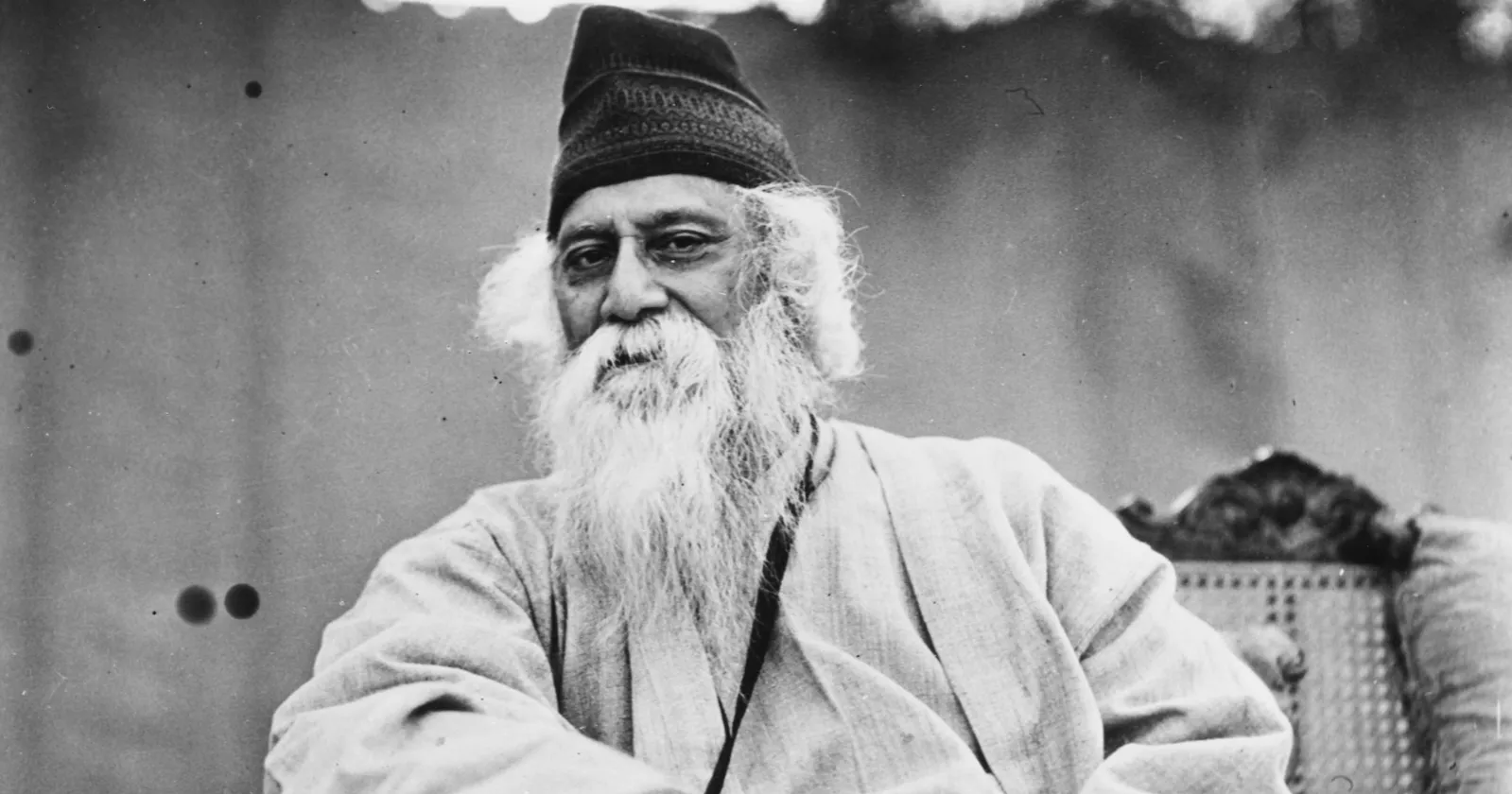
The country on Thursday observed the 85th death anniversary of Nobel Laureate Rabindranath Tagore, with people from all walks of life paying tribute to the literary giant revered as the Bishwakobi (World Poet).
Although Tagore died on August 7, 1941, according to the Gregorian calendar, at the age of 80, his death anniversary is traditionally observed on the 22nd of Srabon in the Bengali calendar.
Tagore's poetry inspires freedom-loving Bangladeshis: Chief Whip
Various cultural organisations and institutions arranged commemorative events featuring music, recitation, discussions and reflections on Tagore’s life and works.
The state-run and private television channels aired special programmes highlighting the poet’s legacy.
Born on May 7, 1861 (25th of Baishakh, 1268 in the Bengali calendar) in Jorasanko, Kolkata, Tagore was the youngest of 13 surviving children of Debendranath Tagore and Sarada Devi.
A towering figure in Bengali literature and culture, Tagore composed over 2,000 songs, establishing a unique genre known as “Rabindra Sangeet.” His vast literary contributions include eight novels, 84 short stories, countless poems, plays, and essays over a career spanning nearly seven decades.
He founded Visva Bharati University at Santiniketan in 1921, envisioning it as a centre for global learning rooted in Indian traditions.
In 1913, Tagore became the first non-European to receive the Nobel Prize in Literature for his English translation of Gitanjali (Song Offerings).
Two of his songs became national anthems – “Amar Sonar Bangla” for Bangladesh and “Jana Gana Mana” for India – reflecting his enduring influence across the subcontinent.