
On the occasion of 29th Anniversary of establishment of BIMSTEC, I extend, on behalf of the
BIMSTEC Secretariat, my warm greetings and best wishes to the Governments and Peoples of
the 7 BIMSTEC member States (Bangladesh, Bhutan, India, Myanmar, Nepal, Sri Lanka and
Thailand).
7 BIMSTEC member States, located contiguous and close to Bay of Bengal, the largest Bay of the world, face similar developmental and transnational security challenges, which, they realize,
they cannot deal with alone.
Hence, they are keen to forge regional cooperation under BIMSTEC. Their shared historical experiences, cultural linkages and civilization legacies provide a strong foundation for forging regional cooperation.
BIMSTEC is an Inter-Governmental Regional Organisation, with its Permanent Secretariat
located in Dhaka, Bangladesh. Established in June 1997 by its 4 founding members - Bangladesh, India, Sri Lanka and Thailand - as a non-political platform to facilitate cooperation amongst the countries of South Asia and South East Asia, BIMSTEC has emerged as a vibrant regional organization. Seven BIMSTEC member States are home to 1.8 billion people; they had in 2024 a combined GDP of over $5.0 trillion and a combined external trade of almost $3.0 trillion.
A significant part of global trade and energy flows through the waters of Bay of Bengal. Since its inception, 29 years ago, BIMSTEC has made significant progress. It has adopted its own Charter and has institutionalized the requisite core and sectoral mechanisms for forging regional cooperation. It has its vision enshrined in BIMSTEC Bangkok Vision 2030, which provides a roadmap for expanding and deepening regional cooperation. As a non-political organization, BIMSTEC has focused on promoting tangible cooperation, based on shared priorities of the member States.
BIMSTEC has a comprehensive agenda, comprising 18 sectors of cooperation, clubbed in 7
Groups with designation of 7 member States as the Lead member State for one of the 7 Groups.
Bangladesh leads Trade & Investment, Women Development and Blue Economy Sectors; Bhutan
leads Environment & Climate Change and Mountain Economy Sectors; India leads Security, Energy and Disaster Management Sectors; Myanmar leads Agriculture & Food Security and Fisheries & Livestock Sectors; Nepal leads Culture, Tourism, People-to-People Contact Forums and Poverty Alleviation Sectors; Sri Lanka leads Science, Technology & Innovation, Health and Human Resource Development Sectors; and Thailand leads Connectivity Sector. The Agenda of BIMSTEC has been developed with consensus amongst the member States and is fully aligned with the UN SDGs Agenda 2030.
BIMSTEC has held numerous Summits of Heads of the Government and Ministerial and Senior
Officials Meetings, including Sectoral Ministerial and Senior Officials Meetings. There are numerous sectoral Joint Working Groups, Expert Groups and their Sub-Groups to identify areas of cooperation in various sectors, delineate Plans of Action and monitor their implementation.
In order to institutionalize cooperation in various sectors, BIMSTEC has established Centres of Excellence, such as BIMSTEC Centre for Weather and and Climate and BIMSTEC Energy Centre, both in India. Further, BIMSTEC Cultural Industries Observatory has been set up in Paro, Bhutan, and BIMSTEC Technology Transfer Facility is being set up in Colombo, Sri Lanka. 8 more Centres of Excellence are being set up in order to enhance regional cooperation in areas of agriculture, culture and tourism, disaster management, sustainable maritime transport, skill development, tropical medicine, traditional medicine, Supreme Audit Institutions etc. BIMSTEC has already concluded two Conventions: BIMSTEC Convention on Cooperation in Combating International Terrorism, Transnational Organized Crime and Illicit Drug Trafficking, which has entered into force since March 2021, and BIMSTEC Convention on Mutual Legal Assistance in Criminal Matters, which has not yet entered into force. 3 more Conventions on Extradition; Human Trafficking; and Transfer of Sentenced Persons are being concluded. The BIMSTEC Agreement on Maritime Transport Cooperation, which was signed in April 2025, has entered into force for the 4 member States, which have ratified it. Besides, a number of MoUs and MoAs have also been concluded.
BIMSTEC has been seeking developmental partnerships with the non-Members as well as the
UN, International and Regional Organisations. It has signed MoUs for cooperation with ADB,
IFPRI, IORA and UNODC. It has been engaged in forging cooperation with WB, WIPO, WHO, ITU, UNDRR, UNESCAP, UN Women, ISA and CDRI etc.
BIMSTEC is open to engage in partnerships with other regional organizations as well as UN and International Organizations.
With measures being taken to reform and revitalize it, including through implementation of the
recommendations contained in the Report of the Eminent Persons’ Group, BIMSTEC is poised
to emerge as a dynamic and successful platform for forging regional cooperation and to play a
crucial role in realizing security and sustainable development of its member States.
It is also emerging as a shining example of South-South cooperation.
I express my deep gratitude to the BIMSTEC member States for their continued guidance and support to the BIMSTEC Secretariat.
The Secretariat remains fully committed to carrying out the tasks entrusted to it in a timely, efficient and effective manner and supporting the member States in translating their shared vision for regional cooperation into tangible outcomes.
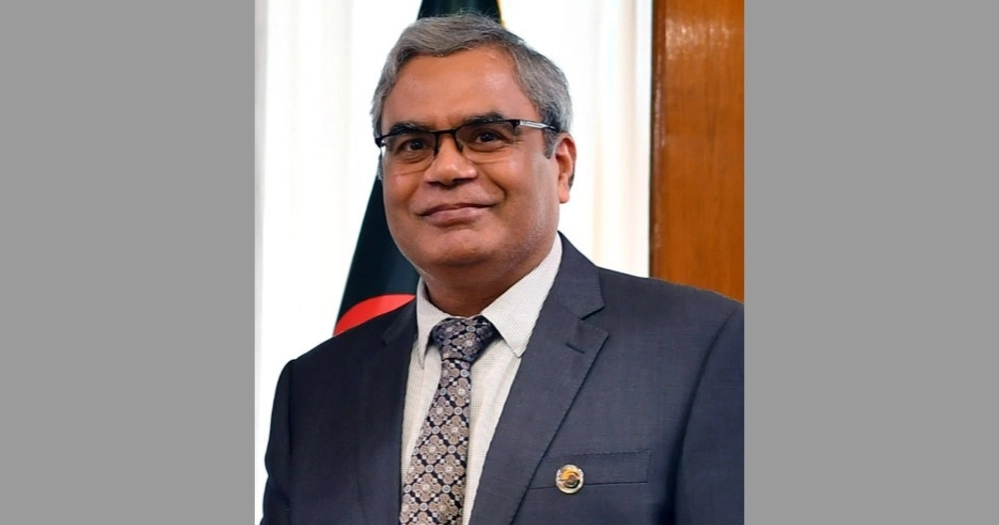
Indra Mani Pandey is the Secretary-General of the Bay of Bengal Initiative for Multi-Sectoral Technical and Economic Cooperation (BIMSTEC)