
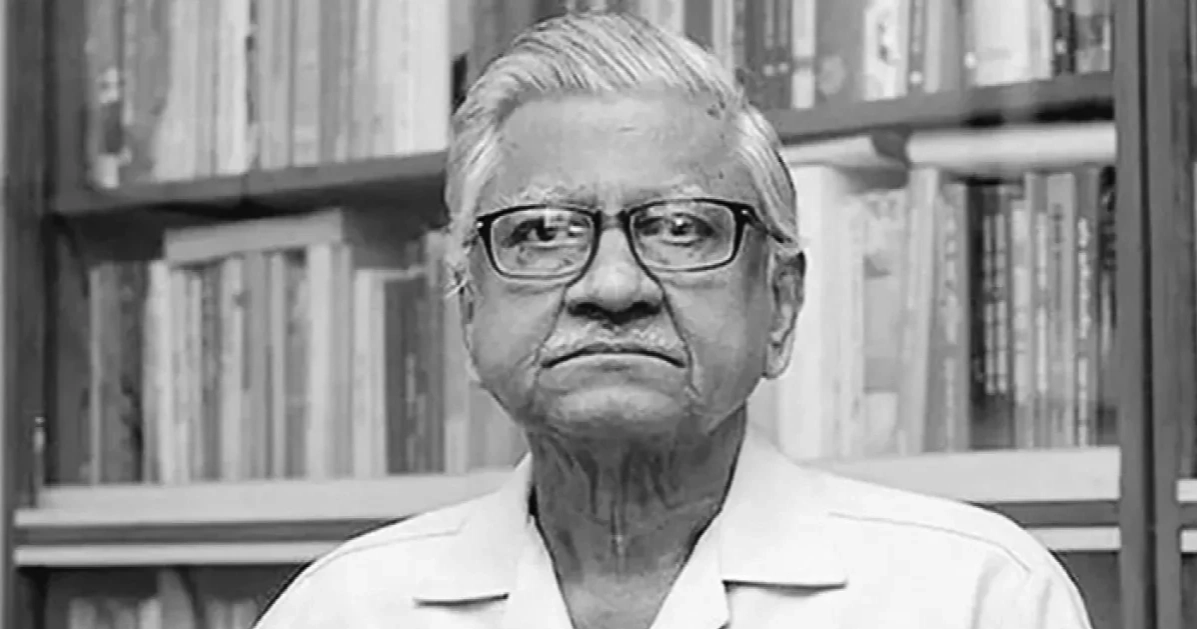
The passing of eminent writer, educationist and intellectual Prof Abul Quasem Fazlul Huq marks the end of an era in Bangladesh’s intellectual history. For decades, he stood as a fearless voice of reason, truth and moral integrity, earning the respect of scholars, students and readers across generations.
To many, Prof Huq was more than a distinguished academic. He was the nation’s conscience—a thinker who consistently challenged injustice, corruption and intellectual dishonesty with clarity and courage.
His writings reflected an unwavering commitment to truth and humanity. Through his essays, books and public engagements, he encouraged critical thinking and independent judgment at a time when conformity often seemed the easier path.
His intellectual legacy continues to inspire those who believe that scholarship must serve society.
Prof Huq devoted more than four decades to the Bangla Department of the University of Dhaka, where he taught countless students and later served as department chairman. His classrooms were known not only for academic excellence but also for nurturing curiosity, ethical reflection and social responsibility.
Born on September 30, 1940, in Pakundia upazila of Kishoreganj, Prof Huq completed his honours degree in Bangla in 1965 and his master’s degree in 1966 from the University of Dhaka.
During his student life he was influenced by renowned scholars such as Munir Chowdhury, Ahmed Sharif, Humayun Azad and Neelima Ibrahim, whose intellectual traditions helped shape his own independent outlook.
Among his notable works are Muktisangram (1972), Naitikata: Shreyoniti O Durniti (1981), Rajniti O Darshan (1989), Adhunikatabad O Jibananander Jibonoutkantha (2004) and Rashtrachintay Bangladesh (2008).
His works remain valuable references for readers seeking thoughtful analysis of Bangladesh’s social, political and cultural development.
He translated Bertrand Russell’s Political Ideals and Vision of the New Age into Bangla, making important philosophical ideas more accessible to local readers. He also edited significant publications, including Bangladesh Culture in the Light of History, Swadeshchinta and Akbar’s Nationalism. Since 1982, he had served as editor of the progressive periodical Lokayat, promoting critical discourse and progressive thought.
Despite personal tragedy, Prof Huq remained steadfast in his commitment to intellectual freedom.
His son, publisher Faisal Arefin Dipon, owner of Jagriti Prokashony, was brutally murdered by militants on October 31, 2015, in an attack that shocked the nation. Even after this devastating loss, Prof Huq continued to speak firmly for freedom of expression and against extremism.
After his son’s murder, he told reporters, “I don’t want any justice. I want good sense to prevail. Those who do politics in the name of secularism, and those who do so in the name of state religion—both are destroying the country. Good sense should prevail on both sides. That is all I wish. What will be achieved through jail and hanging?”
Following his death, people from all walks of life gathered to pay their final respects. His first namaz-e-janaza was held at Pallabi Masjidul Aman Mosque in Mirpur after Fajr prayers on Monday.
His body was then taken to Bangla Academy, the Central Shaheed Minar and Aparajeyo Bangla, where admirers, colleagues, students and well-wishers paid tribute to the distinguished scholar. A second namaz-e-janaza was scheduled at the Central Mosque of the University of Dhaka after Zuhr prayers.
Author: Sarwar Wadud Chowdhury, General Secretary and Spokesperson, Anti-Corruption National Coordination Committee