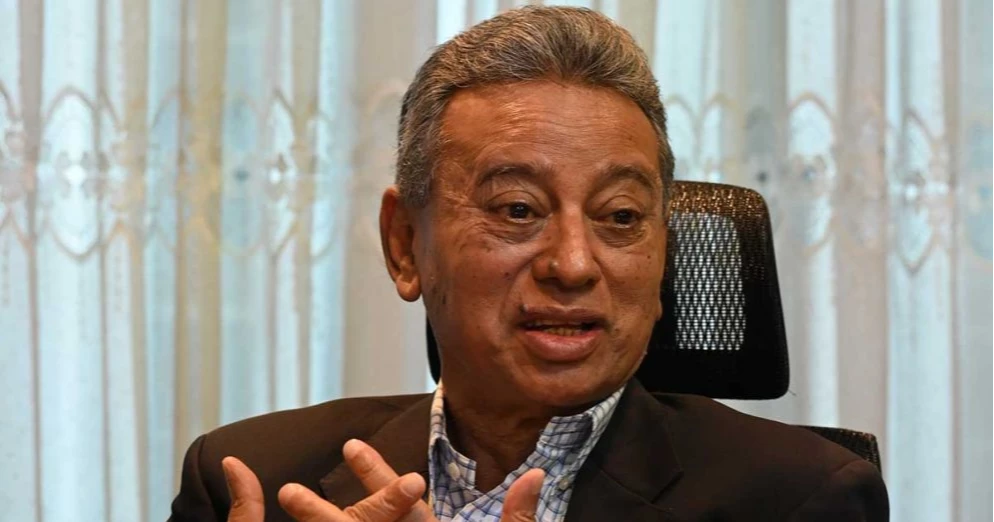
Finance Minister Amir Khosru Mahmud Chowdhury on Wednesday said excessive regulation remains the biggest obstacle to doing business and attracting investment in Bangladesh, stressing that the government is committed to removing unnecessary regulatory complexities.
“If there is any major barrier for businesses in Bangladesh, it is that Bangladesh is an overregulated country,” he said while speaking at a programme titled “Pre-Budget Roundtable 2026” organised by Dhaka Forum at a hotel in the capital's Banani area.
Budget to address rising poverty, expand economic opportunities: Amir Khosru
The minister said the government is fully aware of the need for deregulation and has placed special emphasis on reducing unnecessary regulatory hurdles in the upcoming budget.
“We have focused on deregulation in the budget. The current government is business-friendly, and the budget will contain a number of structural directives aimed at removing complexities and excessive controls to create a better business environment,” he said.
Emphasising the need to involve every citizen in economic activities, Khosru said the government is committed to ensuring broader economic participation.
“Everyone will be part of economic empowerment. We are placing strong emphasis on the full digitalisation of tax collection. We are aware of the various challenges and are working to address them,” he said.
The finance minister also said the government plans to simplify licensing and certification procedures to make it easier for businesses and entrepreneurs to operate. “We will take centralised decisions to remove complexities related to licences and certifications for businesses and entrepreneurs. We will announce our decisions as quickly as possible.”
Referring to public projects undertaken in previous years, he said many unnecessary projects had been approved despite lacking clear justification.
“There are projects that were simply not needed. Some of them are already 50 to 60 percent complete. We are evaluating everything,” he said.
Khosru said the government will strengthen transparency in project planning in the future, assess the necessity of proposed projects more rigorously, and prioritise approving projects that generate employment opportunities.
“We will ensure greater transparency in project formulation and approve projects that contribute to job creation and economic growth,” he added.