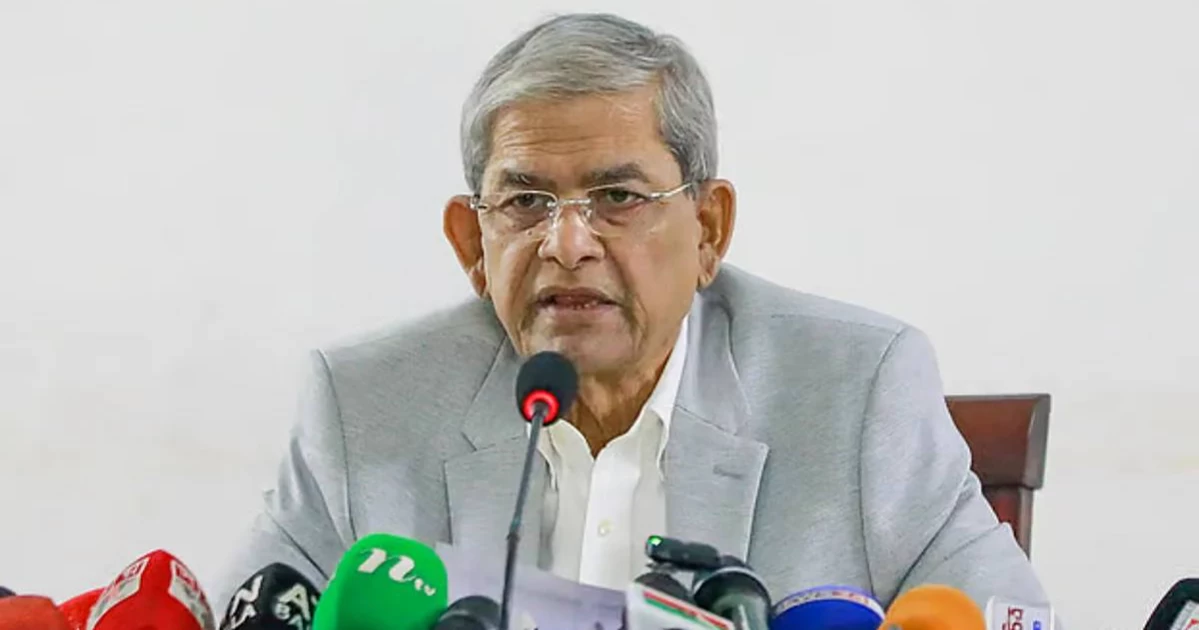
BNP Secretary General Mirza Fakhrul Islam Alamgir on Monday said that despite years of negative propaganda and narratives, former President Ziaur Rahman’s place in public memory and history remains intact.
He made the remarks while addressing a special prayer and discussion meeting at Basabo Buddhist Temple in the capital, organised to mark the 45th death anniversary of BNP founder and former President Ziaur Rahman.
Fakhrul said many young people did not have the opportunity to see Ziaur Rahman and had learned about him mostly through negative narratives propagated over the past 15–16 years.
“Many things were said about him, including allegations that he was a Pakistani agent. But despite all these efforts, they could not diminish Ziaur Rahman, remove him from people’s hearts or erase him from history,” he said.
Drawing a comparison with former Cuban leader Fidel Castro, Fakhrul referred to Castro’s famous statement during his trial: “Condemn me, it does not matter, history will absolve me.” He said history has similarly recognised Ziaur Rahman’s role in Bangladesh.
He said Zia envisioned a “rainbow state” where people of all religions and beliefs—Hindus, Muslims, Buddhists, Christians, believers and non-believers alike, could live together and contribute to nation-building.
Fakhrul said Bangladesh lost one of its most promising leaders with Ziaur Rahman’s death, adding that the country could have advanced much further had he remained alive.
Referring to Prime Minister Tarique Rahman, Fakhrul said the BNP leader has inherited the legacy of Ziaur Rahman and Khaleda Zia and has already launched a number of initiatives following his assumption of office.
He expressed optimism about the upcoming national budget, saying it could include measures aimed at building a new Bangladesh.
Thanking members of the Buddhist community for their support and hospitality, Fakhrul reiterated BNP’s commitment to building a non-communal and inclusive Bangladesh.
He warned against attempts by certain groups to create divisions in society in the name of religion and said communal politics must not be allowed to undermine national unity.
Fakhrul said Bangladesh’s independence was achieved through the collective sacrifices of people from all religious communities and that the spirit of 1971 remains central to the country’s identity.
He said BNP believes in liberal democracy, elections, freedom of expression, media freedom, judicial independence and the protection of the rights of all religious communities.