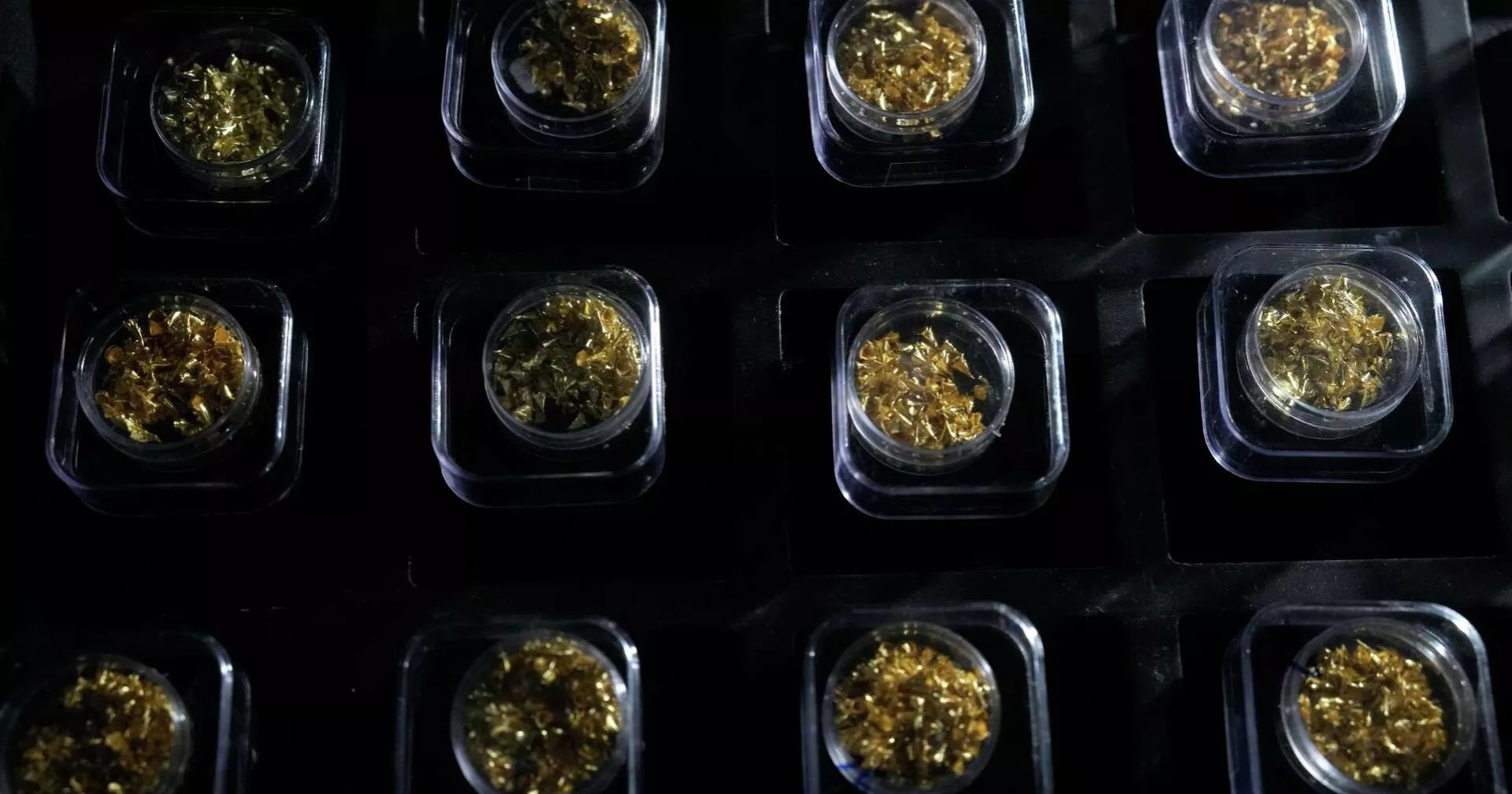
Brazil is using advanced forensic technology to identify the origin of gold in an effort to curb illegal mining in the Amazon, a major threat to the rainforest, Indigenous communities and the environment.
The work is being carried out at the National Institute of Criminalistics in Brasilia, where the federal police have established a specialized "gold lab" to collect and analyze gold samples from across the country.
The lab's goal is to determine whether seized gold came from protected areas, such as Indigenous territories or national forests, where mining is prohibited. The process, known as "gold fingerprinting," allows experts to trace the source of gold with a high degree of accuracy.
Researchers say each gold deposit contains a unique chemical signature. As gold forms naturally underground or in riverbeds, it absorbs tiny amounts of surrounding elements such as silver and copper, creating a distinct fingerprint.
By comparing a seized sample with data stored in the laboratory's database, investigators can determine whether the gold was legally mined or illegally extracted from protected areas.
Federal police forensic expert Gustavo Geiser said the technique has been developed since 2019 in partnership with Brazilian universities using advanced technologies including X-ray fluorescence spectrometry, scanning electron microscopy and laser ablation mass spectrometry.
If tests confirm that gold was illegally mined, the findings can be used as evidence in criminal investigations and prosecutions.
Authorities say illegal mining groups often use fraudulent documents to sell illegally mined gold through legal markets, similar to schemes involving illegally sourced cattle and timber.
The problem has intensified as global gold prices have risen, encouraging more illegal mining across the Amazon.
According to Amazon Mining Watch, about 496,000 hectares of rainforest have been cleared for mining since 2023, including around 223,000 hectares in the Brazilian Amazon.
Brazil's Federal Court of Accounts said last year there was evidence that permits issued to small-scale miners had been misused to disguise gold extracted from protected areas.
A separate Greenpeace investigation described a "ghost mine" scheme, in which operators claim gold was produced from licensed mines that show no mining activity, while nearby Indigenous lands display extensive illegal mining operations.
Earlier this month, a federal court in the northern state of Pará ordered government agencies, including the Central Bank and the National Mining Agency, to improve gold tracking from mines to markets.
Federal prosecutors have also filed a lawsuit seeking stricter oversight of mining permits, arguing that some licences are being used to launder gold mined illegally by criminal groups operating in protected areas.
Geiser said the forensic laboratory strengthens criminal investigations while helping improve the credibility of Brazil's gold supply chain by verifying the legal origin of gold entering financial markets.
He added that criminal networks are increasingly moving illegally mined gold through neighboring countries such as Venezuela, French Guiana and Suriname. Gold samples from those countries have also been added to the laboratory's growing database.
Illegal gold mining remains a major environmental concern in the Amazon. While mining contributes less to deforestation than agriculture, it causes long-lasting environmental damage because miners commonly use mercury to separate gold from other materials.
The mercury often ends up in rivers, contaminating water and fish that many Indigenous communities rely on for food.
A 2023 study by Brazil's Fiocruz research institute found that more than one-fifth of fish sold in Amazon markets contained mercury levels above World Health Organization safety limits. The study also found that children aged two to four in some areas were exposed to mercury levels up to 31 times higher than recommended.
Brazil is a signatory to the UN Minamata Convention on Mercury, which aims to eliminate mercury use in gold mining.
This month, Brazil's Ministry of Mines and Energy published a draft proposal to gradually phase out mercury use in mining. Public consultation on the proposal will continue until Aug. 7.
Federal prosecutors have called for Indigenous communities, which are among the most affected by mercury pollution, to be included in the consultation process.
Geiser said a complete ban on mercury would not only reduce environmental damage but also make it easier for investigators to identify illegal mining operations.