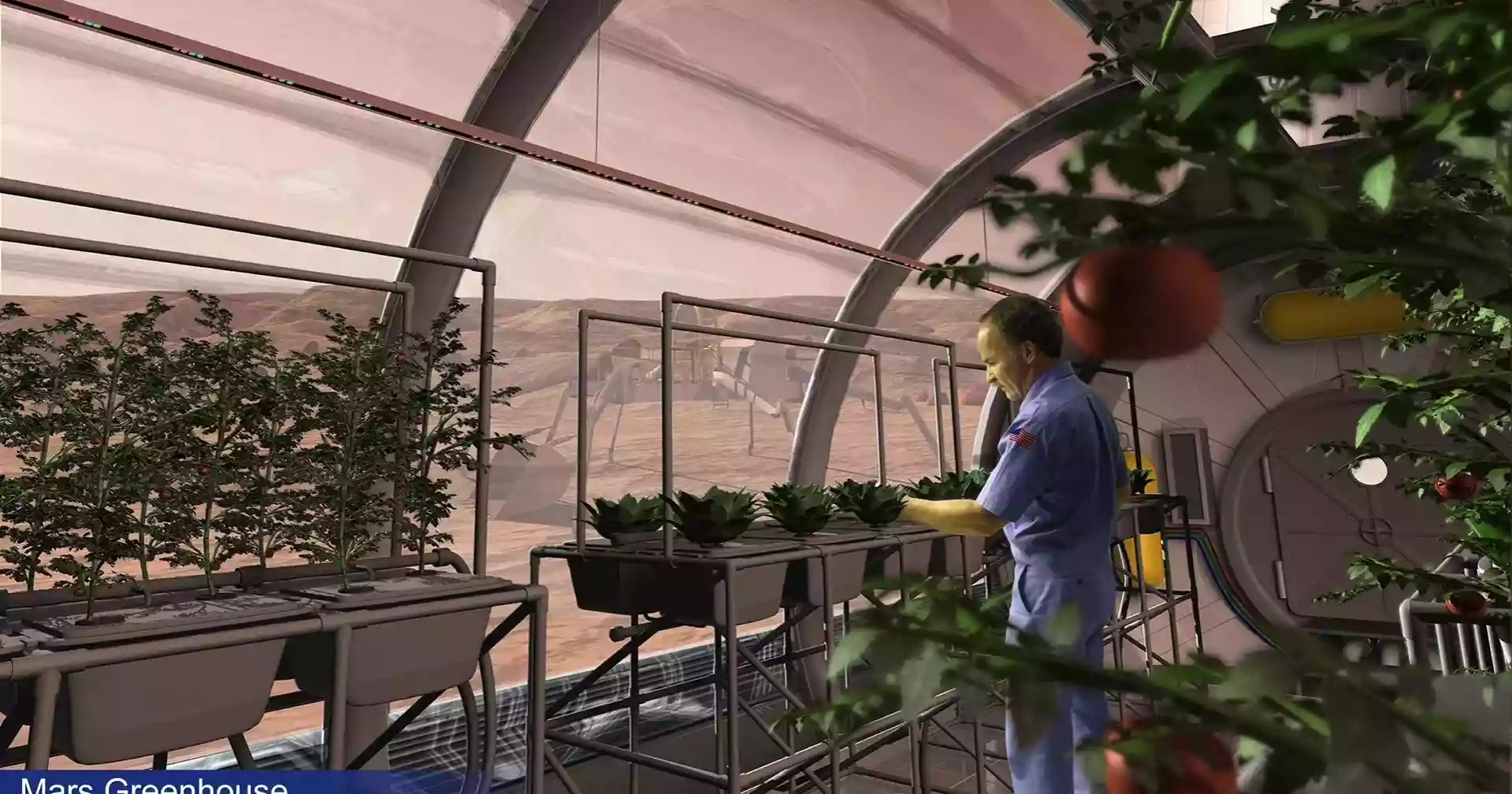
Researchers are exploring whether beneficial fungi could help make the harsh soil-like material on the Moon and Mars suitable for growing crops, potentially reducing the need to transport food from Earth.
The idea may sound like science fiction, but scientists in the United States and Brazil are already studying how fungi could support agriculture beyond Earth. In a recent review published in Frontiers in Astronomy and Space Sciences, researchers examined how these microorganisms could help turn lunar and Martian regolith into a more suitable environment for plants.
Making Martian soil more suitable for crops
Lunar and Martian regolith lacks several nutrients essential for plant growth. The researchers particularly focused on shortages of nitrogen, potassium and phosphorus.
Beneficial fungi could help address some of these problems. On Earth, fungi play an important role in nutrient cycling and can help plants obtain essential nutrients from their surroundings.
The review looked at fungal species that have been shown to promote plant growth by improving nutrient absorption, including in environments affected by non-living stresses such as poor soil conditions. The researchers also examined fungi that have been used in experiments aboard the International Space Station.
Fungi could extend plant roots
Plants growing in nutrient-poor lunar or Martian regolith would face significant challenges. They would need to obtain limited nutrients while also coping with difficult growing conditions.
One promising group is arbuscular mycorrhizal fungi, or AMF. These fungi form close relationships with plant roots and effectively work as extensions of a plant's root system.
By expanding the area through which plants can access nutrients, AMF can help crops absorb resources more efficiently.
However, researchers say more studies are needed before fungi can become part of practical space-farming systems. Future experiments will need to determine how these organisms perform in actual lunar and Martian regolith rather than simulated or substitute materials.
Despite these challenges, the researchers see fungi as a potentially useful tool for future agriculture beyond Earth. If the approach proves successful, fungi could help astronauts grow more reliable and productive crops on the Moon and Mars, reducing dependence on food supplies sent from Earth.
The researchers concluded that adding plant-growth-promoting fungi to lunar or Martian agriculture could strengthen crop production and support the development of human settlements beyond Earth. Fungi such as Trichoderma and different types of AMF could help plants cope with harsh conditions, improve access to essential nutrients and potentially make regolith more suitable for cultivation.
Source: Science Daily