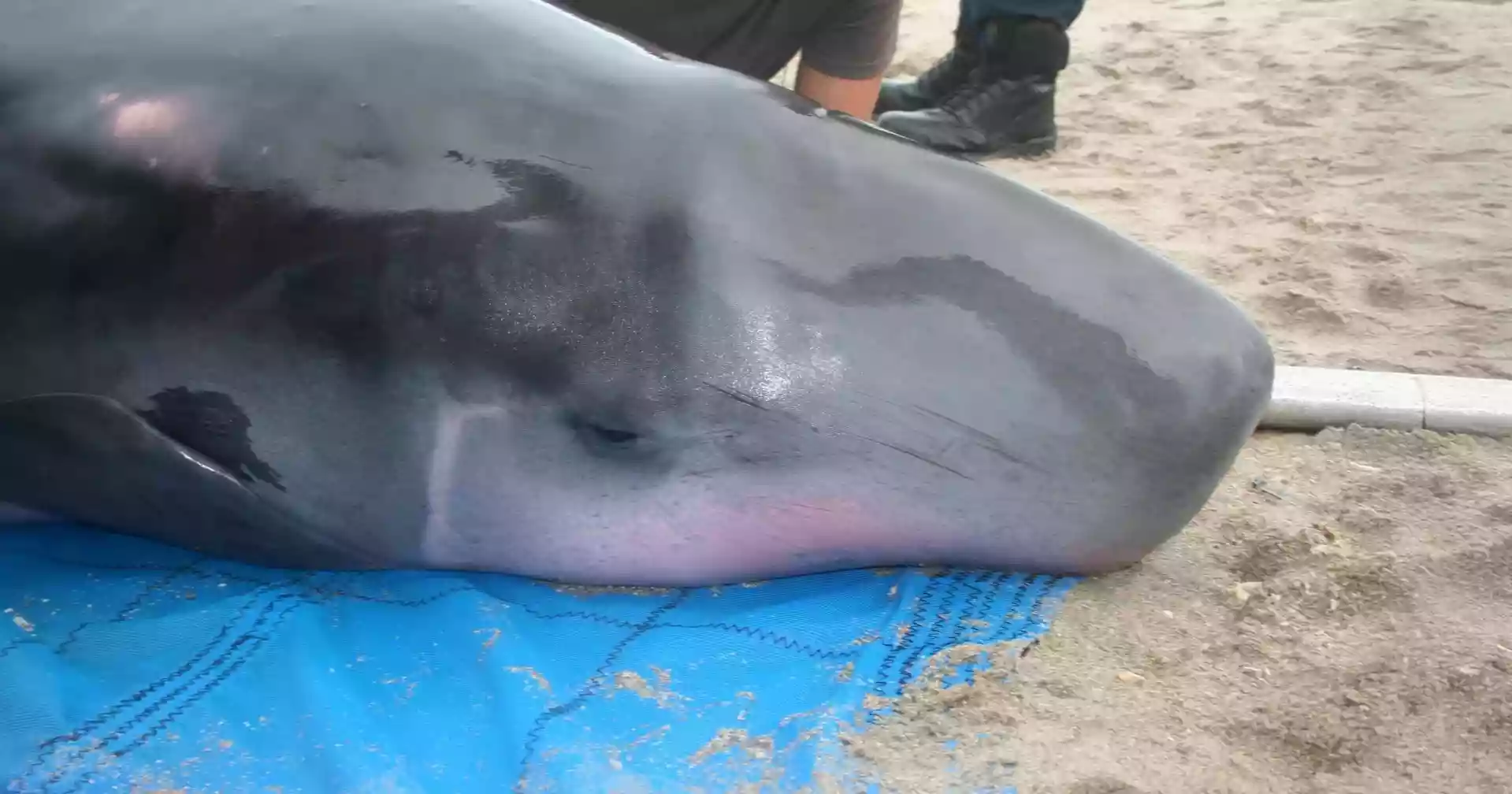
Scientists have discovered three previously unknown types of Helicobacter bacteria in pygmy sperm whales, offering new clues about the health of one of the ocean's most mysterious marine mammals.
Pygmy sperm whales (Kogia breviceps) are among the least studied whale species because they spend most of their lives far offshore, travel in small groups and dive deep to hunt squid and fish. As they are rarely seen in the wild, much of what scientists know about them comes from whales that wash ashore.
Researchers from Florida Atlantic University's Harbor Branch Oceanographic Institute and partner institutions reviewed more than two decades of whale stranding records and preserved tissue samples. Their findings, published in the Journal of Wildlife Diseases, identified three previously undocumented Helicobacter genotypes, named Kogia Helicobacter 1, 2 and 3.
The discovery is the first confirmed evidence of these bacteria in pygmy sperm whales and could help scientists better understand the role bacterial infections play in the health of marine mammals.
"Helicobacter bacteria are known to cause stomach-related illnesses in humans and other animals, including chronic inflammation, ulcers and even stomach cancer," said lead researcher Annie Page. "Finding new strains in a deep-diving whale species is an important scientific discovery."
New bacteria identified
Between 1999 and 2020, researchers examined 59 stranded pygmy sperm whales, conducting post-mortem examinations on about 80% of them.
Four whales were found to have spiral-shaped bacteria in their stomach tissue. Further laboratory testing and DNA analysis confirmed that the bacteria belonged to three previously unknown Helicobacter genotypes.
According to researcher Wendy Marks, two of the newly identified bacteria are genetically similar to Helicobacter species previously found in dolphins, porpoises and humans. The third belongs to a more distinct genetic group, suggesting that many unknown bacteria may still exist in the ocean.
Signs of stomach disease
All four whales carrying the bacteria also showed signs of digestive system disease, including stomach inflammation, ulcers, tissue scarring and parasitic worm infections. One whale also had inflammation in its intestine.
Although researchers did not conclude that the bacteria caused the whales' deaths, they said the repeated presence of stomach damage suggests the infection may contribute to long-term health problems.
Helicobacter bacteria were first identified in marine mammals in 2000 and have since been found in several whale and dolphin species. Infections have been linked to stomach ulcers, inflammation, reduced appetite and other digestive disorders.
More research needed
Scientists say it remains unclear how common these newly discovered bacteria are among pygmy sperm whales or how much they affect the animals' health.
Because the species is rarely observed in the wild, further studies will be needed to determine whether the bacteria contribute to illness, strandings or broader population declines.
Researchers said the discovery also highlights the importance of long-term marine mammal stranding programmes, which provide valuable opportunities to study species that are otherwise difficult to observe.
The study involved scientists from Florida Atlantic University, the University of Florida, Colorado State University and Marine Mammal Pathology Services.
Source: Science Daily