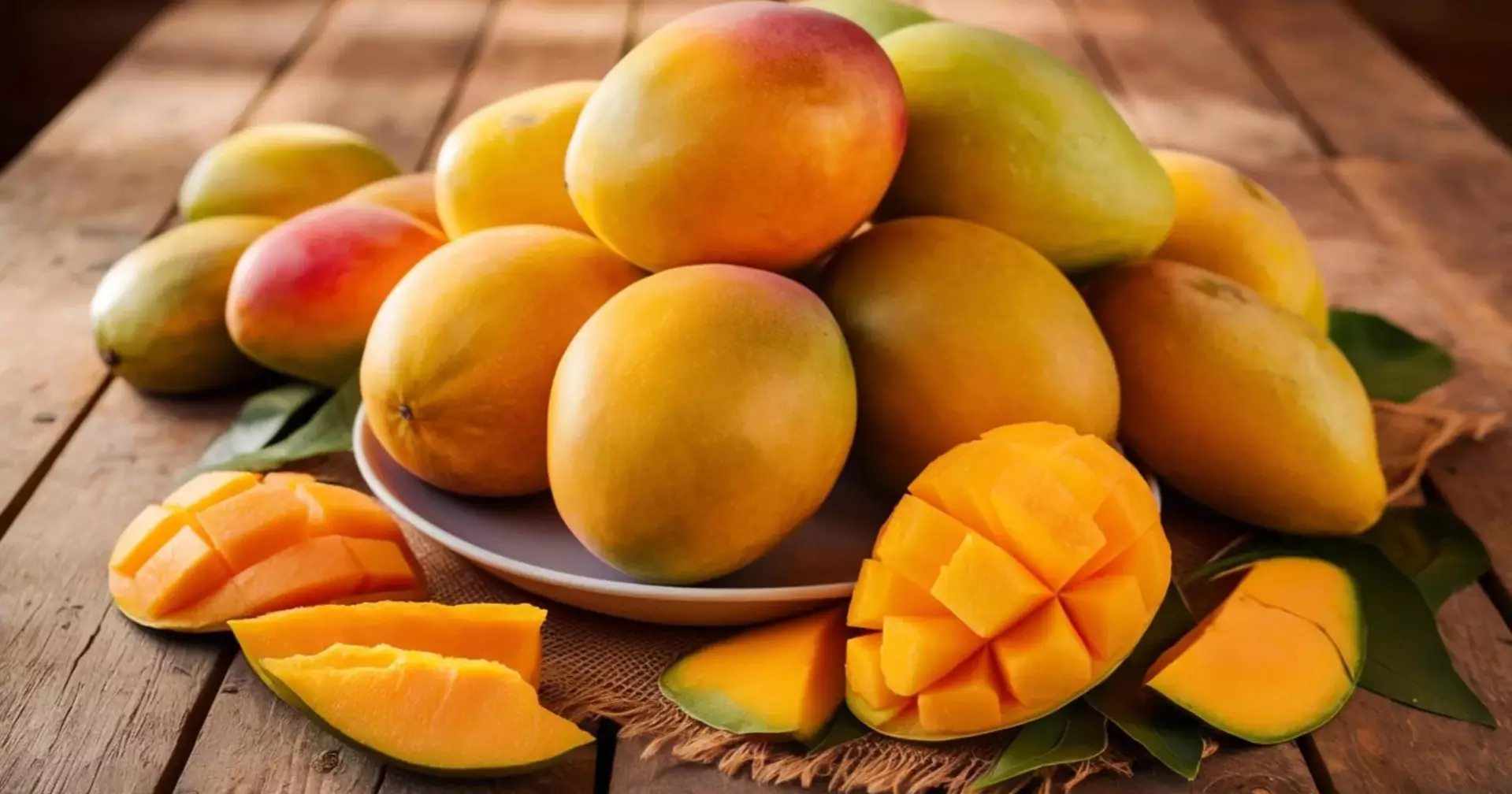
Researchers have found that storing mangoes at 12 degrees Celsius can significantly extend the fruit’s freshness while preventing cold damage, offering a potential breakthrough for mango transportation and storage systems.
According to a study by scientists from Hainan University, mangoes kept at 12°C ripened more slowly, retained their firmness and flavor longer, and activated stronger natural antioxidant defenses compared to fruit stored at warmer temperatures.
The findings, published in Tropical Plants, could help reduce spoilage and improve cold-chain transport for tropical fruits.
Mangoes are widely popular for their sweet taste and nutritional value, but they spoil quickly after harvesting because they continue to ripen during storage and transport.
In many tropical countries, mangoes are usually transported at temperatures between 26°C and 30°C. Scientists say such warm conditions speed up ripening and moisture loss, causing the fruit to soften and deteriorate faster.
Although colder storage is known to slow ripening, mangoes are also sensitive to extremely low temperatures, which can cause chilling injuries. Earlier studies had suggested that 12°C might be an effective storage temperature for ‘Tainong No.1’ mangoes, but researchers did not fully understand why.
To explore the issue, scientists compared mangoes stored at 12°C and 30°C over 24 days.
The team monitored several factors including fruit color, firmness, weight loss, sugar content, acidity, respiration rate, and levels of harmful molecules linked to cell damage.
Researchers also examined antioxidant compounds such as vitamin C, phenolics and flavonoids, along with protective enzymes that help fruits resist spoilage.
The study found that mangoes stored at 12°C stayed fresh much longer than those kept at 30°C.
After 16 days, mangoes stored at warmer temperatures turned yellow quickly, while those kept at 12°C maintained their green color for a longer period.
Fruit stored at 30°C also lost acidity faster and experienced sharp increases and later declines in sugar content. In contrast, mangoes kept at 12°C showed slower and steadier ripening.
The difference in physical condition was even more noticeable. Mangoes stored at 30°C lost over 17% of their weight, while fruit kept at 12°C lost less than 4%.
Cooler storage also helped the fruit remain firm for longer periods.
Microscopic analysis showed that mangoes stored at 12°C retained stronger cell walls and starch structures even after 24 days, while fruit stored at 30°C showed early cell damage and collapse.
Researchers further discovered that cooler temperatures reduced oxidative stress inside the fruit by limiting the buildup of harmful molecules linked to spoilage.
At the same time, mangoes stored at 12°C maintained higher levels of vitamin C and other antioxidant compounds. Protective enzymes also remained active for longer under cooler conditions.
Gene analysis showed increased activity in several antioxidant-related genes, helping strengthen the fruit’s natural defense system and reduce cellular damage during storage.
Scientists said the findings could provide practical guidance for the mango industry, allowing fruit to be harvested earlier, transported over longer distances, and ripened closer to consumer markets with less waste and quality loss.
The research received funding support from several Chinese agricultural and research programmes, including the Hainan Province Agricultural Reclamation Team Joint Innovation Project and China’s National Key Research and Development Programme.
Source: Science Daily