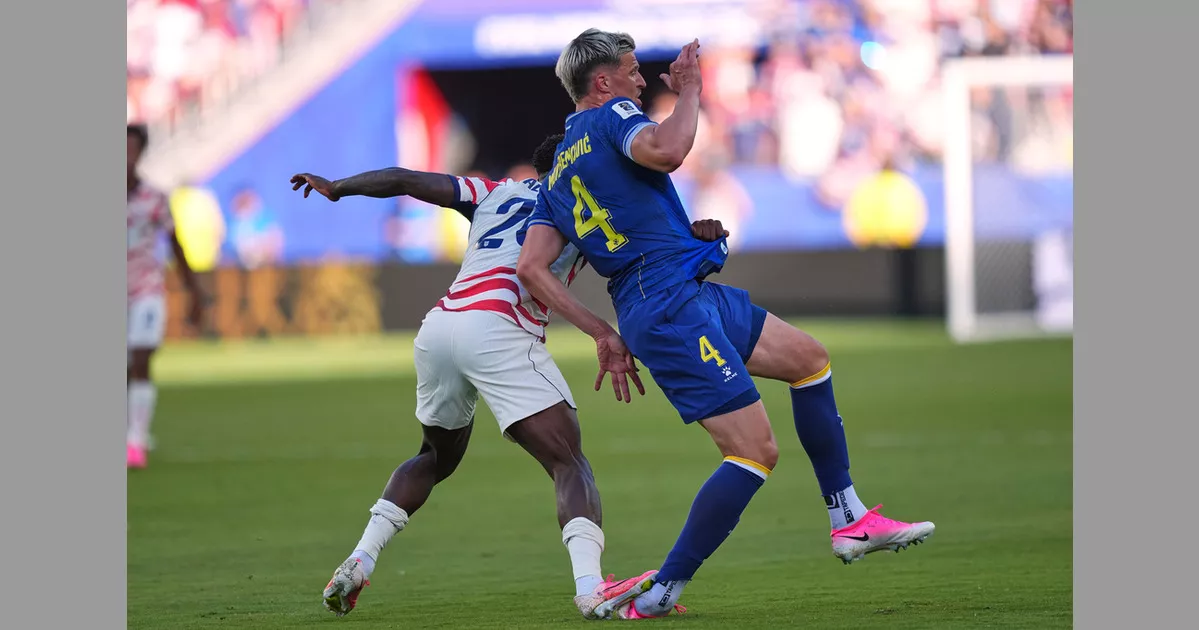
FIFA's decision to overturn the one-match suspension of United States forward Folarin Balogun has triggered widespread debate over the governing body's disciplinary process and allegations of political influence, despite the Americans' 4-1 defeat to Belgium in the FIFA World Cup Round of 16.
Balogun, who had been sent off during the United States' 2-0 victory over Bosnia-Herzegovina in the previous round, was initially due to miss the knockout match under FIFA's automatic suspension rules for red cards.
However, FIFA lifted the suspension less than 24 hours before the Belgium clash after reviewing the case. The decision followed public comments by US President Donald Trump, who acknowledged raising the issue with FIFA President Gianni Infantino and described the original red card as "a great injustice."
FIFA dismissed Belgium's appeal against the ruling hours before kickoff, allowing Balogun to start the match. However, the striker was unable to prevent the hosts from suffering a heavy defeat.
In explaining the decision, FIFA's disciplinary committee cited provisions in its disciplinary code allowing a judicial body to suspend the implementation of certain sanctions. Instead of serving an immediate one-match ban, Balogun received a suspended suspension valid for one year and was fined $40,000 for the red-card incident and for celebrating with teammates after being sent off.
FIFA said the suspension would only be enforced if Balogun committed a similar disciplinary offence within the probationary period.
The move drew criticism from Belgium, whose football federation described the decision as astonishing. Belgium coach Rudi Garcia questioned the timing of the ruling, while European football governing body UEFA warned that the decision could undermine the integrity of the game.
Several prominent figures in world football also expressed concern that the ruling could create uncertainty over the automatic suspension system and encourage future appeals against disciplinary decisions.
Infantino rejected suggestions of political interference, insisting FIFA's independent disciplinary committee had acted solely under the governing body's regulations and based on the facts of the case.
Balogun's case is believed to be the first at a FIFA World Cup in more than six decades in which a player avoided serving the automatic one-match suspension after being sent off during a tournament match.