Beijing is using research, investment, industrial infrastructure and policy support to speed up the transition of scientific discoveries from laboratories to mass production.
In Yizhuang, a high-tech industrial zone in southeastern Beijing, Guoke Superconductor is building what it describes as the world's first mass-production line for iron-based superconducting wire and tape. The facility is expected to be completed by the end of 2026, with an annual capacity of about 100 km.
“Fusion devices need 5,000 to 20,000 km of superconducting tape,” said Zhang Xiaohu, chairman of the company. He said global production in 2025 was insufficient to supply even one such device.
Superconductors, which can carry electricity without resistance under certain conditions, are used in areas including nuclear fusion, medical equipment and quantum information.
Yizhuang has also helped turn medical research into commercial production. Platinumlife Biotechnology developed automated production technology for amimestrocel injection, China's first approved stem cell drug. The treatment was approved in 2025 for steroid-refractory acute graft-versus-host disease.
The company replaced manual cell culture with automated, closed production lines and three-dimensional bioreactors, reducing production costs to one-seventieth of a comparable treatment approved in the United States.
The district has similarly supported the development of intelligent manufacturing. Xiaomi's electric vehicle factory was completed in 14 months and can produce a vehicle every 76 seconds at full capacity, using more than 1,000 robots.
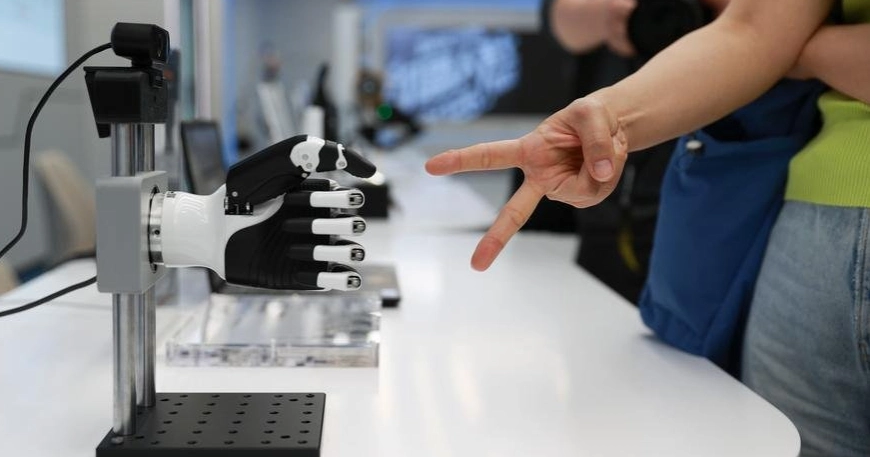
Yizhuang has also established a pilot platform for humanoid robot production, offering companies, universities and research institutions services ranging from prototyping to testing.
Policy support has been central to the area's growth. Over the past five years, Yizhuang has introduced nearly 70 policies supporting emerging industries and allocated more than 10 billion yuan annually in industrial development funds.
By 2030, the district aims to establish eight industrial clusters worth more than 100 billion yuan each and achieve total industrial output of 1 trillion yuan.