China’s exports rose 25 percent in August compared with the same month a year earlier, driven by strong overseas demand for automobiles and high-tech products, while the country’s already large trade surplus grew further, customs authorities said Tuesday.
The figures were largely consistent with economists’ forecasts and were released ahead of an expected meeting between Chinese President Xi Jinping and US President Donald Trump later this month. Beijing has yet to announce the exact date of the meeting.
Trade is expected to feature prominently in discussions between the two leaders.
China’s imports from around the world increased 28.2 percent in August year-on-year, accelerating from a 27.5 percent rise in July. Export growth also picked up from 23.9 percent in July. As a result, China’s trade surplus increased to $119.1 billion in August from $112.5 billion the previous month.
The growing surplus has drawn criticism from the United States and other economies. China recorded a record annual trade surplus of $1.2 trillion last year. Beijing, however, maintains that it does not deliberately pursue a larger trade surplus.
Chinese exports to the United States were valued at $42.5 billion in August, marking a 34.4 percent increase from a year earlier. The sharp rise was partly attributed to a lower comparison base following a decline in exports last year after higher US tariffs were introduced. US exports to China stood at $13.3 billion, giving China a surplus of about $29.2 billion, according to Chinese customs figures.
Exports to the European Union increased 6.6 percent, while shipments to Southeast Asia and Latin America rose 30.2 percent and 17.5 percent, respectively.
Lynn Song, chief economist for Greater China at Dutch bank ING, said exports have continued to grow faster than imports and are likely to push China’s trade surplus to another record this year.
China has also managed to withstand disruptions caused by the Iran war better than many other economies. Its expanding trade with Southeast Asia, Latin America and Africa has helped offset some of the effects of higher US tariffs.
Customs data showed automobile exports increased 43 percent in August from a year earlier, while semiconductor shipments surged 129.8 percent.
Chi Lo, a senior Asia-Pacific market strategist at BNP Paribas Asset Management, said China remains highly competitive in technology-related exports. He noted that strong shipments of electric vehicles, industrial equipment and semiconductors have contributed to the country's export performance.
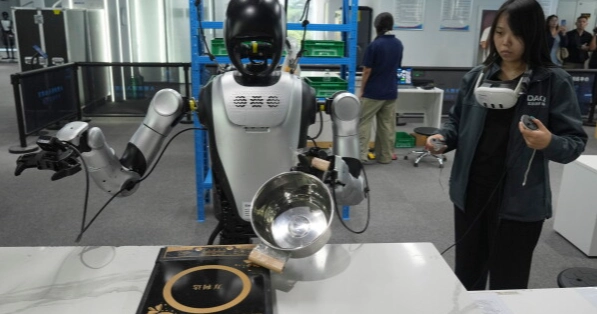
Lo said China has rapidly advanced toward higher-value industries and established itself as a significant force in artificial intelligence infrastructure and industrial automation.
Despite strong external demand, China's domestic economy continues to face difficulties. Consumer spending and investment remain weak following years of problems in the property sector. On Sunday, Beijing announced plans to inject about $54 billion into state-owned banks and insurers as part of efforts to support economic growth.
China’s heavy dependence on exports has also raised concerns among its major trading partners. At a recent meeting of senior financial officials in Asheville, North Carolina, 19 members of the Group of 20 agreed to work toward reducing global economic imbalances. China was the only G20 member that did not support the agreement after US Treasury Secretary Scott Bessent described China’s trade surplus as an obstacle to global economic growth.
Lo said the strategic tensions between China and the United States are likely to continue. He noted that both countries have leverage over strategically important products, with Washington restricting exports of advanced technology to China while Beijing has limited supplies of rare earths to the US.
China and the European Union are also expected to hold ministerial-level trade discussions later this year. The EU is seeking ways to narrow its trade deficit with China, which is estimated at around 1 billion euros per day.
In July, the EU introduced measures aimed at supporting its steel industry and restricted tax-free imports of small Chinese e-commerce packages.