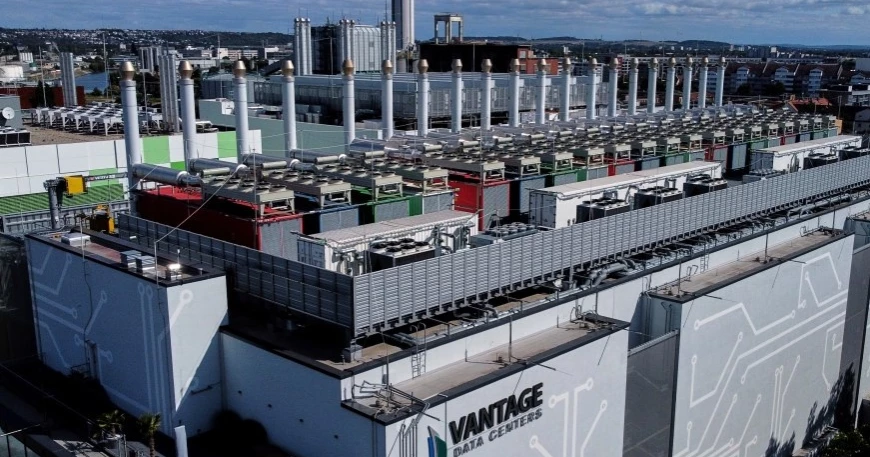
The European Union is offering 10 billion euros ($11.4 billion) in public funding to help build seven large-scale artificial intelligence facilities as the 27-nation bloc seeks to narrow its technology gap with the United States and China.
The European Commission said on Thursday that the funding could attract another 20 billion euros ($22.8 billion) in private investment.
“Access to the raw scale of computing power within AI gigafactories is a strategic necessity for Europe as AI development accelerates,” said Henna Virkkunen, the Commission’s executive vice president in charge of tech sovereignty.
The EU has been stepping up efforts to build what it calls “tech sovereignty” amid growing concerns about relying too heavily on foreign technology providers. European leaders fear such dependence could leave the bloc vulnerable if technology or critical supplies are used as leverage.
US President Donald Trump has also sharply criticised the EU’s technology regulations, while China has restricted supplies of minerals that are vital to the technology industry.
Companies can now bid to build the seven planned AI gigafactories, each expected to have at least 100,000 advanced AI chips. The facilities would be about four times more powerful than the data centers currently operating in the EU.
Once the seven gigafactories are operational, the EU’s overall AI computing capacity will more than double. The bloc currently has 19 AI data centers operating across Europe, from Finland to Spain.
Europe, however, remains well behind the US and China in several key areas needed to develop AI, according to a 2025 assessment by the US Federal Reserve.
China has huge electricity capacity available for data centers, while US companies attract most of the world’s private investment in AI.
The EU also faces higher costs and supply challenges. Europe does not produce many of the millions of components needed to build data centers, while electricity prices can be two to three times higher than in the US and China, according to a European Commission report presented to the European Parliament in June.
The report warned that European companies and public authorities would continue to depend on US AI and cloud providers, putting local service providers at a disadvantage.
It also said dependence on large foreign cloud and AI computing companies, particularly for critical services, could expose European data to access from outside the bloc and create risks to the continuity of essential services.
French AI company Mistral currently operates one of the EU’s largest AI data centers at its Paris campus. The company develops the Le Chat chatbot but remains behind leading US firms such as OpenAI, the maker of ChatGPT, and Chinese competitors including DeepSeek.
European leaders, including French President Emmanuel Macron, have repeatedly warned that the bloc needs stronger homegrown AI companies. At the same time, concerns are growing across Europe about the technology’s potential impact on jobs, the economy and privacy.
The European Commission said AI products developed through the expanding network of data centers would have to meet EU standards on data protection, safety, security and ethics.
The move comes amid wider concerns about the environmental impact of AI infrastructure. In June, 40 mayors from cities around the world signed an agreement seeking to limit the impact of AI data centers on natural resources, energy prices and climate targets.