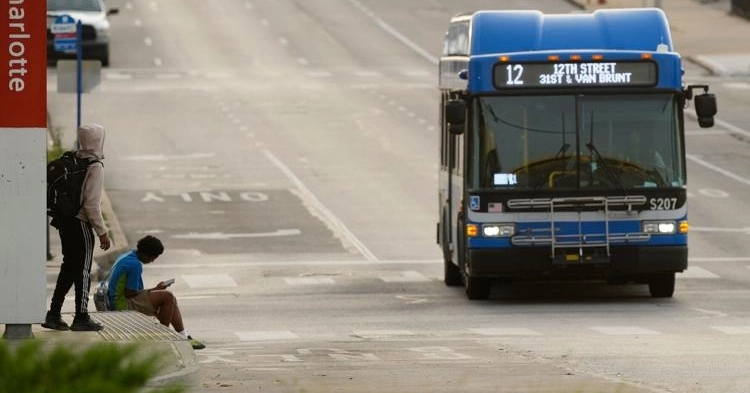
Officials in Kansas City, Missouri are planning to install facial recognition cameras on some public buses to identify passengers who may match lists of banned riders or missing persons, triggering a heated debate over security and privacy.
Supporters say the system could improve public safety by helping detect wanted individuals or missing people in real time. But critics warn it could open the door to expanded surveillance in everyday public spaces.
“The idea of running face recognition on a camera pointed at live public spaces is something that has not really been crossed in the last 25 years,” said Jay Stanley of the American Civil Liberties Union, calling it a major shift in public surveillance practices.
The project, led by Kansas City transportation authorities, is moving forward with local and federal funding after the state of Missouri declined to support it due to concerns over the technology.
Officials argue that buses already use surveillance cameras and that the new system is simply an upgraded version using artificial intelligence. “We’ve always had cameras on our buses. It’s just new technology,” said Tyler Means, chief mobility and strategy officer at the Kansas City Transportation Authority, adding that people may eventually feel little difference in daily use.
The technology, developed by SafeSpace Global, will scan faces captured on bus cameras and immediately compare them with active alerts, including missing persons or individuals on law enforcement watch lists set by transit authorities. If no match is found, the facial data will not be stored. Regular video footage will be kept for up to five years after buses return to depots.
Company CEO Scott Boruff said the system is designed to be limited in scope and not continuously store biometric data. However, privacy advocates argue that such systems tend to expand over time and become harder to control.
“It may be used for a very narrow watch list today, but there are very good reasons to think it will expand over time,” Stanley warned.
Opponents, including civil liberties groups, say public transport should not become a testing ground for new surveillance technologies, raising concerns about bias and misuse.
Similar technologies have been used in other US cities in the past, often facing backlash or legal challenges over privacy violations and misidentification issues, particularly involving minority communities.
The Kansas City project has also faced delays. Initially expected to launch this spring, it was postponed due to technical upgrades needed for transit systems and a lack of state funding support.
City officials now say the rollout could still happen this year and may expand from nine buses in the pilot phase to as many as 30 buses.
While the technology is not ready in time for current World Cup-related transit security needs, officials say additional police patrols have been deployed at bus stops and transit centers as a temporary measure.
“I think they need to take their time and do it right,” said city council member Ryana Parks-Shaw, adding that any use of such technology must include strong safeguards and transparency.