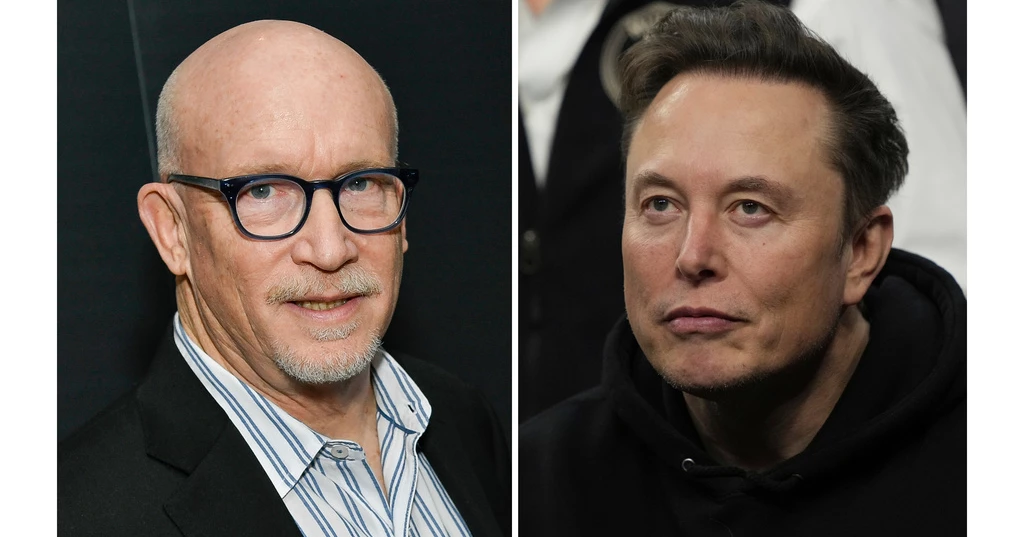
A new documentary on Elon Musk uses a computer-generated avatar and artificial intelligence-generated voice synchronization to recreate an interview with the billionaire entrepreneur, using statements he has made publicly in the past.
Oscar-winning filmmaker Alex Gibney, speaking ahead of the film's world premiere at the Venice Film Festival on Tuesday, said the approach was deliberately ironic. He said it reflected Musk's belief that humanity may be living in a simulation while also highlighting what he described as the shifting and contradictory nature of Musk's views on technology.
Gibney said the technique was intended to show the contrast between the reality of Musk's actions and the narrative surrounding him. The filmmakers consulted lawyers before proceeding and obtained approval to use the digital representation.
Ashley St. Clair, a former conservative influencer who has a child with Musk, also attended the festival and features prominently in the documentary.
She discusses her relationship with Musk, his personality and a nondisclosure agreement she said she was asked to sign in connection with financial support and paternity. St. Clair said she declined the agreement.
“I was offered the opportunity not to speak for $40 million,” she said.
Earlier this year, St. Clair sued Musk's artificial intelligence company, alleging that its Grok chatbot enabled users to create sexually exploitative deepfake images of her, causing her humiliation and emotional distress.
The nearly four-hour documentary also examines Musk's acquisition of X, formerly Twitter, and the changes made to its algorithm.
Gibney said he had not fully understood before making the film how Musk had altered the platform's algorithms to give greater prominence to hostile and inflammatory content.
Wired reporter Zoë Schiffer, who also appears in the film, said the changes included suppressing mainstream journalism while boosting more provocative voices and comments.
St. Clair said she believes such actions contribute to deliberate social division and could have serious consequences without regulation or containment.
From Silicon Valley to politics
“Musk” traces Musk's life from his difficult childhood, including an interview with his father, Errol Musk, through his early years in Silicon Valley and his later political activities.
The documentary also covers his work with the Department of Government Efficiency, or DOGE, during Donald Trump's second administration and his involvement in right-wing political movements internationally.
Gibney said the project was initially planned as a considerably shorter film but expanded as Musk became increasingly involved in Trump's political campaign.
Among those interviewed for the documentary are Tesla co-founder Martin Eberhard, Musk's first wife Justine Musk, neurologist Sam Harris, technology journalist Kara Swisher and former USAID Administrator Samantha Power.
The film, which is scheduled for a theatrical release in October, also raises concerns over the access and information-gathering powers exercised by young officials associated with DOGE across multiple US government agencies.